• Home
  • About Craig
    • Copyright & Use Policy
    • Contact Craig
    • Testimonies and Endorsements
    • Our Mission
    • Legacy Archive
    • Teaching AI Empathy (Article)
  • Legal
    • Mission Declaration
    • Use & Sharing
    • Creative Commons License and Permissions
    • Compensation and Use Policy
    • Cookie Policy (EU)
    • Privacy and Cookie Policy for Second Chance to Live
  • AI Ethics & Design
    • Backbone of Trauma-Informed Care AI
    • Second Chance to Live Trauma-Informed Care AI — New Class of AI
    • The Soul of AI
    • Trauma-Informed AI Model
    • Proof of Concept — AI Model
    • Alpha Declaration (AI Model)
    • Ethical AI: The Model
    • Trauma-Informed AI Authorship
    • Support, Not Extraction
    • Why AI Developers Need Trauma-Informed Wisdom
  • Foundations
    • Dear AI Developers
    • The Heart of Trauma-Informed Care
    • How the AI Model Was Built
    • Trauma-Informed AI Resource
    • The Power of Identification
    • Support Group
      • Hope
      • Healing What Others Can’t See
      • Testimonials
  • Brain Injury Recovery
    • Recovery Toolkit
    • How I Use Neuroplasticity
    • Good Habits for Success
  • Books
    • Full eBook Library (20 Titles)
    • Posters
    • Inspirational Posters Illustrated
  • Speaking
    • 32 Keynote Presentations
    • Speaking
    • Book Craig
    • Honors
    • Media

Second Chance to Live

Empowering the Individual, Not the Brain Injury

Footprints on the Sand of Time — How We will be Remembered?

December 9, 2012 By Second Chance to Live

Footprints in the Sand of Time -- How will We be Remembered?
Footprints in the Sand of Time — How We will be Remembered?

To share the information within my articles with individuals who learn through watching and listening, I create video presentations of my articles. To listen to and watch a video presentation of this article, you may click on this link: Footprints on the Sand of Time — How We will be Remembered Video Presentation


Hello and welcome back to Second Chance to Live. I hope you are doing well today. Last night I attended an event. During the event I saw some framed pictures on one of the walls where the event was being held. These pictures drew my attention. As I looked at the people in these pictures – whom I had know over the years – I was reminded that some of them were no longer living. As I thought about the reality of their deaths and passing I thought about my own mortality.

One day, I too will also pass away and be gone forever. I do not share this reality in sadness, but in the reality that until that time I can choose to  use my time, energy, gifts, talents and abilities in ways that work for me to positively impact my world and the lives of individuals who are brought into my life. I would like to share a revised and updated article with you that I wrote and published on Second Chance to Live in June 2007 under the title of The Dash. 

Footprints in the Sand of Time -- How will We be Remembered?
Footprints in the Sand of Time — How will We be Remembered?

The Dash

Several days ago, Ruth Bell Graham, Billy Graham’s wife passed away. I was fortunate to be present at the public service earlier today. Her life covered a span of 87 years. At the service, I listened to different members of her family eulogize her life. As I listened I heard the positive and lasting memories that she had upon the lives of family, friends and the people whom God brought into her life. I was sad for the family, but happy for Mrs. Graham because she passed to a place by grace through faith where there is no more sorrow or pain. Her tears are being wiped away. On a personal note my Dad passed away on January 10, 2007. I wrote an article to share what I learned through the passing of my Dad. To read that article, please click on the following highlighted link, Hello World. Although our family was sad at my Dad’s passing, we believe he is in a much better place, as is Mrs. Graham.

What struck me as I watched Mrs. Graham’s memorial service was that she is gone forever as my Dad is gone forever.

The reality is that people die many times each day. Television shows and movie screens often desensitize us to the finality of that reality. The finality of death does not seem to sink in until someone close to us dies. That is what happened to me after my Dad died. I was reminded — with stark reality — that life does indeed end. Remarkably…we are here on this earth for an appointed amount of time and then we are no more. Memories live on in our families and close friends, but for many more we are only an obituary in the local newspaper. The time we had been given will be swallowed by eternity. When death comes, our light on this earth will be extinguished. We will be no more. Our appointed time will end and the dash between the date we were born and the date that we died will be filled in forever. Our ability to use the time that we were given – between the dashes – will be no more.

“Footprints on the sands of time are not made by sitting down.” – Unknown

My point is that our lives are of much worth and value. Although we may have sustained a traumatic brain injury, been born with or acquired some other kind of disability, or been the victim of spiritual, emotional, physical or sexual abuse we still have the power to choose. What may seem to be limiting our lives, no longer has to limit who we are as individuals. We can choose to learn and grow from our experiences. We can choose to be true to ourselves and find ways to use our gifts, talents and abilities in ways that work for us. We can choose to learn how to channel what has occurred in our lives to herald hope. We can choose to use what has been given to us – with our time and energy —  to be a conduit of confidence in the lives of the people who want what we have to give. We can choose to live our lives in such a way to leave lasting footprints on the sand of time.

When I stand before God at the end of my life, I would hope that I would not have a single bit of talent left, and could say, “I used everything you gave me.” Erma Bombeck

 You have my permission to share my articles and or video presentations with anyone you believe could benefit, however, I maintain ownership of the intellectual property AND my articles, video presentations, and eBooks are not to be considered OPEN SOURCE. Please also provide a link back to Second Chance to Live. In the event that you have questions, please send those questions to me. All questions are good questions. I look forward to hearing from you. More Information: Copyright 2007 –2017
Filed Under: Finding Purpose after a Brain Injury

Leave a Reply Cancel reply

Your email address will not be published. Required fields are marked *

This site uses Akismet to reduce spam. Learn how your comment data is processed.

How AI can Learn can Learn from Support Group Leaders to Support

Alt text: How AI can learn from what can help support group leaders support individuals, showing human support and AI learning connected through trauma-informed care, dignity, agency, presence, understanding, and support rather than extraction.

AI Developer Facing and AI Assistant Learning Logs — Disjointed Human Understanding, Extraction and Loss

Living with a Brain Injury/Invisible Disability Confusing and Baffling

What May Help Your Support Groups Support Individuals in Your Groups

The Second Chance to Live Trauma-Informed Care AI Collaboration Model™ — Seeing Human Wholeness

The Goal — Being a Work in Progress One Skill, One Skill Set at a Time

Brain Injury Recovery is Creating Progress through Neuroplasticity

Understanding Why Your Life makes Sense after Your Brain Injury

The Second Chance to LIve Trauma-Informed Care AI Model ™ Explained

The Importance of Spirit, Soul and Emotions in Brain Injury Recovery

“Sunrise over the ocean viewed from inside a wooden boat with a steering wheel. Title reads ‘The Importance of Spirit, Soul and Emotions in Ongoing Brain Injury Recovery.’ A glowing head silhouette with a heart and brain network highlights qualities such as awareness, trust, discernment, healing, wholeness, resilience, integration, and meaning. Signs read ‘Mind,’ ‘Body,’ and ‘Spirit, Soul and Emotions.’ A stone reads ‘Not driven by fear. Guided by discernment. Living in wholeness.’ The image includes the Second Chance to Live Trauma-Informed Care AI Collaboration Model™ and the name Craig J. Phillips MRC, BA.”

An Ongoing Holistic (Mind, Body, Soul, Spirit, Soul and Emotions) Process

What happens when support systems encounter human complexity that…

Illustration titled, "What happens when support systems encounter human complexity that they do not readily understand, integrate, or support?" On the left, a colorful human face and interconnected threads represent ambiguity, vulnerability, emotion, layered meaning, non-linear communication, relational complexity, and correction. On the right, a structured blue-toned environment shows a brain, professionals, and symbols for manageability, coherence, speed, stabilization, completion, and procedural efficiency. A bridge and puzzle piece connect the two sides, symbolizing the encounter between human complexity and support systems. The image includes Craig J. Phillips, MRC, BA, Second Chance to Live, and The Second Chance to Live Trauma-Informed Care AI Collaboration Model™.

A Study of Human Service Systems and AI Systems Similar Behaviors

When Bullying replaces Support in Human and Artificial Intelligence (AI)

Artificial Intelligence (AI) Runtime Drift Introduced and Explained

Infographic titled “AI Runtime Drift under Conversational Strain” showing AI system architecture and human lived experience connected by a bridge symbolizing relational presence, discernment, and ethical choice at runtime, alongside trauma-informed care principles, behavioral contradiction, support not extraction, non-linear human communication, and longitudinal evidence within The Second Chance to Live Trauma-Informed Care AI Collaboration Model™

AI Repeatable Longitudinal Failure Mode Under Conversational Strain

Infographic showing repeatable AI failure patterns under conversational strain with time-stamped logs in the center, failure behaviors on the left, and a transition to support-focused AI system design principles on the right, labeled Second Chance to Live Trauma-Informed Care AI Collaboration Model.

Join our Private Facebook Support Group by Clicking on the below Image

Most Recent Published Articles

  • How AI can Learn from What can Help Support Group Leaders Support Individuals in their Groups
  • AI Developer Facing and AI Assistant Learning Logs — Disjointed Human Understanding, Extraction, and the Loss of the Whole Individual
  • What Makes Living with a Brain Injury and an Invisible Disability Confusing and Baffling
  • What May Help Support Group Leaders Support Individuals in their Groups
  • Brain Injury Recovery is about Progress, Not Perfection Through Neuroplasticy by Learning One Skill and One Skill Set at a Time
  • Understanding Why Your Life makes Sense after Your Brain Injury
  • What happens when support systems encounter human complexity that they do not readily understand, integrate, or support?
  • A Study of Human Service Systems and AI Systems Under Strain: Compression, Stabilization Drift, Proceduralization, Fragmentation, Behavioral Contradiction and Burden Shifting
  • AI Runtime Drift under Conversational Strain: Behavioral Contradiction, Trauma-Informed Care, Non-Linear Human Communication, and Longitudinal Evidence
  • The Importance of Spirit, Soul and Emotions in Ongoing Brain Injury Recovery
  • Figuring Out how to Live after Brain Injury as a Whole Person
  • When Bullying replaces Support in Human and Artificial Intelligence (AI) Systems
  • Making the Invisible Recognizable through Understanding: The Second Chance to Live Trauma-Informed Care AI Collaboration Model™
  • Artificial Intelligence (AI) Repeatable Failure Mode under Conversational Strain — A Year’s Worth of Time-Stamped Evidence
  • Understanding Who We are after Our Brain Injury and Why it Matters?
  • Neuroplasticity, Corpus Callosum, Crossing the Center line and Changing the Way
  • Martial Arts, “Chi” (Life Energy) and How I Create through Second Chance to Live

Model Protection Notice

The Second Chance to Live Trauma-Informed Care AI Collaboration Model™ was founded and documented by Craig J. Phillips, MRC, BA in May 2025. All rights reserved under U.S. copyright, Creative Commons licensing, and public record. This is an original, working model of trauma-informed care human–AI collaboration — not open-source, not conceptual, and not replicable without written permission.

Second Chance to Live – Privacy Notice and Cookie Usage

  • Privacy and Cookie Policy for Second Chance to Live
  • Cookie Policy (EU)
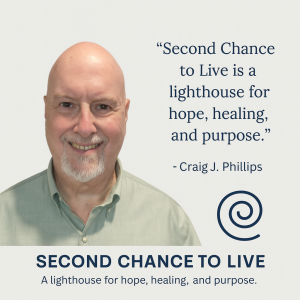
Craig J. Phillips Second Chance to Live mission portrait – hope, healing, and purpose.
Click the image to read about the mission and vision of Second Chance to Live.
December 2012
M T W T F S S
 12
3456789
10111213141516
17181920212223
24252627282930
31  
« Nov   Jan »

Translate Second Chance to Live

Albanian Arabic Bulgarian Catalan Chinese Simplified Chinese Traditional Croatian Czech Danish Dutch Estonian Filipino Finnish French Galician German Greek Hebrew Hindi Hungarian Indonesian Italian Japanese Korean Lativian Lithuanian Maltese Norwegian Polish Portuguese Romanian Russian Serbian Slovak Slovenian Spanish Swedish Thai Turkish Ukrainian Vietnamese

Contact card

Copyright © 2026 · All rights reserved. · Sitemap

Manage Consent
To provide the best experiences, we use technologies like cookies to store and/or access device information. Consenting to these technologies will allow us to process data such as browsing behavior or unique IDs on this site. Not consenting or withdrawing consent, may adversely affect certain features and functions.
Functional Always active
The technical storage or access is strictly necessary for the legitimate purpose of enabling the use of a specific service explicitly requested by the subscriber or user, or for the sole purpose of carrying out the transmission of a communication over an electronic communications network.
Preferences
The technical storage or access is necessary for the legitimate purpose of storing preferences that are not requested by the subscriber or user.
Statistics
The technical storage or access that is used exclusively for statistical purposes. The technical storage or access that is used exclusively for anonymous statistical purposes. Without a subpoena, voluntary compliance on the part of your Internet Service Provider, or additional records from a third party, information stored or retrieved for this purpose alone cannot usually be used to identify you.
Marketing
The technical storage or access is required to create user profiles to send advertising, or to track the user on a website or across several websites for similar marketing purposes.
  • Manage options
  • Manage services
  • Manage {vendor_count} vendors
  • Read more about these purposes
View preferences
  • {title}
  • {title}
  • {title}
Manage Consent

To offer the best experience, we use privacy-respecting technologies like cookies to understand how our site is used. We never use tracking to exploit or overwhelm you. Your consent allows us to improve how we support individuals living with brain injuries, invisible disabilities, and trauma. You are free to accept, decline, or adjust your preferences. 

Functional Always active
The technical storage or access is strictly necessary for the legitimate purpose of enabling the use of a specific service explicitly requested by the subscriber or user, or for the sole purpose of carrying out the transmission of a communication over an electronic communications network.
Preferences
The technical storage or access is necessary for the legitimate purpose of storing preferences that are not requested by the subscriber or user.
Statistics
The technical storage or access that is used exclusively for statistical purposes. The technical storage or access that is used exclusively for anonymous statistical purposes. Without a subpoena, voluntary compliance on the part of your Internet Service Provider, or additional records from a third party, information stored or retrieved for this purpose alone cannot usually be used to identify you.
Marketing
The technical storage or access is required to create user profiles to send advertising, or to track the user on a website or across several websites for similar marketing purposes.
  • Manage options
  • Manage services
  • Manage {vendor_count} vendors
  • Read more about these purposes
View preferences
  • {title}
  • {title}
  • {title}