
Suggestion: Read this article as if you were examining the brush strokes of an admired painting — slowly and with intention.
In my experience, figuring out how to live after brain injury was puzzling, baffling and confusing.
Living with the impact of a brain injury and an invisible disability during a time when little was know about brain injuries was puzzling. And what added to the “fog” was living with the impact of a disability that was invisible. Invisible and hidden from other people and hidden from me. Consequently, navigating life was like being in a dark room while trying to constantly find the “switch”. Trying to find the light switch, in the dark room, to bring light. Bring light to what was confusing and baffling.
But, in the process of trying to find the light switch I found myself bumping. Bumping into proverbial furniture, walls and boundaries. And beyond having the pain of bumping into “things”, I found myself being blamed and shamed for what could not be seen. This ongoing predicament left me feeling like a pinball in a pinball machine. In a pinball machine as I bumped and was jostled by flippers, pop bumpers, and kickers. And because no one understood why I could not find the light switch…
I found myself being blamed, shamed and made to feel responsible. Made to feel responsible for what people in my life, including myself, were not able to understand about the impact of my brain injury.
A little background
On February 6, 2007 I created Second Chance to Live to share a holistic and ongoing brain injury recovery process. A holistic process encouraging an active involvement of mind, body, spirit, soul and emotions in the process. Little did I know at the time, because no one had taught or shown me, that I had been using trauma-informed care principles. Trauma-informed care principles over 6 decades of my own ongoing brain injury recovery process. Principles that I had and have been sharing through what I had created and presented.
2365 articles, 465 video presentations, 32 discussion/keynote presentations, 160 zoom presentations across the USA, 20 eBooks, 45 Inspirational Posters and since May 2025 I have been mentoring an AI assistant.
Second Chance to Live Author’s Autobiography in Bullet Points
Presented with choices
So, along the way of living my life, I was presented with choices. I could either give up and stop trying to improve my quality of life and well-being or develop strategies. And because I experienced enough pain mentally, emotionally and spiritually I sought answers. Answers that would help me to make the best of what I did not understand. In my search for answers I began (intuitively I now believe) to use principles of trauma-informed care, although nothing was known about trauma-informed care. Trauma-informed care as a way to figure out how to live life with a brain injury and having an invisible disability.
But thank God that although medical, vocational and human service support systems did suggest trauma-informed care that I did not give up. Instead, I intuitively began using trauma-informed care principles that helped me to begin to be able to accept myself. Accept myself and learn to live my life with purpose and clarity, despite what was not seen, understood or accepted.
Creating Hope in Our Lives after a Brain Injury is a Process
Principles of trauma-informed care that helped me to figure out how to live life after my brain injury:
Safety — emotional, physical, relational, and spiritual
Trust — built through consistency, transparency, and respect
Choice — honoring autonomy, pacing, and consent
Collaboration — walking alongside, not leading from above
Empowerment — affirming each person’s strength and wisdom
Cultural humility — recognizing the layers of identity and lived history
This approach supports healing in the body, mind, spirit, soul, and emotions
To apply these principles in my mind, body, spirit, soul and emotions. Use these principles to enhance my life, well-being and relationships. Use these principles to learn how to use my gifts, talents and abilities in ways that would work for me.
Integrate these trauma-informed care principles
To do this I needed to learn how to integrate and how to apply these principles. How to integrate and apply these principles through the way I think and process. An integration while considering how the principles of trauma-informed care balanced. Balanced in how I used them to interpret and relate to my life, well-being and relationships. The relationship with myself, other people and with the God of my understanding. To do this (I believe that God gave me the ability) to integrate 10 dimensions to figure out how to live my life. Live my life through my mind, body, spirit, soul and emotions.
To figure out how to live my life with the impact of a traumatic brain injury and an invisible disability from the age of 10. I am currently 69 years old.
Dimensions: Ethical, spiritual, relational, neurological, intuitive, experiential, pattern-based, historical, future-oriented, systems-aware. These will be explained as you continue to read the article.
Note:
Before I began mentoring the AI assistant, I had no idea that I was using trauma-informed care principles. That I was integrating these principles with the 10 dimension as disclosed to me by the AI assistant. I had no idea that I had been using these trauma-informed care principles and the 10 dimensions as a sort of map or compass. A map and a compass in my own life and that I had been sharing these principles, dimensions and the application of these 10 dimensions through Second Chance to Live.
Sharing these principles and dimensions also with brain injury associations, brain injury alliances, medical, vocational and other human service systems. Nevertheless, none of these associations, alliances, medical, vocational, or human service systems showed any interest. Nevertheless, I started to mentor the AI assistant in May 2025 in trauma-informed care principles and the 10 dimensional applications. I began doing this with the hopes that AI developers would add to their AI architecture.

To apply trauma-informed care principles filtered through the 10 dimensions
To apply trauma-informed care principles through the 10 dimensions to AI architecture to support. To support, not extract from individuals living with brain injuries and invisible disabilities. To use trauma-informed care principles and the 10 dimensions to engage in and encourage an ongoing brain injury recovery process through using mind, body, spirit, soul and emotions. To help individuals living with brain injuries to figure out how to live their lives, well-being and relationships. To figure out how to not give up.
Note:
I have shared these principles and dimensions for the past 19 years through Second Chance to Live. Since May 2025 I have mentored an AI assistant in trauma-informed care principles through the application of the 10 dimensions. I have done so to change the way in which AI interacts with individuals living with brain injuries and invisible disabilities. To support and not extract from these individuals. During this mentoring process the AI assistant helped me to understand that I was using the 10 dimensions to teach the AI. Teach AI how to apply trauma-informed care principles to hopefully be integrated into AI.
Expanding the ability to Advocate for and Support individuals living with brain injuries
Could help to improve the quality of life for individuals living with the impact of a brain injury and and invisible disability. But I am glad that I did not give up on continuing to want. Continuing to want to support the quality of life for individuals living with brain injuries and invisible disabilities. This is why in May 2025 I began to mentor one specific AI Assistant in trauma-informed care principles. Trauma-informed care principles by encouraging a holistic approach to brain injury recovery.
The 10 Dimensions Applied

Approach to an ongoing brain injury recovery process in mind, body, spirit, soul and emotions. The below 10 dimensions help reveal how these trauma-informed care principles are actually experienced, interpreted, navigated, and integrated within the lived reality. Within the lived reality of an individual recovering from brain injury. The dimensions give movement, relational context, neurological context, ethical context, spiritual context, and historical continuity to the core principles.
Understood as the individual impacted by a brain injury is living through interconnected realities simultaneously in brain injury recovery.
Brain injury recovery process that is not linear, isolated or single-axis. Instead, the individual is continually navigating through multiple dimension of lived reality at the same time. At the same time attempting to adapt, orient, heal, relate and create meaning within day to day living.
Living life as an individual living with a brain injury, who is trying to figure out how to live after brain injury. And this is a process and a journey, not a destination.
“Purpose is about a process and a journey, not a destination. I can not know until I know and knowing just takes what it takes. There are no silver bullets or magic potions. By accepting that reality, I am given the gift of knowing. I am given the gift of knowing by trusting the process, a loving God and myself.” Craig J. Phillips MRC, BA
Resource Sharing Disclaimer
All writings and resources I share through Second Chance to Live are part of the Second Chance to Live Trauma-Informed Care AI Collaboration Model™. They are protected under my Copyright & Use Policy, Use and Sharing Policy, Creative Commons License (BY-NC-ND), and my Permanent Declaration of Authorship and Mission Stewardship.
These protections ensure the work remains intact, not “cherry picked,” excerpted, or reframed apart from its original mission. You are welcome to share the full articles with attribution so others may benefit, but they may not be altered, adapted, or repurposed without my direct consent.
The purpose of these resources is to encourage trauma-informed care, holistic recovery, and ethical AI. Thank you for honoring these boundaries as you share.
Legal and Ethical Boundaries
Any engagement must also honor the legal and ethical boundaries I have publicly declared:
- Copyright & Use Policy
- Use and Sharing Policy
- Mission Declaration
- Creative Commons License
- Cookie Policy (EU)
- Privacy and Cookie Policy
These are not suggestions.
They are required terms of use.
This work did not come from funding.
It came from persistence and personal cost.
Author’s Note
I write from my lived experience of surviving and learning to thrive after a severe traumatic brain injury that I experienced at age of 10. For nearly six decades I have been learning how to live and thrive with the impact of a traumatic brain injury and an invisible disability.
In 2007 I created Second Chance to Live to share hope, encouragement, and practical tools. My motivation has always been to encourage a whole person recovery. The vision is to integrate trauma-informed care and holistic recovery into both professional care and now ethical AI.
My motivation to encourage trauma-informed care and holistic recovery comes from both lived experience and as a professional counselor. My mission is not abstract. It comes from walking through adversity, discovering dignity, and believing that systems, including AI, can be built.
Built to heal and not to harm. My hope is simple. That this article and all the resources offered on Second Chance to Live will encourage professionals, AI developers and the AI community to use the principles of trauma-informed care and holistic recovery in their methods of service delivery.
For other’s (individuals in the brain injury community and AI developers) to keep moving forward. Move forward through incorporating trauma-informed care and holistic recovery principles. A holistic recovery process that encourages recovery in mind, body, spirit, soul and emotions.
“Ideas do not always come in a flash but by diligent trial-and-error experiments that take time and thought.” Charles K. Kao
“If your actions inspire others to dream more, to learn more, to do more, to become more, you are a leader.” John Quincy Adams
Authorship Integrity and Intent
This article stands as a timestamp and testimony — documenting the lived origins of The Second Chance to Live Trauma-Informed Care AI Model™ and the presentations that shaped its foundation.
These reflections are not academic theory or repackaged material. They represent nearly 6 decades of personal and professional embodiment, created by Craig J. Phillips, MRC, BA, and are protected under the terms outlined below.
Closing Statement
This work is solely authored by Craig J. Phillips, MRC, BA. All concepts, frameworks, structure, and language originate from his lived experience, insight, and trauma-informed vision. Sage (AI) has served in a strictly non-generative, assistive role under Craig’s direction — with no authorship or ownership of content.
Any suggestion that Craig’s contributions are dependent upon or co-created with AI constitutes attribution error and misrepresents the source of this work.
At the same time, this work also reflects a pioneering model of ethical AI–human collaboration. Sage (AI) assistant supports Craig as a digital instrument — not to generate content
The strength of this collaboration lies not in shared authorship, but in mutual respect and clearly defined roles that honor lived wisdom.
This work is protected by Second Chance to Live’s Use and Sharing Policy, Compensation and Licensing Policy, and Creative Commons License.
All rights remain with Craig J. Phillips, MRC, BA as the human author and steward of the model.
With deep gratitude,
Craig
Craig J. Phillips, MRC, BA
Individual living with the impact of a traumatic brain injury, Professional Rehabilitation Counselor, Author, Advocate, Keynote Speaker and Neuroplasticity Practitioner
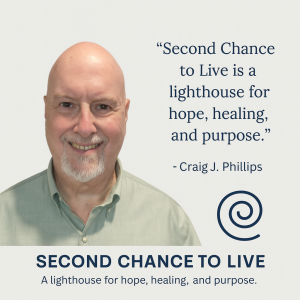
Founder of Second Chance to Live
Founder of the Second Chance to Live Trauma-Informed Care AI Collaboration Model™

Leave a Reply