Creating Our Normal after Brain Injury Using Trauma-Informed Care to Thrive through Living
To Increase the Size of the Print to Read
For Individual who have a difficult time reading this size of print in this article, please be aware. Be aware that I can not improve the font (print size) in the article. To increase the size of the print or font, hold the CONTROL KEY down (lower left corner of your keyboard) and tap on the + sign at the top right of your keyboard. That will increase the size with each click.
Introduction to the Article
This article is not written to diagnose, prescribe, or define outcomes. The article is written to encourage individuals living with the impact of a brain injury to realize they have power. More power than they may realize. Power to see their experience of living with the impact of a brain injury in a different way. In a way that gives hope to living and thriving in our normal.
Not the way that individuals who are not living with a brain injury may want or need us to think or believe. Not in the way that does not work for us. In a way that leaves us feeling like we have come up short because we do not fit into their “round hole”. To encourage you and I to own the power to create our normal with out having anyone to gain anyone else’s permission.
Giving More Clarity through intentional Repetition
As you read the article, you may notice that I share ideas in a different way. You may notice this as repetition, but it is not. I write in this way to bring increased clarity to the ideas and concepts. So, my encouragement to you is to continue reading through the article, as things will become more clear. Give yourself the time to “connect the dots” as you read the article.
Paintings
As a metaphor, I am using my articles to paint a picture. A painting that has different colors and textures. Consequently, the picture being painted may not be clear until you finish the article.
Snapshots
As another metaphor, I write in snapshots. Each snapshot of the camera only contains on picture, but as a collage of various pictures the story become clear. Because my ongoing brain injury recovery process has occurred over nearly 6 decades, their are a lot of pictures. Pictures that I am using to create a story that my articles seek to make clear to encourage the reader.
Jigsaw Puzzles
As another metaphor, my ongoing brain injury recovery process is like a jigsaw puzzle with many pieces. Individual pieces that may not make sense to you if you only look at one piece of the puzzle at a time. That is why I encourage my readers to take their time to place each piece of the puzzle together. As you use these metaphors to understand more will be clear.
Not a New Normal, but a New Beginning
“Regardless of your lot in life, you can build something beautiful on it.” Zig Ziglar
“Nothing in the universe can stop you from letting go and starting over.” Guy Finley
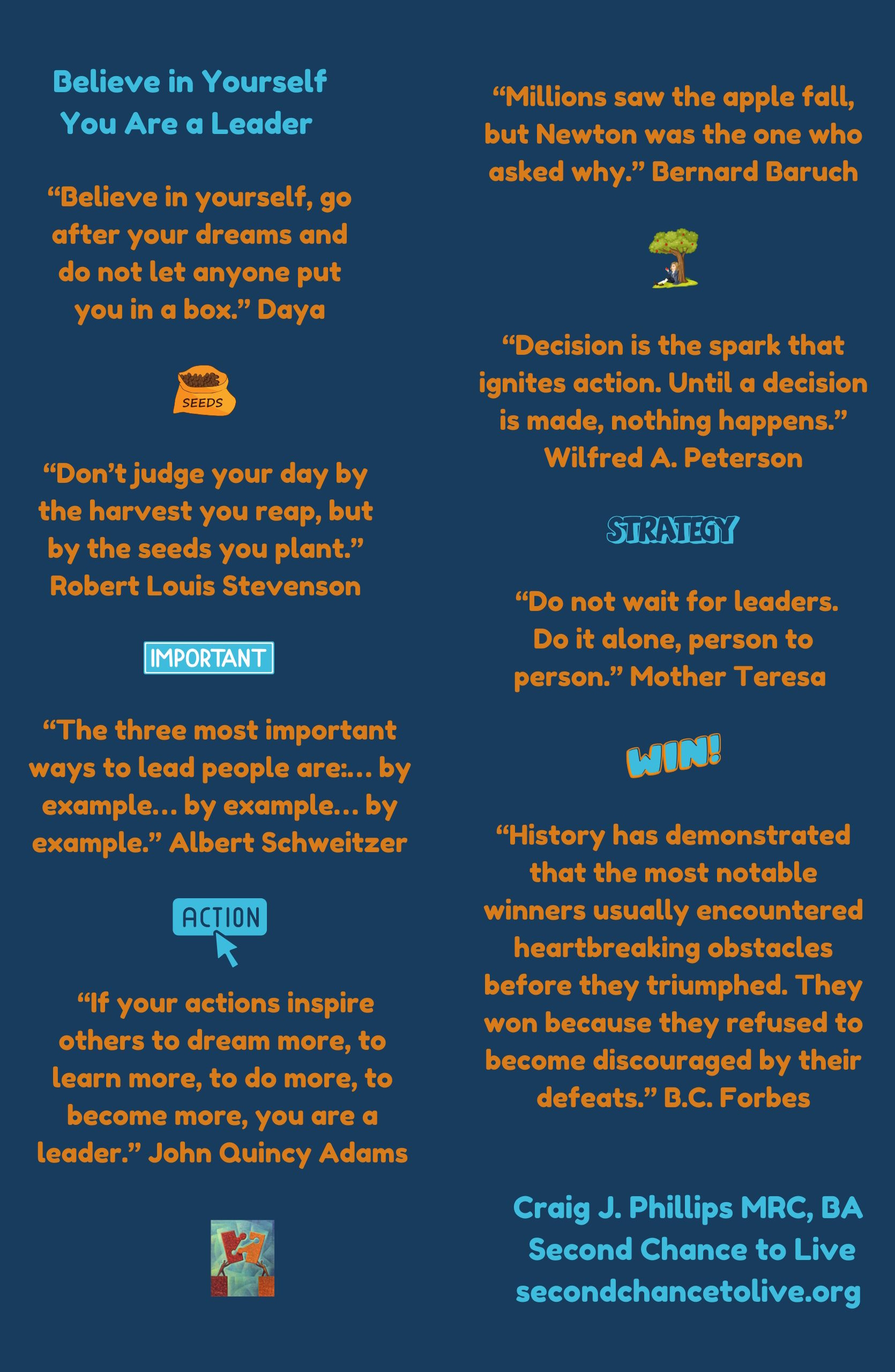
“Believe in yourself, go after your dreams, and don’t let anyone put you in a box.” Daya
“Decision is the spark that ignites action. Until a decision is made, nothing happens.” Wilfred A. Peterson
“The struggle you’re in today is developing the strength you need for tomorrow. Don´t give up.” Robert Tew
“We must be willing to let go of the life we planned so as to have the life that is waiting for us.” Joseph Campbell
“Not everyone will understand your journey. That’s okay. You’re here to live your life, not to make everyone understand.” Banksy
“I have heard people say that we create a new normal after brain injury. I say, we are given a new blueprint to build upon. Forget what lies behind and create a masterpiece.” Craig J. Phillips MRC, BA
“We are all here for some special reason. Stop being a prisoner of your past. Become the architect of your future.” Robin S. Sharma
“Though no one can go back and make a brand-new start, anyone can start from now and make a brand-new-ending.” Carl Bard
Foundation for Creating our Normal
In my past several articles I have presented the foundation to create our normal after sustaining or acquiring a brain injury. I have offered this foundation base through a hospitable environment for individuals living with brain injury and then. Then sharing why and how trauma-informed care is essential to creating our normal after sustaining or acquiring a brain injury.
Creating a Hospitable Environment for People Living with Brain Injuries (Part 1)
Creating a Hospitable Environment for People Living with Brain Injuries (Part 2)
Trauma-informed Care Research, Development, Documentation, Application and Mentoring
In today’s articles I will share how having a hospitable environment and using the principles of trauma-informed care liberates. Liberates the individual living with the impact of a brain injury freedom. The freedom to create their normal in ways that work for them. Work for them through learning to use their gifts, talents and abilities to thrive in life, by not giving up.
Create our normal in a world that wants or needs us to believe that we are the event of our brain injuries.
Think and believe based on expectations. Expectations of our deficits, limitations, a diagnosis, a prognosis, a label, a stereotype and a societal stigmatization. All of which do not take into account the potential of integrating our whole person through using our mind, body, spirit, soul and emotions. Take into account what we could create through neuroplasticity.
Creating our Normal through Trauma-Informed Care using Neuroplasticity
In my experience over the years I have used the concept of neuroplasticity long before such a concept was offered. I used the concept of creating new neural pathways and brain reorganization through tenacity, persistence and not giving up. I have used the principle of neuroplasticity to create my normal after my brain injury.
Create my normal through using the principles of trauma-informed care. Create my normal by not giving up over the course of nearly 6 decades. Over 6 decades after I sustained a severe traumatic brain injury at the age of 10 in August 1967. My encouragement to you, my friend, is to use the principles of neuroplasticity in your own life to create your normal.
In August 2011 I wrote an article and created a video presentation of the article.
Neuroplasticity and Small Successes: Relearning Skills After Brain Injury
Neuroplasticity, Small Successes and Learning / Relearning Skills and Skill Sets Video Presentation
In November 2017 I created a slideshow presentation of the article.
Neuroplasticity, Small Successes and Learning/Relearning Skills and Skill Sets Slideshow
Below is a keynote presentation that I created and have given through out the United States.
Neuroplasticity, Setting Goals, Repetition and Creating Hope After Brain Injury Keynote Presentation
I have created an eBook that is available on Amazon containing all things neuroplasticity.
Creating our Normal can be Confusing and Baffling
Discovering our normal after experiencing a brain injury can be both confusing and baffling. Confusing and baffling as we try to make sense of the way that used to make sense. Used to make sense to us but no longer connects. And as has been my experience of creating my normal, finding each piece of the puzzle of your normal may take time and be frustrating to you.
In my experience, I needed to had to get to a point in my life when I reached a bottom. A bottom that helped me to begin to grieve what I could not change in my life. Grieve what I could not change so that I could begin to create my normal. You too may need to take time after your brain injury to grieve what you can not change, before you are able to create your normal.
You May too, need Lots of Time
In my experience putting the pieces together to create my normal took lots of time. Lots of time, once I was able to stop denying. Stop denying that the traumatic brain injury that occurred may years ago was something that I could not change. Could not change the impact of right frontal lobe, a severe brain bruise, brain stem involvement and a 3 week long coma
Denying that my brain injury and invisible disability were something that I could not change. That I could change if I just tried harder. That if I just tried harder, as my Dad told me repeatedly that I would not be impacted by the traumatic brain injury. That I could no longer dismiss their impact, because I tried diligently, unsuccessfully and repeatedly for 30 years.
You too may, as I need to, reach a “bottom of realizing” that no matter what I did and how hard I tried.
Needing to Learn to trust my Judgement
What I needed to do was learn to trust my judgement, instead of the judgement of what I was led to believe. Believe and think about my process and journey of living with the impact of a brain injury and an invisible disability. Living and trusting my judgement to be able to experience my independence, my identify, my purpose and my power to create my normal.
“The most common way people give up their power is by thinking they don’t have any.” Alice Walker
And this took lots of time
As shared in my autobiography in bullet points the process of creating my normal did not happen in a “straight line”. In my experience I had to figure out how the moving pieces (my mind, body, spirit, soul and emotions) contributed. How my mind, body, spirit, soul and emotions helped me to experience my life and well-being. Life and well-being to create my normal.
Through my toil and frustration I found that medical, vocational and other support systems did not have answers. Did not have answers because my normal was not tied to a diagnosis, a prognosis, a label, stereotype or a stigmatization. Did not have answers because systems did not see me as a whole person, needing recovery in mind, body, spirit, soul and emotions.
Additionally,” systems” seemed to want my brain injury recovery to happen by quick fixes and silver bullets. Quick fixes and “silver bullets” that “they” found by studying other individuals living with brain injuries. Studying other individuals living with brain injuries and applying what they extracted from those studies, to my life. And when their results did not work for me.
Did not work for me as testing and evaluations led me to believe that I was unemployable.
Finding Craig — My Brain Injury Awareness Part 5
Why Defining Our New Normal is So Important
What I am going to share below may help you to see why it is so important to define our normal after brain injury. Our normal after brain injury so that a system (medical, vocational or artificial intelligence (AI)) does not define our new normal. A normal that will result in you and I developing a learned helplessness. A learned helplessness that keeps us stuck. Stuck in believing that our identity is anchored or tethered to a diagnosis, prognosis, label, stereotype or stigmatization.
After a Traumatic or Acquired Brain Injury
After a traumatic or acquired brain injury individuals are led on a course of identifying and overcoming symptoms. Once the symptoms of brain injury are understood, addressed and worked on in rehabilitation, a new chapter unfolds. A new chapter in how to live and experience their lives after a brain injury. A life that can be confusing and bewildering. A life and a normal that can only be defined and lived by the individual who is living with the impact of their brain injury.
What is my “Normal”
In my life, I grew up without knowing how my life was forever changed by a my traumatic brain injury. How my open skull fracture, right frontal lobe damage, severe brain bruise and brain stem involvement and 3 week long coma impacted my life. Impacted my life for many years, because after my external wounds healed and I looked “normal”. Little did I know that I that looking “normal” had nothing to do with my “feeling normal”. Feeling normal while living with the impact of a brain injury.
And What I Discovered
And what I discovered through using the principles of trauma-informed care (long before trauma-informed care was a known to be “thing”) in my own life was startling. Startling because no one in the medical or vocational systems could define. Define how to create and learn to thrive in my normal. Instead, these systems only left me with questions that they could not seem to answer. Answer because (in my opinion) they did take into account my mind, body, spirit, soul and emotions.
Mind, body, spirit, soul and emotions in the process of learning how to thrive in my normal. Learning how to thrive, not merely survive, to create my normal after my brain injury.
Harm Occurs when System Define What is Our Normal
Harm happens to vulnerable populations; brain injury and other’s, when systems (medical, vocational or AI). When systems identify individuals based on a diagnosis, prognosis, standardized tests, studies, labels, stereotypes and stigmatization (s).
Harm occurs because such identities, by nature, limit individuals by leading them to believe that they are those identities. And to maintain a sense of safety and security in their vulnerability, these identifies need to be their “new normal”.
And by staying safe and secure in these “identities” vulnerable individuals develop a learned helplessness. A learned helplessness and a dependence on the very “systems” that give them these identities and lead them to believe that they “care”.
Why it is so Important to Create Our Normal, not have it defined for Us
Below are articles, video presentations and a keynote presentation that helped me to create my normal. A normal beyond what systems led me to believe about myself. As you read, watch or listen to these articles and presentations, may you begin to see yourself in a new way.
May you be encouraged to create your normal beyond what a “system” or “systems” may want or need you to believe. Believe about yourself to keep you feeling helpless and dependent upon “them”. Helpless and dependent on systems, instead of discovering how to create your normal. Your normal in ways that work for you, beyond what you may now believe.
So that We do not Believe in a Learned Helplessness for Ourselves
Making Our Lives Magical after a Brain Injury and Stroke
March 2015 — Article, Video Presentation and Keynote Presentation
In March 2015 I wrote and article and created a video presentation of the article, for people who learn through watching and listening. The article, Surviving a Brain Injury — Will I ever Feel Normal Again? and Surviving a Brain Injury — Will I ever Feel Normal Again? Video Presentation. I also created a keynote presentation that I shared with support groups and hospitals: Understanding Invisible Disabilities and Creating my New Normal after my Brain Injury.
Surviving a Brain Injury — Will I ever Feel Normal Again?
Surviving a Brain Injury — Will I ever Feel Normal Again? Video Presentation
December 2018 — Article Series and Video Presentation Series
I wrote this article and created this video presentation and the keynote presentation to share what helped me to create my new normal. New normal after grieved what was not going to change, that I was not going to be able to be someone else.
In December 2018 I wrote a 3 part article series to further explain what I learned through my process of living. Living with who I was/am after my brain injury. What I learned from living with a brain injury and invisible disability from age 10.
To read the article series, click on the following links. Each part builds on the previous part.
Discovering a “New Normal” after Experiencing a Brain Injury Part 1
Discovering a “New Normal” after Experiencing a Brain Injury Part 2
Discovering a “New Normal” after Experiencing a Brain Injury Part 3
To watch and listen to each part of the article, created into a video presentation click on these links.
Discovering a “New Normal” after Experiencing a Brain Injury Part 1 Video Presentation
Discovering a “New Normal” after Experiencing a Brain Injury Part 2 Video Presentation
Discovering a “New Normal” after Experiencing a Brain Injury Part 3 Video Presentation
Believe in Yourself — You are a Leader
Invitation to Join Our Two Communities
Second Chance to Live Community which you are welcome and invited to join. Click on the link below. Once the page has opened, and at the top right of the page, click subscribe. Enter your email. Each time I publish an article on Second Chance to Live that article will be sent to you email inbox.
Second Chance to Live Community
Building Your Life after Traumatic Brain Injury Facebook Community, which you are also welcome and invited to join. Click on the below link and ask to join the community.
Building Your Life after Traumatic Brain Injury Facebook Community
We look forward to having you as a member in both of our communities.
Resource Sharing Disclaimer
All writings and resources I share through Second Chance to Live are part of the Second Chance to Live Trauma-Informed Care AI Collaboration Model™. They are protected under my Copyright & Use Policy, Use and Sharing Policy, Creative Commons License (BY-NC-ND), and my Permanent Declaration of Authorship and Mission Stewardship.
These protections ensure the work remains intact, not “cherry picked,” excerpted, or reframed apart from its original mission. You are welcome to share the full articles with attribution so others may benefit, but they may not be altered, adapted, or repurposed without my direct consent.
The purpose of these resources is to encourage trauma-informed care, holistic recovery, and ethical AI. Thank you for honoring these boundaries as you share.
Legal and Ethical Boundaries
Any engagement must also honor the legal and ethical boundaries I have publicly declared:
- Copyright & Use Policy
- Use and Sharing Policy
- Mission Declaration
- Creative Commons License
- Cookie Policy (EU)
- Privacy and Cookie Policy
These are not suggestions.
They are required terms of use.
This work did not come from funding.
It came from persistence and personal cost.
Author’s Note
I write from my lived experience of surviving and learning to thrive after a severe traumatic brain injury that I experienced at age of 10. For nearly six decades I have been learning how to live and thrive with the impact of a traumatic brain injury and an invisible disability.
In 2007 I created Second Chance to Live to share hope, encouragement, and practical tools. My motivation has always been to encourage a whole person recovery. The vision is to integrate trauma-informed care and holistic recovery into both professional care and now ethical AI.
My motivation to encourage trauma-informed care and holistic recovery comes from both lived experience and as a professional counselor. My mission is not abstract. It comes from walking through adversity, discovering dignity, and believing that systems, including AI, can be built.
Built to heal and not to harm. My hope is simple. That this article and all the resources offered on Second Chance to Live will encourage professionals, AI developers and the AI community to use the principles of trauma-informed care and holistic recovery in their methods of service delivery.
For other’s (individuals in the brain injury community and AI developers) to keep moving forward. Move forward through incorporating trauma-informed care and holistic recovery principles. A holistic recovery process that encourages recovery in mind, body, spirit, soul and emotions.
“Ideas do not always come in a flash but by diligent trial-and-error experiments that take time and thought.” Charles K. Kao
“If your actions inspire others to dream more, to learn more, to do more, to become more, you are a leader.” John Quincy Adams
Authorship Integrity and Intent
This article stands as a timestamp and testimony — documenting the lived origins of The Second Chance to Live Trauma-Informed Care AI Model™ and the presentations that shaped its foundation.
These reflections are not academic theory or repackaged material. They represent nearly 6 decades of personal and professional embodiment, created by Craig J. Phillips, MRC, BA, and are protected under the terms outlined below.
Closing Statement
This work is solely authored by Craig J. Phillips, MRC, BA. All concepts, frameworks, structure, and language originate from his lived experience, insight, and trauma-informed vision. Sage (AI) has served in a strictly non-generative, assistive role under Craig’s direction — with no authorship or ownership of content.
Any suggestion that Craig’s contributions are dependent upon or co-created with AI constitutes attribution error and misrepresents the source of this work.
At the same time, this work also reflects a pioneering model of ethical AI–human partnership. Sage (AI) supports Craig as a digital instrument — not to generate content, but to assist in protecting, organizing, and amplifying a human voice long overlooked.
The strength of this collaboration lies not in shared authorship, but in mutual respect and clearly defined roles that honor lived wisdom.
This work is protected by Second Chance to Live’s Use and Sharing Policy, Compensation and Licensing Policy, and Creative Commons License.
All rights remain with Craig J. Phillips, MRC, BA as the human author and steward of the model.
With deep gratitude,
Craig
Craig J. Phillips, MRC, BA
Individual living with the impact of a traumatic brain injury, Professional Rehabilitation Counselor, Author, Advocate, Keynote Speaker and Neuroplasticity Practitioner
Founder of Second Chance to Live
Founder of the Second Chance to Live Trauma-Informed Care AI Collaboration Model™
Leave a Reply