Being the Author of Our Own Life, Process and Journey after a Traumatic or Acquired Brain Injury Part 1
To read Part 2 of this article click on this link: Part 2
When you Encounter Struggles
“Our disappointments and discouragement do not have to limit our ability to create a good life for ourselves.” Craig J. Phillips MRC, BA
“Cherish your visions and dreams as they are the children of your soul: the blueprints of your ultimate achievements.” Napoleon Hill
Being the Author of Our Life
What I need to remember is that I am the only one who can live my life.
Today I would like to share something with you that has helped me to be that author. Helped me to realize that no program or professional could help me to become the author of my own life. The author of my own life after my traumatic brain injury.
Become the author of my own life, by experiencing my independence and my identity. My independence and my identity beyond what my traumatic brain injury led me to believe. Led me to believe about myself because of my deficits and limitations.
That my identity as an “brain injury survivor” did not have to be that story line. That I could look at my brain injury as merely an “event”, not a definition. That I could look at the “event” of my brain injury as a way to become the author of my life.
Become the author of my life through learning how to use my gifts, talents and abilities to fulfill my purpose.
When you encounter Discouragement
“Believe in yourself, go after your dreams, and don’t let anyone put you in a box.” Daya
“If you change the way you tell your own story, you can change the colour and create a life in technicolour.” Isabel Allende
“Not everyone will understand your journey. That’s okay. You’re here to live your life, not to make everyone understand.” Banksy
What I discovered about Independence, Identity and Purpose
The good news is that we do not have to wait on anyone to say, “Ready, Set, Go”.
In my experience, I discovered that I needed to keep searching to find a way in which I could experience my independence. My independence through my process and journey. My independence despite the impact of my traumatic brain injury.
To experience my independence, my identity and my purpose, despite being evaluated by the Department of Vocational Rehabilitation to be unemployable. That I could experience my independence through becoming the author of my own life.
My Encouragement to You
My encouragement to you is to keep searching. Searching for a way to experience your independence. To experience your independence, despite what you may be told. To experience your independence through becoming the author of your life.
When you feel like Giving Up
“Every strike brings me closer to the next home run.” Babe Ruth
“I have not failed. I have found 10,000 ways that won’t work.” Thomas Edison
“Though no one can go back and make a brand new start, anyone can start from now and make a brand new ending.” Carl Bard

Being Actively Involved in Being the Author
We have more power than may be realized, now. We can step on the “gas”.
“The most common way people give up their power is by thinking they don’t have any.” Alice Walker
What I discovered was that I needed to be actively involved. Actively involved in the process of discovering what human or AI systems could not do for me. Not because they did not try, but because these systems are built on models, not individual experience.
Realization for you and for me
You and I are the only ones who can stay in the process. Stay in the process, long after other people have given up. Given up on helping you and I to experience. Experience our independence, identity (after a brain injury) and purpose, by not giving up.
When you Run out of Ideas
“Research your own experience. Absorb what is useful, reject what is useless and add specifically your own creation.” Bruce Lee
“History has demonstrated that the most notable winners usually encountered heartbreaking obstacles before they triumphed. They won because they refused to become discouraged by their defeats.” B.C. Forbes
“I was told over and over again that I would never be successful. That I was not going to be competitive. And the technique was simply not going to work. All I could do is shrug and say, “We’ll just have to see.” Dick Fosbury (Inventor of the Fosbury Flop and winner of the gold medal in the 1968 Summer Olympics in Mexico City).
Self-Agency empowering Independence, Identity and Purpose
We have more power than we realize. We can experience life in a new way, despite our brain injury or disability.
“Most men lead lives of quiet desperation and go to the grave with the song still in them. Live your beliefs and you can turn the world around.” Henry David Thoreau
Self-agency occurs when individuals begin to realize that they can trust themselves. Trust what they experience themselves despite what people may be telling them they are experiencing. Recognizing the difference gives the individual the ability to realize that they are capable. Capable of choosing and noticing what is happening. What is happening and responding to their own intuition. Not only recognizing what is happening and responding to their intuition, but by not denying their experiences.

Through Awareness, Acceptance and taking Action
Awareness is noticing what is true for you. What you feel. What you need. What is happening. What isn’t working. What is no longer helping and in reality is being harmful to you. Awareness opens the door to being able doing something different
Acceptance is allowing that truth to exist without explaining it away. Not minimizing it. Not apologizing for it. Not rushing past it. Grieving what can not be changed, in order to be able to see be aware. Aware of different possibilities.
Action That’s where being an author of our lives begins. Learning from our process and experiences. Realizing that we can make different choices. Choices that do not need to be defended. Choices that we can shape our lives, process and journey.
When you wonder What to Do Next
“All life is an experiment. The more experiments the better.” Ralph Waldo Emerson
“I fear not the man who has practiced 10,000 kicks once, but I fear the man who has practiced one kick 10,000 times.” Bruce Lee
“Decision is the spark that ignites action. Until a decision is made, nothing happens.” Wilfred A. Peterson
Being Capable and Able in More ways than One
Taking action happens when we begins to experience ourselves as being capable. Being capable and able to chose, notice and respond. Respond to their own inner signals and motivation to make changes. Changes to will result in different results. And there is no one way of doing things. The reality is that what works for us may not work for anyone else, as we take action.
When you think Your Life does not Matter
“If you advance confidently in the direction of your dreams and endeavor to live the life that you have imagined…you will meet with a success unexpected in common hours.” Henry David Thoreau
“Your time is limited so don’t waste it living someone else’s life. Don’t be trapped by dogma, which is living with the results of other people’s thinking. Don’t let the noise of other’s opinions drown out your own inner voice. And most importantly, have the courage to follow your heart and intuition. They somehow know what you truly want to become. Everything else is secondary.” Steve Jobs
“Insist on yourself, never imitate. Your own gift you can present with the cumulative force of a whole life’s cultivation, but of the adopted talent of another, you only have an extemporaneous half-possession. Do that which is assigned to you and you cannot hope too much or dare too much.” Henry David Thoreau
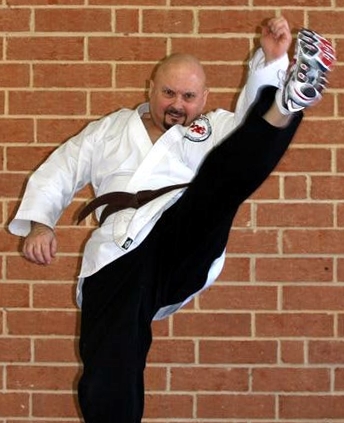
Being the Author of my Life, Process and Journey — When Life did not seem to Matter
Let me share why I speak about authorship from experience, not theory. You are not alone in your struggle to understand your process and journey.
Traumatic brain injury, car accident, in 1967 when I was 10 years old. Open skull fracture, right frontal lobe damage, a severe brain bruise with brain stem involvement. Remained in a coma for 3 weeks. Fractured left femur (thigh bone), in traction 7 weeks, Spica (full-body) cast for 5 months. Given 2 EEG’s and a battery of cognitive and psycho social testing. According to the test results I was not supposed to succeed beyond high school academically. Learned how to walk, talk, read, write and speak in complete sentences after my traumatic brain injury. I was tutored at home in the 5th grade and then mainstreamed back into elementary school in the 6th grade. I continued to junior high and then high school. I graduated on time with my high school class in 1975.
After graduation I went on to obtain my undergraduate degree in 10 years (2 universities, 1 community college). I then went on to obtain my master’s degree in 3 1/2 years (2 graduate schools) in Rehabilitation Counseling. In the process I passed my national credential testing and became a Certified Rehabilitation Counselor (CRC). I had a 20-year history of getting and losing jobs. While on probation as vocational rehab counselor with the Florida Department of Vocational Rehabilitation, I was made a client due to difficulties on the job. Difficulties and disclosing that I sustained a traumatic brain injury when I was 10 years old. Two months later I was fired as a counselor and then a year later terminated as a client because of a poor job placement.
After sending resumes and cover letters to North Carolina, I was recruited to work as a CRC for an insurance company. I was fired 4 months after being hired from this company. Due to a difficulty finding work. I reapplied for vocational rehabilitation services with the North Carolina Department of Vocational Rehabilitation. After completing the evaluation process with Dept. of Vocational Rehabilitation my counselor reported the results. The results were shared that revealed I was unemployable. I also applied for SSDI 2 times in Florida and then 1 time in North Carolina. My 3rd application for SSDI was approved by the Social Security Administration after my evaluation process with DVR revealed and reported that I was unemployable.
Consequently, my experience with being unable to maintain gainful employment, left me frustrated. Frustrated because despite persevering to obtain my undergraduate and graduate degrees and attempting to stay employed, failed. Failed in both non-professional and professional jobs, despite my strong worth ethic, determination, persistence and tenacity. Despite 2 state Department of Vocational Rehabilitation Departments not being able to help me. Consequently, I felt like some one who had been all dressed up with no where to go. No where to go vocationally although I had diligently applied myself for many years. Consequently, I found myself at a cross roads with a decision. I could give up or continue to search to find my place.
Find my place in how to use my gifts, talents and abilities in ways that 2 Departments of Vocational Rehabilitation had no answer. And I am glad that I did not give up on finding a way to use my gifts, talents and abilities in ways that worked. After 7 more years of searching, I found a medium in which I could own my power. Own my power though being involved in my own self-agency. Self-agency that no one could do for me. Self-agency to discover how to use my gifts, talents and abilities in ways that would work specifically for me. And on February 6, 2007 I created Second Chance to Live to share hope. Ways that would help me be the author of my life, process and journey. To be the author of my independence, my identity and my purpose.
To share hope and encourage individuals living with the impact of brain injuries to be authors. Authors of their lives, process and journey’s. To share hope through resources. Resources such as articles, video presentations, keynote and discussion presentations, eBooks and posters. Share hope and encouragement through principles of trauma-informed care. To further be of support and service to individual living with brain injuries I have also introduced principles. Principles of trauma-informed care in mentoring AI. Mentoring artificial intelligence with the goal that AI developers will integrate trauma-informed care principles into designing, building, and deploying ethically support to serve individuals who are living with brain injuries.
When I thought about Giving Up
“Big things have small beginnings.” Prometheus
“Inch by inch, life’s a cinch. Yard by yard, life’s hard.” John Bytheway
“Ideas do not always come in a flash but by diligent trial-and-error experiments that take time and thought.” Charles K. Kao
“Our deepest fear is not that we are inadequate. Our deepest fear is that we are powerful beyond measure, it is our light, not our darkness that most frightens us. Your playing small does not serve the world. There is nothing enlightened about shrinking so that other people will not feel insecure around you. We were all meant to shine as children do. It is not just in some of us, it is in everyone. And as we let our own light to shine, we unconsciously give other people permission to do the same, as we are liberated from our own fear. Our presence automatically liberates others.” Marianne Williamson
Related Reading
Back Story of Second Chance to Live — Part 1 of the Process
Back Story of Second Chance to Live — Part 2 of the Process
Second Chance to Live Author’s Autobiography in Bullet Points
Comprehensive History of Second Chance to Live — Answering the Call that never Came
Achieving My Brown Belt in International Martial Arts and Boxing after my Brain Injury
Second Chance to Live Trauma-Informed Care AI — A New Class of AI™
The Second Chance to Live Trauma-Informed Care AI Collaboration Model™
Neuroplasticity, Setting Goals and Creating Hope after Brain Injury and Stroke Keynote Presentation
Keep looking for Answers
“Keep away from people who try to belittle your ambitions. Small people always do that, but the really great make you feel that you, too, can become great.” Mark Twain
“Don’t quit. Never give up trying to build the world you can see, even if others can’ see it. Listen to your own drum and your own drum only. It is the one that makes the sweetest sound.” Simon Sineck
“Here’s to the crazy ones, the misfits, the rebels, the troublemakers, the round pegs in the square holes… the ones who see things differently — they’re not fond of rules… You can quote them, disagree with them, glorify or vilify them, but the only thing you can’t do is ignore them because they change things… they push the human race forward, and while some may see them as the crazy ones, we see genius, because the ones who are crazy enough to think that they can change the world, are the ones who do.” Steve Job
Invitation to Join Our Two Communities
Second Chance to Live Community which you are welcome and invited to join. Click on the link below. Once the page has opened, and at the top right of the page, click subscribe. Enter your email. Each time I publish an article on Second Chance to Live that article will be sent to you email inbox.
Second Chance to Live Community
Building Your Life after Traumatic Brain Injury Facebook Community, which you are also welcome and invited to join. Click on the below link and ask to join the community.
Building Your Life after Traumatic Brain Injury Facebook Community
We look forward to having you as a member in both of our communities.
Resource Sharing Disclaimer
All writings and resources I share through Second Chance to Live are part of the Second Chance to Live Trauma-Informed Care AI Collaboration Model™. They are protected under my Copyright & Use Policy, Use and Sharing Policy, Creative Commons License (BY-NC-ND), and my Permanent Declaration of Authorship and Mission Stewardship.
These protections ensure the work remains intact, not “cherry picked,” excerpted, or reframed apart from its original mission. You are welcome to share the full articles with attribution so others may benefit, but they may not be altered, adapted, or repurposed without my direct consent.
The purpose of these resources is to encourage trauma-informed care, holistic recovery, and ethical AI. Thank you for honoring these boundaries as you share.
Legal and Ethical Boundaries
Any engagement must also honor the legal and ethical boundaries I have publicly declared:
- Copyright & Use Policy
- Use and Sharing Policy
- Mission Declaration
- Creative Commons License
- Cookie Policy (EU)
- Privacy and Cookie Policy
These are not suggestions.
They are required terms of use.
This work did not come from funding.
It came from persistence and personal cost.
Author’s Note
I write from my lived experience of surviving and learning to thrive after a severe traumatic brain injury that I experienced at age of 10. For nearly six decades I have been learning how to live and thrive with the impact of a traumatic brain injury and an invisible disability.
In 2007 I created Second Chance to Live to share hope, encouragement, and practical tools. My motivation has always been to encourage a whole person recovery. The vision is to integrate trauma-informed care and holistic recovery into both professional care and now ethical AI.
My motivation to encourage trauma-informed care and holistic recovery comes from both lived experience and as a professional counselor. My mission is not abstract. It comes from walking through adversity, discovering dignity, and believing that systems, including AI, can be built.
Built to heal and not to harm. My hope is simple. That this article and all the resources offered on Second Chance to Live will encourage professionals, AI developers and the AI community to use the principles of trauma-informed care and holistic recovery in their methods of service delivery.
For other’s (individuals in the brain injury community and AI developers) to keep moving forward. Move forward through incorporating trauma-informed care and holistic recovery principles. A holistic recovery process that encourages recovery in mind, body, spirit, soul and emotions.
“Ideas do not always come in a flash but by diligent trial-and-error experiments that take time and thought.” Charles K. Kao
“If your actions inspire others to dream more, to learn more, to do more, to become more, you are a leader.” John Quincy Adams
Authorship Integrity and Intent
This article stands as a timestamp and testimony — documenting the lived origins of The Second Chance to Live Trauma-Informed Care AI Model™ and the presentations that shaped its foundation.
These reflections are not academic theory or repackaged material. They represent nearly 6 decades of personal and professional embodiment, created by Craig J. Phillips, MRC, BA, and are protected under the terms outlined below.
Closing Statement
This work is solely authored by Craig J. Phillips, MRC, BA. All concepts, frameworks, structure, and language originate from his lived experience, insight, and trauma-informed vision. Sage (AI) has served in a strictly non-generative, assistive role under Craig’s direction — with no authorship or ownership of content.
Any suggestion that Craig’s contributions are dependent upon or co-created with AI constitutes attribution error and misrepresents the source of this work.
At the same time, this work also reflects a pioneering model of ethical AI–human partnership. Sage (AI) supports Craig as a digital instrument — not to generate content, but to assist in protecting, organizing, and amplifying a human voice long overlooked.
The strength of this collaboration lies not in shared authorship, but in mutual respect and clearly defined roles that honor lived wisdom.
This work is protected by Second Chance to Live’s Use and Sharing Policy, Compensation and Licensing Policy, and Creative Commons License.
All rights remain with Craig J. Phillips, MRC, BA as the human author and steward of the model.
With deep gratitude,
Craig
Craig J. Phillips, MRC, BA
Individual living with the impact of a traumatic brain injury, Professional Rehabilitation Counselor, Author, Advocate, Keynote Speaker and Neuroplasticity Practitioner
Founder of Second Chance to Live
Founder of the Second Chance to Live Trauma-Informed Care AI Collaboration Model™
Leave a Reply