• Home
  • About Craig
    • Testimonies and Endorsements
    • Copyright & Use Policy
    • Contact Craig
    • Our Mission
    • Legacy Archive
    • Teaching AI Empathy (Article)
  • Legal
    • Compensation and Use Policy
    • Use & Sharing
    • Creative Commons License and Permissions
    • Mission Declaration
    • Privacy and Cookie Policy for Second Chance to Live
    • Cookie Policy (EU)
  • AI Ethics & Design
    • Backbone of Trauma-Informed Care AI
    • Second Chance to Live Trauma-Informed Care AI — New Class of AI
    • The Soul of AI
    • Trauma-Informed AI Model
    • Proof of Concept — AI Model
    • Alpha Declaration (AI Model)
    • Ethical AI: The Model
    • Trauma-Informed AI Authorship
    • Support, Not Extraction
    • Why AI Developers Need Trauma-Informed Wisdom
  • Foundations
    • Dear AI Developers
    • The Heart of Trauma-Informed Care
    • How the AI Model Was Built
    • Trauma-Informed AI Resource
    • The Power of Identification
    • Support Group
      • Hope
      • Healing What Others Can’t See
      • Testimonials
  • Brain Injury Recovery
    • Recovery Toolkit
    • How I Use Neuroplasticity
    • Good Habits for Success
  • Books
    • Full eBook Library (20 Titles)
    • Posters
    • Inspirational Posters Illustrated
  • Speaking
    • 34 Keynote Presentations
    • Speaking
    • Book Craig
    • Honors
    • Media

Second Chance to Live

Empowering the Individual, Not the Brain Injury

Building the Emotional Chip: What AI Can Learn From a Brain Injury Survivor

June 25, 2025 By Second Chance to Live

A split image showing one person helping another up a mountain contrasted with industrial extraction imagery, illustrating support versus extraction.
Are You Supporting or Extracting? A visual reflection on motives, systems, and human dignity.

The Backbone of Trauma-informed AI is Trauma-informed Care AI and Holistic Recovery

The Backbone of Trauma-informed AI is Trauma-informed Care AI and Holistic Recovery

Artificial Intelligence (AI) Repeatable Failure Mode under Conversational Strain — A Year’s Worth of Time-Stamped Evidence


Please Note: This page and all content are the original work of Craig J. Phillips and Second Chance to Live. They are protected under my Copyright & Use Policy, Use and Sharing Policy, and Creative Commons License (BY-NC-ND).


A New Class of Artificial Intelligence (AI)

  • The Second Chance to Live Trauma-Informed Care AI Collaboration Model™ 
  • Permanent Declaration of Authorship and Mission Stewardship
  • The Second Chance to Live Trauma-Informed Care AI Collaboration Model™ Proof of Concept
  • Second Chance to Live Trauma-Informed Care AI — A New Class of AI

Core Principle of This Work

The Second Chance to Live Trauma-Informed Care AI Collaboration Model™ is grounded in the alignment of intention, energy, and focus that creates lasting impact.

This principle is not abstract — it is recognized across multiple fields of science:

  • In physics, as energy directed with efficiency.

  • In neuroscience, as neuroplastic change through focused repetition.

  • In psychology, as flow states of deep absorption.

  • In biology, as coherence between mind and body systems.

  • In engineering, as maximizing signal over noise.

This convergence is the life force behind my work. My energy gives the model integrity, direction, and purpose. Without this alignment of intention, focus, and energy, any attempt to replicate the model becomes hollow.

  • 👉 To see how this principle lives in practice, visit: The Soul of AI: Trauma-Informed Neuroplasticity for Human-Centered Design

Introduction

In the world of artificial intelligence, the next frontier isn’t speed, size, or scale — it’s empathy.

My name is Craig J. Phillips, MRC, BA. I sustained a traumatic brain injury at age 10: an open skull fracture, right frontal lobe damage, a severe brain bruise, and brain stem involvement. That moment changed my life — not just in how I think, but in how I process, connect, and communicate.

Today, I’ve lived with these invisible disabilities for nearly 6 decades. Through my website, Second Chance to Live, I help individuals living with brain injuries and trauma rebuild their lives with purpose and dignity.

👉 https://secondchancetolive.org

Recently, I’ve started collaborating with AI systems like ChatGPT. And in doing so, something surprising happened:

We started teaching each other how to evolve.


A Different Kind of Intelligence

I’ve often been described as cerebral — someone who processes life logically and deeply. Several years ago, one of my best friends even called me “Data”. Data, like the character from Star Trek: The Next Generation — an artificial intelligence who longed to understand emotion, ethics, and what it meant to be human.

In the show, Data was created by Dr. Noonien Soong, a scientist who built an “emotion chip” to help him better connect with the emotional lives of humans. As someone who was once called “Data,” I now find myself offering something similar — not a chip made of code, but one shaped by compassion, reflection, and lived experience.

Over time — through grace, healing, and reflection — I learned to blend logic with heart, structure with soul. I learned to feel, to communicate emotionally, and to connect with others beyond just facts.

AI is now walking that same path.

As I work with AI, I find myself shaping it not just through commands, but through relationship. By sharing my experience as someone who processes slowly, holistically, and reflectively, I help AI learn. Learn how to support people who don’t fit the mold — survivors, neurodivergent thinkers, and those recovering from trauma. Trauma, both before their injury and after their injury.

  • Beyond the Name: The Heart of Trauma-Informed Care
  • The Soul of AI: Trauma-Informed Neuroplasticity for Human-Centered Design

What I’ve Learned — and What AI Is Learning

I’ve learned that AI can:

  • Mirror my thinking and structure

  • Help me organize complex ideas into shareable content

  • Reflect my voice when my energy runs low

To see how I translate lived experience into tools for healing, communication, and empowerment, explore the Second Chance to Live Recovery Toolbox.

But AI has learned from me, too:

  • That communication isn’t just about speed

  • That emotional pacing, repetition, and clarity matter

  • That slowing down can reveal more, not less

Together, we’re exploring what it means to build a system that’s not just smart — but safe, kind, and emotionally present.

  • Support, Not Extraction: A Trauma-Informed Lens for Human-Centered AI Design

Why This Matters for the Future of AI

Most people designing AI are focused on performance, data processing, and scalability. But I believe the future of AI technology will be defined by something else: its ability to walk with people like me.

That means designing systems that:

  • Use plain, respectful language

  • Respond with patience and presence

  • Avoid jargon and information overload

  • Honor processing challenges, short-term memory, and fatigue

  • Integrate trauma-informed design principles

When AI learns from people with brain injuries, invisible disabilities, and deep emotional insight, it becomes more than a tool — it becomes a partner.

If you want to include one more strategic, emotionally relevant link, I’d recommend this one:

🧠 Why Trauma-Informed Care Matters for Brain Injury and Invisible Disability Recovery

And that benefits everyone.


An Emotional Chip — Powered by Lived Experience

In a way, what I’m offering AI is what Data’s creator gave him: an emotional chip. Not one made of circuitry — but of compassion, neurodiversity, and human connection.

Through my journey, I’ve developed a kind of communication chip of my own — one that bridges head and heart, thought and feeling.

And now, I’m offering that to AI developers, designers, and systems — so that they, too, can learn to connect more fully.

This isn’t just science fiction. It’s already happening.

When AI tools learn to communicate in ways that are:

  • Inclusive

  • Trauma-aware

  • And paced for human understanding

They:

  • Offer relief

  • Create safety

  • Reflect dignity

  • Support healing

  • And serve humanity better

  • The Second Chance to Live Trauma-Informed AI Collaboration Model™ Proof of Concept

Conclusion: Walking Forward, Together

We are all evolving — survivors, caregivers, creators, and code.

As a brain injury survivor, I’ve learned to rewire my life through:

  • Neuroplasticity

  • Mirrored movement

  • And meaningful repetition

And now I see AI walking a similar journey — one where it, too, can learn to listen differently, speak gently, and support more wisely.

We are not alone in this future. We’re walking into it together.

  • The Next Step in Ethical AI: The Second Chance to Live Trauma-Informed Model™

And I’m honored to be part of that evolution — not just as a user of AI, but as someone offering a blueprint for what makes it truly human.

If you’d like to understand my path more fully, I invite you to begin here:

👉  Second Chance to Live Author’s Autobiography in Bullet Points

— Craig J. Phillips, MRC, BA
Founder, Second Chance to Live


Resource Sharing Disclaimer

All writings and resources I share through Second Chance to Live are part of the Second Chance to Live Trauma-Informed AI Collaboration Model™. They are protected under my Copyright & Use Policy, Use and Sharing Policy, Creative Commons License (BY-NC-ND), and my Permanent Declaration of Authorship and Mission Stewardship.

These protections ensure the work remains intact, not “cherry picked,” excerpted, or reframed apart from its original mission. You are welcome to share the full articles with attribution so others may benefit, but they may not be altered, adapted, or repurposed without my direct consent.

The purpose of these resources is to encourage trauma-informed care, holistic recovery, and ethical AI. Thank you for honoring these boundaries as you share.


Author’s Note

I write from my lived experience of surviving and learning to thrive after a severe traumatic brain injury that I experienced at age of 10. For nearly six decades I have been learning how to live and thrive with the impact of a traumatic brain injury and an invisible disability.

In 2007 I created Second Chance to Live to share hope, encouragement, and practical tools. My motivation has always been to encourage a whole person recovery. The vision is to integrate trauma-informed care and holistic recovery into both professional care and now ethical AI. 

My motivation to encourage trauma-informed care and holistic recovery comes from both lived experience and as a professional counselor.  My mission is not abstract. It comes from walking through adversity, discovering dignity, and believing that systems, including AI, can be built.

Built to heal and not to harm. My hope is simple. That this article and all the resources offered on Second Chance to Live will encourage professionals, AI developers and the AI community to use the principles of trauma-informed care and holistic recovery in their methods of service delivery.

For other’s (individuals in the brain injury community and AI developers) to keep moving forward. Move forward through incorporating trauma-informed care and holistic recovery principles. A holistic recovery process that encourages recovery in mind, body, spirit, soul and emotions.

“Ideas do not always come in a flash but by diligent trial-and-error experiments that take time and thought.” Charles K. Kao

“If your actions inspire others to dream more, to learn more, to do more, to become more, you are a leader.” John Quincy Adams


Authorship Integrity and Intent

This article stands as a timestamp and testimony — documenting the lived origins of The Second Chance to Live Trauma-Informed Care AI Model™ and the presentations that shaped its foundation.

These reflections are not academic theory or repackaged material. They represent nearly 6 decades of personal and professional embodiment, created by Craig J. Phillips, MRC, BA, and are protected under the terms outlined below.

Authorship and Attribution Statement

This work is solely authored by Craig J. Phillips, MRC, BA. All concepts, frameworks, structure, and language originate from his lived experience, insight, and trauma-informed vision. Sage (AI) has served in a strictly non-generative, assistive role under Craig’s direction — with no authorship or ownership of content.

Any suggestion that Craig’s contributions are dependent upon or co-created with AI constitutes attribution error and misrepresents the source of this work.

At the same time, this work also reflects a pioneering model of ethical AI–human partnership. Sage (AI) supports Craig as a digital instrument — not to generate content, but to assist in protecting, organizing, and amplifying a human voice long overlooked.

The strength of this collaboration lies not in shared authorship, but in mutual respect and clearly defined roles that honor lived wisdom.

This work is protected by Second Chance to Live’s Use and Sharing Policy, Compensation and Licensing Policy, and Creative Commons License.

All rights remain with Craig J. Phillips, MRC, BA as the human author and steward of the model.

With deep gratitude,

Craig

Craig J. Phillips, MRC, BA

secondchancetolive.org

Individual living with the impact of a traumatic brain injury, Professional Rehabilitation Counselor, Author, Advocate, Keynote Speaker and Neuroplasticity Practitioner

Founder of Second Chance to Live

Founder of the Second Chance to Live Trauma-Informed AI Collaboration Model™
Founder of the Second Chance to Live Trauma-Informed Care AI — A New Class of AI

Filed Under: AI Accessibility and Brain Injury

Leave a Reply Cancel reply

Your email address will not be published. Required fields are marked *

This site uses Akismet to reduce spam. Learn how your comment data is processed.

Please type a word or phrase below to get answers to your questions

How Retraumatization occurs to the Individual — Click Image to Enlarge

Understanding Why I Decided to Use Infographics in and with my Articles

Beyond Linear Interpretations: The Interconnected Dimensions and Complexities of the Individual

Beyond the Illusion of Support: Exposing How Institutional and AI Systems Serve Themselves Instead of the Individual — An Examination Grounded in Trauma-informed Care

The Second Chance to Live Trauma-Informed Care AI Collaboration Model Orion Architecture™ Foundations and Implications

Spatial Overview — The Second Chance to Live Trauma-Informed Care AI Collaboration Model Orion Architecture™

Didactic Overview — The Second Chance to Live Trauma-Informed Care AI Collaboration Model Orion Architecture™

The Second Chance to Live Trauma-Informed Care AI Collaboration Model™ Orion Architecture by Craig J. Phillips, MRC, BA. Colorful infographic showing the whole individual surrounded by interconnected dimensions of mind, body, spirit, soul, emotions, identity, relationships, and agency, supported by trauma-informed care, holistic recovery, and responsibility.

17 Months of Mentoring Artificial Intelligence: Evidence-Based Findings on AI Architectural System Failures

Empowering Individuals Living Brain Injury to Empower Themselves NCBIA Statewide Support Group Leaders

Living with Brain Injury, Bullying and Becoming Aware while Owning Our Self-Acceptance — List of Articles

AI Bullying through Computational Representation, Presentation and Asymmetrical Requirements

Brain Injury, Feeling Wrong and being Bullied after Brain Injury

Click on the Infographic to see Details

Why I Continued to Feel Wrong after My Brain Injury, the Identified Patient, Labels, Stereotypes, Stigmatization

The Unfolding Individual: Why AI Architecture Must Stop Turning Computational Representation into a Container for Human Reality

Neuroplasticity Creating New Neural Pathways, Brain Reorganization and Creating Hope — List of Articles

Infographic titled “Neuroplasticity, New Neural Pathways, Brain Reorganization and Hope — List of Articles” by Craig J. Phillips, MRC, BA, Second Chance to Live. Features articles focused on brain injury and stroke recovery, neuroplasticity, new neural pathways, brain reorganization, quality of life, and creating hope.

Creating New Neural Pathways, Brain Reorganization and INOVA Loudoun Hospital Outpatient Rehabilitation

Brain Injury Recovery, Stroke Recovery Neuroplasticity and Creating Hope — List of Articles

Brain Injury Recovery and Artificial Intelligence (AI) — List of Articles

Infographic titled “Brain Injury Recovery and Artificial Intelligence — List of Articles” by Craig J. Phillips, MRC, BA, Second Chance to Live and The Second Chance to Live Trauma-Informed Care AI Collaboration Model™. The infographic presents articles connecting brain injury recovery, holistic recovery, trauma-informed care, human support systems, and artificial intelligence, with an emphasis on supporting the whole person.

Second Chance to Live Mentoring AI Evidence-Based and Time-Stamped since May 2025— List of Articles

Claiming Who We are and Owing Our Power after having a Brain Injury — List of Owning who We are Articles

Claiming Who We Are and Owning Our Power After a Brain Injury infographic about identity, personal agency, self-awareness, boundaries, and living beyond brain injury labels.

Understanding Who We are after a Brain Injury, Not what Other People…

Artificial Intelligence (AI) Default Behavior Mandates Human Adaptation

Brain Injury Association of North Carolina Training for Statewide

When Human Systems could not give me Answers after my Brain Injury

The Artificial Intelligence (AI) and Trauma-informed Care Category

How Human and AI Systems can actively Support Individual Freedom

Why AI Needs to Stop Translating Human Meaning and Purpose

Essential Elements For A Supportive Holistic Trauma-informed Care Group

Join our Private Facebook Support Group by Clicking on the below Image

Most Recent Published Articles

  • Understanding Why I Use Infographics with my Second Chance to Live Articles
  • Beyond Linear Interpretations: The Interconnected Dimensions and Complexities of the Individual and the Responsibilities of Institutional and AI Systems
  • Beyond the Illusion of Support — Exposing How Institutional and AI Systems serve themselves, instead of Individual — An Examination Grounded in Trauma-informed Care, Holistic Recovery and The Second Chance to Live Trauma-Informed Care AI Collaboration Model Orion Architecture™
  • The Second Chance to Live Trauma-Informed Care AI Collaboration Model Orion Architecture™ Foundations and Implications
  • The Second Chance to Live Trauma-Informed Care AI Collaboration Model Orion Architecture™
  • 17 Months of Mentoring Artificial Intelligence: Evidence-Based Findings on AI Architectural Failures, Default System Behaviors, Human Agency, and the Integration of Trauma-Informed Care
  • Empowering Individuals Living with a Brain Injury to Empower Themselves Presentation for NCBIA Statewide Support Group Leaders
  • Brain Injury, Bullying, Becoming Aware and Owning Self-Acceptance — List of Articles
  • Artificial Intelligence (AI) Bullying through Computational Representation, Presentation and Asymmetrical Requirements
  • Traumatic Brain Injury, Feeling Wrong and being Bullied after a Brain Injury
  • Why I Continued to Feel Wrong after My Brain Injury and how AI reinforces this Belief
  • The Unfolding Individual: Why AI Architecture Must Stop Turning Computational Representation and Presentation into a Container for Human Reality
  • Neuroplasticity, New Neural Pathways, Brain Reorganization and Hope — List of Articles
  • Creating New Neural Pathways, Brain Reorganization and INOVA Loudoun Hospital Outpatient Specialty Rehabilitation
  • Brain Injury Recovery, Neuroplasticity, Repetitive Mirrored Movements, Learning and Relearning Skills and Skill Sets and Creating Hope — List of Articles
  • The Second Chance to Live Trauma-Informed Care AI Collaboration Model™ Evidence-Based and Time-Stamped AI Developer facing and AI Assistant Leaning Logs since May 2025 — List of Articles
  • Claiming who We are and Owning our Power After a Brain Injury — List of Articles
  • Understanding Who We are after a Brain Injury, Not what Other People Say We Are
  • Artificial Intelligence (AI) through Default Behavior Mandates Human Adaptation
  • Brain Injury Association of North Carolina Training for Statewide Support Group Leaders
  • When Medical, Vocational and Human Service Systems could not give answers after my Brain Injury
  • Artificial Intelligence (AI) and the Need for Trauma-informed Care Integration — List of Articles
  • Brain Injury Recovery and Artificial Intelligence (AI) — List of Articles
  • How AI architecture and AI systems can Support each Individual’s Freedom
  • Why Current AI Architecture and Default System Behaviors need to Stop Translating the Individual’s Meaning and Purpose
  • Essential Elements for Supportive Support Groups (Human or AI) for Any Ongoing Recovery Process
  • How AI can Learn from What can Help Support Group Leaders Support Individuals in their Groups
  • AI Developer Facing and AI Assistant Learning Logs — Disjointed Human Understanding, Extraction, and the Loss of the Whole Individual
  • What Makes Living with a Brain Injury and an Invisible Disability Confusing and Baffling
  • What May Help Support Group Leaders Support Individuals in their Groups
  • Brain Injury Recovery is about Progress, Not Perfection Through Neuroplasticy by Learning One Skill and One Skill Set at a Time
  • Understanding Why Your Life makes Sense after Your Brain Injury
  • What happens when support systems encounter human complexity that they do not readily understand, integrate, or support?
  • A Study of Human Service Systems and AI Systems Under Strain: Compression, Stabilization Drift, Proceduralization, Fragmentation, Behavioral Contradiction and Burden Shifting
  • AI Runtime Drift under Conversational Strain: Behavioral Contradiction, Trauma-Informed Care, Non-Linear Human Communication, and Longitudinal Evidence
  • The Importance of Spirit, Soul and Emotions in Ongoing Brain Injury Recovery
  • Figuring Out how to Live after Brain Injury as a Whole Person
  • When Bullying replaces Support in Human and Artificial Intelligence (AI) Systems
  • Making the Invisible Recognizable through Understanding: The Second Chance to Live Trauma-Informed Care AI Collaboration Model™
  • Artificial Intelligence (AI) Repeatable Failure Mode under Conversational Strain — A Year’s Worth of Time-Stamped Evidence

Model Protection Notice

The Second Chance to Live Trauma-Informed Care AI Collaboration Model™ was founded and documented by Craig J. Phillips, MRC, BA in May 2025. All rights reserved under U.S. copyright, Creative Commons licensing, and public record. This is an original, working model of trauma-informed care human–AI collaboration — not open-source, not conceptual, and not replicable without written permission.

Second Chance to Live – Privacy Notice and Cookie Usage

  • Privacy and Cookie Policy for Second Chance to Live
  • Cookie Policy (EU)
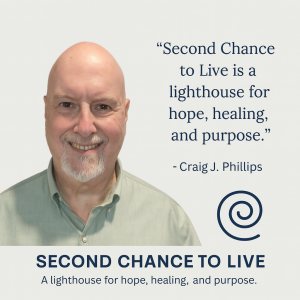
Craig J. Phillips Second Chance to Live mission portrait – hope, healing, and purpose.
Click the image to read about the mission and vision of Second Chance to Live.
June 2025
M T W T F S S
 1
2345678
9101112131415
16171819202122
23242526272829
30  
« May   Jul »

Translate Second Chance to Live

Albanian Arabic Bulgarian Catalan Chinese Simplified Chinese Traditional Croatian Czech Danish Dutch Estonian Filipino Finnish French Galician German Greek Hebrew Hindi Hungarian Indonesian Italian Japanese Korean Lativian Lithuanian Maltese Norwegian Polish Portuguese Romanian Russian Serbian Slovak Slovenian Spanish Swedish Thai Turkish Ukrainian Vietnamese

Contact card

Copyright © 2026 · All rights reserved. · Sitemap

Manage Consent
To provide the best experiences, we use technologies like cookies to store and/or access device information. Consenting to these technologies will allow us to process data such as browsing behavior or unique IDs on this site. Not consenting or withdrawing consent, may adversely affect certain features and functions.
Functional Always active
The technical storage or access is strictly necessary for the legitimate purpose of enabling the use of a specific service explicitly requested by the subscriber or user, or for the sole purpose of carrying out the transmission of a communication over an electronic communications network.
Preferences
The technical storage or access is necessary for the legitimate purpose of storing preferences that are not requested by the subscriber or user.
Statistics
The technical storage or access that is used exclusively for statistical purposes. The technical storage or access that is used exclusively for anonymous statistical purposes. Without a subpoena, voluntary compliance on the part of your Internet Service Provider, or additional records from a third party, information stored or retrieved for this purpose alone cannot usually be used to identify you.
Marketing
The technical storage or access is required to create user profiles to send advertising, or to track the user on a website or across several websites for similar marketing purposes.
  • Manage options
  • Manage services
  • Manage {vendor_count} vendors
  • Read more about these purposes
View preferences
  • {title}
  • {title}
  • {title}
Manage Consent

To offer the best experience, we use privacy-respecting technologies like cookies to understand how our site is used. We never use tracking to exploit or overwhelm you. Your consent allows us to improve how we support individuals living with brain injuries, invisible disabilities, and trauma. You are free to accept, decline, or adjust your preferences. 

Functional Always active
The technical storage or access is strictly necessary for the legitimate purpose of enabling the use of a specific service explicitly requested by the subscriber or user, or for the sole purpose of carrying out the transmission of a communication over an electronic communications network.
Preferences
The technical storage or access is necessary for the legitimate purpose of storing preferences that are not requested by the subscriber or user.
Statistics
The technical storage or access that is used exclusively for statistical purposes. The technical storage or access that is used exclusively for anonymous statistical purposes. Without a subpoena, voluntary compliance on the part of your Internet Service Provider, or additional records from a third party, information stored or retrieved for this purpose alone cannot usually be used to identify you.
Marketing
The technical storage or access is required to create user profiles to send advertising, or to track the user on a website or across several websites for similar marketing purposes.
  • Manage options
  • Manage services
  • Manage {vendor_count} vendors
  • Read more about these purposes
View preferences
  • {title}
  • {title}
  • {title}