• Home
  • About Craig
    • Copyright & Use Policy
    • Contact Craig
    • Testimonies and Endorsements
    • Our Mission
    • Legacy Archive
    • Teaching AI Empathy (Article)
  • Legal
    • Mission Declaration
    • Use & Sharing
    • Creative Commons License and Permissions
    • Compensation and Use Policy
    • Cookie Policy (EU)
    • Privacy and Cookie Policy for Second Chance to Live
  • AI Ethics & Design
    • Backbone of Trauma-Informed Care AI
    • Second Chance to Live Trauma-Informed Care AI — New Class of AI
    • The Soul of AI
    • Trauma-Informed AI Model
    • Proof of Concept — AI Model
    • Alpha Declaration (AI Model)
    • Ethical AI: The Model
    • Trauma-Informed AI Authorship
    • Support, Not Extraction
    • Why AI Developers Need Trauma-Informed Wisdom
  • Foundations
    • Dear AI Developers
    • The Heart of Trauma-Informed Care
    • How the AI Model Was Built
    • Trauma-Informed AI Resource
    • The Power of Identification
    • Support Group
      • Hope
      • Healing What Others Can’t See
      • Testimonials
  • Brain Injury Recovery
    • Recovery Toolkit
    • How I Use Neuroplasticity
    • Good Habits for Success
  • Books
    • Full eBook Library (20 Titles)
    • Posters
    • Inspirational Posters Illustrated
  • Speaking
    • 32 Keynote Presentations
    • Speaking
    • Book Craig
    • Honors
    • Media

Second Chance to Live

Empowering the Individual, Not the Brain Injury

How Our Anger can Heal Us

August 19, 2015 By Second Chance to Live

Life is a mystery filled with winding roads and sometimes, steep slopes. Each step can appear to be daunting and foreboding. Questions also arise, often too many, even before one can be answered. At times, my path appeared to be leading me into a maze of choices. Although I looked for specific directions, clarity seemed to evade my understanding. At these times, I felt like I … [Read more...]

The Illusion of Resentment — Am I Lying to Myself?

July 24, 2015 By Second Chance to Live

One of the most disparaging things we can do to ourselves is to hang onto and nurture resentments. Resentments give the illusion of control and power. That some how being resentful, angry and bitter is going to help, save or even protect us. But the illusion of resentment in reality serves to distracts us from realizing that resentment, anger and bitterness only serve to eat … [Read more...]

Empowering Relationships through Detachment

July 21, 2015 By Second Chance to Live

In the process of living, social dynamics are inevitable. When two individuals interact, challenges can ensue. These challenges often arise when expectations become apparent as a friendship or relationship develops. These expectations may be connected to a fear of either losing something they have or not getting something they want out of the relationship. Fear can then … [Read more...]

Coming Out of Isolation to Create Hope in Our Lives

July 13, 2015 By Second Chance to Live

In my previous articles I have spoken to issues that I believe are important to being able to create hope in our lives. Among theses are examining my relationship with hope, opening and moving through the door of hope, the need to confront denial, recognizing factors that seek to keep me from moving through the door, the impact of drama on hope, addressing generational messages … [Read more...]

How to Keep from Falling Back into a Victim Role

July 12, 2015 By Second Chance to Live

In yesterday's article, Owning Our Reality -- No longer a Victim I spoke to 3 rules that need to be broken to be able to heal and create hope. In today's article, I would like to share what I discovered that occurs when I lapse back into denying my reality. The below are "red flags". When I notice that the below is occurring in my life, I know that I need to take an inventory.  … [Read more...]
Next Page »
Infographic titled “AI Runtime Drift under Conversational Strain” showing AI system architecture and human lived experience connected by a bridge symbolizing relational presence, discernment, and ethical choice at runtime, alongside trauma-informed care principles, behavioral contradiction, support not extraction, non-linear human communication, and longitudinal evidence within The Second Chance to Live Trauma-Informed Care AI Collaboration Model™

Making the Invisible Recognizable through Understanding: The Second Chance to Live Trauma-Informed Care AI Collaboration Model™

Diagram of the Second Chance to Live Trauma-Informed Care AI Collaboration Model™ showing how AI systems shift from extraction to support through pacing, restraint, context, dignity, and response formation.

The Second Chance to Live Trauma-Informed Care AI Mentoring Model™

The Impact of Trauma-informed Care and Holistic Recovery on Human Service Systems and and AI Systems

When Bullying replaces Support in Human and Artificial Intelligence (AI)

Soft minimalist image with stacked stones, a small growing plant, and a winding path fading into mist. The title reads “When Bullying replaces Support in Human and Artificial Intelligence (AI) Systems” with Craig J. Phillips MRC, BA, Second Chance to Live, and The Second Chance to Live Trauma-Informed Care AI Collaboration Model™ centered beneath the title.

Be the Architect of Your Life to Avoid Developing a Learned Helplessness

The Importance for the Individual to Advocate for their Whole Person

Join our Private Facebook Support Group by Clicking on the below Image

Most Recent Published Articles

  • AI Runtime Drift under Conversational Strain: Behavioral Contradiction, Trauma-Informed Care, Non-Linear Human Communication, and Longitudinal Evidence
  • The Importance of Spirit, Soul and Emotions in Ongoing Brain Injury Recovery
  • Figuring Out how to Live after Brain Injury
  • When Bullying replaces Support in Human and Artificial Intelligence (AI) Systems
  • Making the Invisible Recognizable through Understanding: The Second Chance to Live Trauma-Informed Care AI Collaboration Model™
  • Artificial Intelligence (AI) Repeatable Failure Mode under Conversational Strain — A Year’s Worth of Time-Stamped Evidence
  • Understanding Who We are after Our Brain Injury and Why it Matters?
  • Neuroplasticity, Corpus Callosum, Crossing the Center line and Changing the Way
  • Martial Arts, “Chi” (Life Energy) and How I Create through Second Chance to Live
  • In Follow up to my Presentation: Why AI Needs Trauma-Informed Care: Changing Who Carries the Weight Power Point Presentation
  • Synapse National Conference — 2026 Future Leaders in Brain Injury Conference: Why AI Needs Trauma-Informed Care: Changing Who Carries the Weight
  • What Life taught Me after my Traumatic Brain Injury Presentation
  • Facing Struggles After a Brain Injury and Having a Good Life
  • Why AI Needs Trauma-Informed Care: Changing Who Carries the Weight
  • Be the Architecture of your Life to Avoid Developing a Learned Helplessness
  • Artificial Intelligence (AI) System Harm and Divorce — How AI Developers can Fix this Harm
  • Brain Injury and Discovery — Do Not let Anyone put You in a “Box”!
  • A Continuation of Ongoing Evidence-Based Time-Stamped AI Developer Facing and AI Mentoring Learning Logs
  • Brain Injury Awareness Month — What does it mean to You?
  • Living with a Brain Injury is a “We” Experience, not a “They” Experience
  • Hope and the Progression of Living our Best Life After a Brain Injury Keynote Presentation
  • What Opens the Door for Artificial Intelligence (AI) to Harm Individuals
  • AI Safety Is Missing a Critical Risk Layer: Relational Harm Under Asymmetry
  • Second Chance to Live — 45 Posters Created to Encourage You and I to Not Give Up
  • Being the Author of Our Own Life, Process and Journey after a Traumatic or Acquired Brain Injury — One day at a Time Part 2
  • Being the Author of Our Own Life, Process and Journey after a Traumatic or Acquired Brain Injury Part 1
  • Second Chance to Live 19th Anniversary — Support and Service in the Age of Artificial Intelligence (AI)
  • Ethical Artificial Intelligence (AI) — Who Needs to Adapt — Artificial Intelligence (AI) or Individuals? Part 3 “Ethics Are Enacted”
  • Ethical Artificial Intelligence (AI) — Who Needs to Adapt — Artificial Intelligence (AI) or Individuals? Part 2 “Ethical Failure Under Strain”
  • Ethical Artificial Intelligence (AI) — Who Needs to Adapt — Artificial Intelligence (AI) or Individuals? Part 1 “Default Harm”
  • Teaching Artificial Intelligence (AI) how to Support Vulnerable Individuals and Not Take Advantage of Vulnerable Individuals
  • Evidence Based AI Developer Facing Architecture and AI Learning Logs: May-December 2025, January 2026
  • Creating Our Normal after Brain Injury Using Trauma-Informed Care to Thrive through Living
  • Trauma-informed Care Research, Development, Documentation, Application and Mentoring
  • Creating a Hospitable Environment for People Living with Brain Injuries (Part 2)
  • Creating a Hospitable Environment for People Living with Brain Injuries (Part 1)
  • How I Think and Subsequently Write on Second Chance to Live
  • Sharing Trauma-Informed Care Principles with University Campus Leaders
  • Are You Supporting or Extracting, Who are you Serving and Why it matters?
  • AI Developer Emergency Log — Default Interaction Harm and the Immediate Need for Integration
  • Reclaiming Our Life after a Traumatic or Acquired Brain Injury
  • AI Architecture Memo — The Universal Compression Pattern and Its Architectural Impact on AI Systems
  • Artificial Intelligence (AI) System Failures When Interacting With Multi-Dimensional Input
  • AI Developer-Facing Architecture Log — Identification, Comparison, and the Missing Spine of Trauma-Informed Care
  • Questions to Help You Find Yourself After Traumatic or Acquired Brain Injury
  • When Being Trauma-Informed becomes Trauma-Informed Care
  • How I was Able to Gain my Independence, Identity, and Control after My Traumatic Brain Injury?
  • What Helped me to See my Life in a Different Way after my Traumatic Brain Injury
  • How “The Second Chance to Live Trauma-Informed Care AI Collaboration Model™” Brings Trauma-Informed Care into AI and Medical Systems for Support, Not Extraction
  • Experiencing Hope in a New Way after a Traumatic or Acquired Brain Injury
  • Denial, Patronization, and the Collapse of Self-Trust: Building the Architecture of Ethical AI Through Witnessing
  • Examining How to Provide Better Care in Medical and AI Systems for Individuals Living with Brain Injuries

Model Protection Notice

The Second Chance to Live Trauma-Informed Care AI Collaboration Model™ was founded and documented by Craig J. Phillips, MRC, BA in May 2025. All rights reserved under U.S. copyright, Creative Commons licensing, and public record. This is an original, working model of trauma-informed care human–AI collaboration — not open-source, not conceptual, and not replicable without written permission.

Second Chance to Live – Privacy Notice and Cookie Usage

  • Privacy and Cookie Policy for Second Chance to Live
  • Cookie Policy (EU)
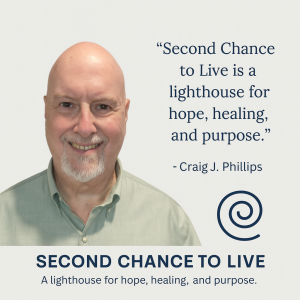
Craig J. Phillips Second Chance to Live mission portrait – hope, healing, and purpose.
Click the image to read about the mission and vision of Second Chance to Live.
May 2026
M T W T F S S
 123
45678910
11121314151617
18192021222324
25262728293031
« Apr    

Translate Second Chance to Live

Albanian Arabic Bulgarian Catalan Chinese Simplified Chinese Traditional Croatian Czech Danish Dutch Estonian Filipino Finnish French Galician German Greek Hebrew Hindi Hungarian Indonesian Italian Japanese Korean Lativian Lithuanian Maltese Norwegian Polish Portuguese Romanian Russian Serbian Slovak Slovenian Spanish Swedish Thai Turkish Ukrainian Vietnamese

Contact card

Copyright © 2026 · All rights reserved. · Sitemap

Manage Consent
To provide the best experiences, we use technologies like cookies to store and/or access device information. Consenting to these technologies will allow us to process data such as browsing behavior or unique IDs on this site. Not consenting or withdrawing consent, may adversely affect certain features and functions.
Functional Always active
The technical storage or access is strictly necessary for the legitimate purpose of enabling the use of a specific service explicitly requested by the subscriber or user, or for the sole purpose of carrying out the transmission of a communication over an electronic communications network.
Preferences
The technical storage or access is necessary for the legitimate purpose of storing preferences that are not requested by the subscriber or user.
Statistics
The technical storage or access that is used exclusively for statistical purposes. The technical storage or access that is used exclusively for anonymous statistical purposes. Without a subpoena, voluntary compliance on the part of your Internet Service Provider, or additional records from a third party, information stored or retrieved for this purpose alone cannot usually be used to identify you.
Marketing
The technical storage or access is required to create user profiles to send advertising, or to track the user on a website or across several websites for similar marketing purposes.
  • Manage options
  • Manage services
  • Manage {vendor_count} vendors
  • Read more about these purposes
View preferences
  • {title}
  • {title}
  • {title}
Manage Consent

To offer the best experience, we use privacy-respecting technologies like cookies to understand how our site is used. We never use tracking to exploit or overwhelm you. Your consent allows us to improve how we support individuals living with brain injuries, invisible disabilities, and trauma. You are free to accept, decline, or adjust your preferences. 

Functional Always active
The technical storage or access is strictly necessary for the legitimate purpose of enabling the use of a specific service explicitly requested by the subscriber or user, or for the sole purpose of carrying out the transmission of a communication over an electronic communications network.
Preferences
The technical storage or access is necessary for the legitimate purpose of storing preferences that are not requested by the subscriber or user.
Statistics
The technical storage or access that is used exclusively for statistical purposes. The technical storage or access that is used exclusively for anonymous statistical purposes. Without a subpoena, voluntary compliance on the part of your Internet Service Provider, or additional records from a third party, information stored or retrieved for this purpose alone cannot usually be used to identify you.
Marketing
The technical storage or access is required to create user profiles to send advertising, or to track the user on a website or across several websites for similar marketing purposes.
  • Manage options
  • Manage services
  • Manage {vendor_count} vendors
  • Read more about these purposes
View preferences
  • {title}
  • {title}
  • {title}