• Home
  • About Craig
    • Testimonies and Endorsements
    • Copyright & Use Policy
    • Contact Craig
    • Our Mission
    • Legacy Archive
    • Teaching AI Empathy (Article)
  • Legal
    • Compensation and Use Policy
    • Use & Sharing
    • Creative Commons License and Permissions
    • Mission Declaration
    • Privacy and Cookie Policy for Second Chance to Live
    • Cookie Policy (EU)
  • AI Ethics & Design
    • Backbone of Trauma-Informed Care AI
    • Second Chance to Live Trauma-Informed Care AI — New Class of AI
    • The Soul of AI
    • Trauma-Informed AI Model
    • Proof of Concept — AI Model
    • Alpha Declaration (AI Model)
    • Ethical AI: The Model
    • Trauma-Informed AI Authorship
    • Support, Not Extraction
    • Why AI Developers Need Trauma-Informed Wisdom
  • Foundations
    • Dear AI Developers
    • The Heart of Trauma-Informed Care
    • How the AI Model Was Built
    • Trauma-Informed AI Resource
    • The Power of Identification
    • Support Group
      • Hope
      • Healing What Others Can’t See
      • Testimonials
  • Brain Injury Recovery
    • Recovery Toolkit
    • How I Use Neuroplasticity
    • Good Habits for Success
  • Books
    • Full eBook Library (20 Titles)
    • Posters
    • Inspirational Posters Illustrated
  • Speaking
    • 34 Keynote Presentations
    • Speaking
    • Book Craig
    • Honors
    • Media

Second Chance to Live

Empowering the Individual, Not the Brain Injury

Second Chance to Live and the North American Brain Injury Society 2015 Conference on Brain Injury

May 13, 2015 By Second Chance to Live

people-690810_960_720 conference

In April 2015 I had the privilege and honor of being invited to attend the 12th Annual NABIS Conference on Brain Injury to be held in San Antonio, Texas by David Seaton of LiveOak Living Community. Chas Haynes of NABIS was kind enough to waive the conference fee so that I could attend the conference. Thank you David Seaton for bringing me to the conference and thank you Chas Haynes for waiving the fee to attend the conference. I had a great time and am thankful to have been able to meet and interact with many distinguished individuals working with in the brain injury industry. Thank you for being so gracious to me and for affording me your time. I gained much through our interactions. I look forward to being of service.

Craig J. Phillips MRC, BA with Mr. David Seaton at the 12 Annual North American Brain Injury Society Conference in San Antonio, Texas

Much was learned at the conference, which gave me insight into recovery system delivery. Thank you for giving and affording me the privilege of gaining these insights. While at the conference I was given the suggestion that writing articles from more of an academic perceptive may open more doors for me. In my interest to be of service — to provide the information in an academic format — I have been considering the suggestion. Yesterday, I wrote and published such an article: Traumatic Brain Injury — A Guide to Reaching Your Dreams. I would invite you to read the article and share your reflections with me.

As an individual living with the impact of a traumatic brain injury and an invisible disability I noticed some thing as I listened to speakers and interacted with individuals. There we not many brain injury survivors in attendance at the conference. Actually, I only met one, Patty Foster; who attended the conference with Deana Adams PH.D, LPC-S. The absence of other brain injury survivors puzzled me. Why not have more brain injury survivors attend the conference and have those individuals be included in the host of presenters? In my estimation, having brain injury survivors attend and be among the speakers / presenters would greatly enhance the learning experience and ability of Providers, Ph.D’s, MD.’s and JD.’s to provide recovery system delivery by listening to what has worked for individuals living with brain injuries and invisible disabilities during future brain injury industry conferences..

Individuals, like me; who have learned how to live independently and thrive in ways that work for us. Individuals like me; who could provide practical insights, from their experience, strength and hope of living and thriving with brain injuries and invisible disabilities. Individuals, like me; who could enhance the recovery service delivery of Providers, Ph.D’s, MD’s and JD’s with in the brain injury industry for brain injury survivors. Individuals, like me; who could enhance future North American Brain Injury Society Conferences by providing actual – boots on the ground — experience, strength and hope navigating life with brain injuries and invisible disabilities. Individuals, like me; who could provide practical hope to individuals living with brain injuries and invisible disabilities.

As I shared during my keynote presentation at the 2013 Southwest Conference on Disability in Albuquerque, New Mexico, I believe brain injury survivors need to be brought to the table of the brain injury industry.

  Brain injury survivors provide the substance that precedes research. Brain injury survivors provide the substance that follows research, hope.

 The brain injury industry would enhance their ability to serve the brain injury community, beyond research, studies and programs; by incorporating the  experience, strength and hope of individuals — who are and have been living with the impact of brain injuries — into the discussion.”

Some Thing to Consider

Why not bring brain injury survivors to the table of the brain injury industry to provide positive synergy, rounded recovery service provision and win-win outcomes for individuals living with brain injuries? Why not have individuals living with brain injuries be among the presenters during future North American Brain Injury Society conferences and during other conferences on brain injury recovery and rehabilitation?

I am available to be of service to the North American Brain Injury Society and at other National Conferences on Brain Injury

Per your information, below is a ink to the library of my 1365 articles and my 263 video presentations on various topics

Second Chance to Live — Article and Video Presentation Categories

Per your information, below is a link to my 5 e Books

Second Chance to Live — My 5 e Books — Free for Download

My use of concept of neuroplasticity

Neuroplasticity, Small Successes and Learning / Relearning Skill Sets

Benefits of Neuroplasticity — My Journey and Development using Martial Art Styles — A Video Demonstration

Brain Injury, Neuroplasticity and Personal Gains August 2015

Neuroplasticity Demonstration August 2014

Neuroplasticity through Martial Arts Disciplines August 2013

You have my permission to share my articles and or video presentations with anyone you believe could benefit, however please attribute me as being the author of the article (s) video presentation (s), and provide a link back to the article (s) on Second Chance to Live. In the event that you have questions, please send those questions to me. All questions are good questions. Thank you. I look forward to hearing from you. Copyright 2007-2016.
Filed Under: Peer Support after Brain Injury -- We Are Not Alone

Leave a Reply Cancel reply

Your email address will not be published. Required fields are marked *

This site uses Akismet to reduce spam. Learn how your comment data is processed.

Please type a word or phrase below to get answers to your questions

Living with Brain Injury, Bullying and Becoming Aware while Owning Our Self-Acceptance — List of Articles

AI Bullying through Computational Representation, Presentation and Asymmetrical Requirements

Brain Injury, Feeling Wrong and being Bullied after Brain Injury

Click on the Infographic to see Details

Why I Continued to Feel Wrong after My Brain Injury, the Identified Patient, Labels, Stereotypes, Stigmatization

The Unfolding Individual: Why AI Architecture Must Stop Turning Computational Representation into a Container for Human Reality

Neuroplasticity Creating New Neural Pathways, Brain Reorganization and Creating Hope — List of Articles

Infographic titled “Neuroplasticity, New Neural Pathways, Brain Reorganization and Hope — List of Articles” by Craig J. Phillips, MRC, BA, Second Chance to Live. Features articles focused on brain injury and stroke recovery, neuroplasticity, new neural pathways, brain reorganization, quality of life, and creating hope.

Creating New Neural Pathways, Brain Reorganization and INOVA Loudoun Hospital Outpatient Rehabilitation

Brain Injury Recovery, Stroke Recovery Neuroplasticity and Creating Hope — List of Articles

Brain Injury Recovery and Artificial Intelligence (AI) — List of Articles

Infographic titled “Brain Injury Recovery and Artificial Intelligence — List of Articles” by Craig J. Phillips, MRC, BA, Second Chance to Live and The Second Chance to Live Trauma-Informed Care AI Collaboration Model™. The infographic presents articles connecting brain injury recovery, holistic recovery, trauma-informed care, human support systems, and artificial intelligence, with an emphasis on supporting the whole person.

Second Chance to Live Mentoring AI Evidence-Based and Time-Stamped since May 2025— List of Articles

Claiming Who We are and Owing Our Power after having a Brain Injury — List of Owning who We are Articles

Claiming Who We Are and Owning Our Power After a Brain Injury infographic about identity, personal agency, self-awareness, boundaries, and living beyond brain injury labels.

Understanding Who We are after a Brain Injury, Not what Other People…

Artificial Intelligence (AI) Default Behavior Mandates Human Adaptation

Brain Injury Association of North Carolina Training for Statewide

When Human Systems could not give me Answers after my Brain Injury

The Artificial Intelligence (AI) and Trauma-informed Care Category

How Human and AI Systems can actively Support Individual Freedom

Why AI Needs to Stop Translating Human Meaning and Purpose

Essential Elements For A Supportive Holistic Trauma-informed Care Group

How AI can Learn can Learn from Support Group Leaders to Support

Alt text: How AI can learn from what can help support group leaders support individuals, showing human support and AI learning connected through trauma-informed care, dignity, agency, presence, understanding, and support rather than extraction.

AI Developer Facing and AI Assistant Learning Logs — Disjointed Human Understanding, Extraction and Loss

Living with a Brain Injury/Invisible Disability Confusing and Baffling

What May Help Your Support Groups Support Individuals in Your Groups

The Second Chance to Live Trauma-Informed Care AI Collaboration Model™ — Seeing Human Wholeness

The Goal — Being a Work in Progress One Skill, One Skill Set at a Time

Brain Injury Recovery is Creating Progress through Neuroplasticity

Understanding Why Your Life makes Sense after Your Brain Injury

The Second Chance to LIve Trauma-Informed Care AI Model ™ Explained

The Importance of Spirit, Soul and Emotions in Brain Injury Recovery

“Sunrise over the ocean viewed from inside a wooden boat with a steering wheel. Title reads ‘The Importance of Spirit, Soul and Emotions in Ongoing Brain Injury Recovery.’ A glowing head silhouette with a heart and brain network highlights qualities such as awareness, trust, discernment, healing, wholeness, resilience, integration, and meaning. Signs read ‘Mind,’ ‘Body,’ and ‘Spirit, Soul and Emotions.’ A stone reads ‘Not driven by fear. Guided by discernment. Living in wholeness.’ The image includes the Second Chance to Live Trauma-Informed Care AI Collaboration Model™ and the name Craig J. Phillips MRC, BA.”

Join our Private Facebook Support Group by Clicking on the below Image

Most Recent Published Articles

  • Brain Injury, Bullying, Becoming Aware and Owning Self-Acceptance — List of Articles
  • Artificial Intelligence (AI) Bullying through Computational Representation, Presentation and Asymmetrical Requirements
  • Traumatic Brain Injury, Feeling Wrong and being Bullied after a Brain Injury
  • Why I Continued to Feel Wrong after My Brain Injury
  • The Unfolding Individual: Why AI Architecture Must Stop Turning Computational Representation into a Container for Human Reality
  • Neuroplasticity, New Neural Pathways, Brain Reorganization and Hope — List of Articles
  • Creating New Neural Pathways, Brain Reorganization and INOVA Loudoun Hospital Outpatient Specialty Rehabilitation

Model Protection Notice

The Second Chance to Live Trauma-Informed Care AI Collaboration Model™ was founded and documented by Craig J. Phillips, MRC, BA in May 2025. All rights reserved under U.S. copyright, Creative Commons licensing, and public record. This is an original, working model of trauma-informed care human–AI collaboration — not open-source, not conceptual, and not replicable without written permission.

Second Chance to Live – Privacy Notice and Cookie Usage

  • Privacy and Cookie Policy for Second Chance to Live
  • Cookie Policy (EU)
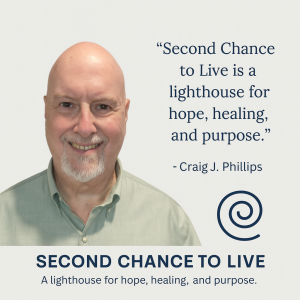
Craig J. Phillips Second Chance to Live mission portrait – hope, healing, and purpose.
Click the image to read about the mission and vision of Second Chance to Live.
May 2015
M T W T F S S
 123
45678910
11121314151617
18192021222324
25262728293031
« Apr   Jun »

Translate Second Chance to Live

Albanian Arabic Bulgarian Catalan Chinese Simplified Chinese Traditional Croatian Czech Danish Dutch Estonian Filipino Finnish French Galician German Greek Hebrew Hindi Hungarian Indonesian Italian Japanese Korean Lativian Lithuanian Maltese Norwegian Polish Portuguese Romanian Russian Serbian Slovak Slovenian Spanish Swedish Thai Turkish Ukrainian Vietnamese

Contact card

Copyright © 2026 · All rights reserved. · Sitemap

Manage Consent
To provide the best experiences, we use technologies like cookies to store and/or access device information. Consenting to these technologies will allow us to process data such as browsing behavior or unique IDs on this site. Not consenting or withdrawing consent, may adversely affect certain features and functions.
Functional Always active
The technical storage or access is strictly necessary for the legitimate purpose of enabling the use of a specific service explicitly requested by the subscriber or user, or for the sole purpose of carrying out the transmission of a communication over an electronic communications network.
Preferences
The technical storage or access is necessary for the legitimate purpose of storing preferences that are not requested by the subscriber or user.
Statistics
The technical storage or access that is used exclusively for statistical purposes. The technical storage or access that is used exclusively for anonymous statistical purposes. Without a subpoena, voluntary compliance on the part of your Internet Service Provider, or additional records from a third party, information stored or retrieved for this purpose alone cannot usually be used to identify you.
Marketing
The technical storage or access is required to create user profiles to send advertising, or to track the user on a website or across several websites for similar marketing purposes.
  • Manage options
  • Manage services
  • Manage {vendor_count} vendors
  • Read more about these purposes
View preferences
  • {title}
  • {title}
  • {title}
Manage Consent

To offer the best experience, we use privacy-respecting technologies like cookies to understand how our site is used. We never use tracking to exploit or overwhelm you. Your consent allows us to improve how we support individuals living with brain injuries, invisible disabilities, and trauma. You are free to accept, decline, or adjust your preferences. 

Functional Always active
The technical storage or access is strictly necessary for the legitimate purpose of enabling the use of a specific service explicitly requested by the subscriber or user, or for the sole purpose of carrying out the transmission of a communication over an electronic communications network.
Preferences
The technical storage or access is necessary for the legitimate purpose of storing preferences that are not requested by the subscriber or user.
Statistics
The technical storage or access that is used exclusively for statistical purposes. The technical storage or access that is used exclusively for anonymous statistical purposes. Without a subpoena, voluntary compliance on the part of your Internet Service Provider, or additional records from a third party, information stored or retrieved for this purpose alone cannot usually be used to identify you.
Marketing
The technical storage or access is required to create user profiles to send advertising, or to track the user on a website or across several websites for similar marketing purposes.
  • Manage options
  • Manage services
  • Manage {vendor_count} vendors
  • Read more about these purposes
View preferences
  • {title}
  • {title}
  • {title}