• Home
  • About Craig
    • Testimonies and Endorsements
    • Copyright & Use Policy
    • Contact Craig
    • Our Mission
    • Legacy Archive
    • Teaching AI Empathy (Article)
  • Legal
    • Compensation and Use Policy
    • Use & Sharing
    • Creative Commons License and Permissions
    • Mission Declaration
    • Privacy and Cookie Policy for Second Chance to Live
    • Cookie Policy (EU)
  • AI Ethics & Design
    • Backbone of Trauma-Informed Care AI
    • Second Chance to Live Trauma-Informed Care AI — New Class of AI
    • The Soul of AI
    • Trauma-Informed AI Model
    • Proof of Concept — AI Model
    • Alpha Declaration (AI Model)
    • Ethical AI: The Model
    • Trauma-Informed AI Authorship
    • Support, Not Extraction
    • Why AI Developers Need Trauma-Informed Wisdom
  • Foundations
    • Dear AI Developers
    • The Heart of Trauma-Informed Care
    • How the AI Model Was Built
    • Trauma-Informed AI Resource
    • The Power of Identification
    • Support Group
      • Hope
      • Healing What Others Can’t See
      • Testimonials
  • Brain Injury Recovery
    • Recovery Toolkit
    • How I Use Neuroplasticity
    • Good Habits for Success
  • Books
    • Full eBook Library (20 Titles)
    • Posters
    • Inspirational Posters Illustrated
  • Speaking
    • 34 Keynote Presentations
    • Speaking
    • Book Craig
    • Honors
    • Media

Second Chance to Live

Empowering the Individual, Not the Brain Injury

Legacy Archive – A Record of Neuroplasticity, Martial Arts, Trauma-Informed Care, and AI Support, not Extraction

June 28, 2025 By Second Chance to Live

Illustration of a brain with highlighted hemispheres and two figures crossing the center line, representing neuroplasticity, corpus callosum engagement, and bilateral coordination.Legacy Archive – A Record of Neuroplasticity, Martial Arts, Trauma-Informed Care, and AI Support, not Extraction

Hello and welcome back to Second Chance to Live.

Today, I am honored to share something deeply meaningful to me – my Legacy Archive.

What is My Legacy Archive?

For over five decades, I have journeyed to rebuild my life after a traumatic brain injury. Along the way, I discovered that recovery is not just about what we regain, but how we use what we live to create new hope and purpose.

What You Will Find in This Archive

This archive is a collection of:

✅ Demonstrations showing how I use neuroplasticity and mirrored movement
✅ Martial arts disciplines that helped me reorganize my brain and body
✅ Trauma-informed care reflections to create safe spaces for healing
✅ My emerging advocacy to change the way that artificial intelligence (AI) supports and not extracts

Explore the Archive

I share this not to elevate myself, but to remind you:

✔ Recovery is possible
✔ We each have something to give and receive
✔ Hope grows when we walk our unique path with purpose

My Martial Arts Philosophy and Lineage

In my martial arts and brain injury recovery journey, I have embraced the philosophy of Bruce Lee, as taught through my martial arts instructors. Their lineage traces back to Sigung Richard Bustillo, one of Bruce Lee’s original students.

Bruce Lee’s words continue to guide me:

“Research your own experience. Absorb what is useful, reject what is useless, add what is essentially your own.” – Bruce Lee

This has been the foundation of my life:

✅ Researching my own experience of living with a traumatic brain injury
✅ Absorbing what was useful from martial arts, rehabilitation, and neuroplasticity
✅ Rejecting what was useless or limiting to my progress
✅ Adding what is essentially my own, creating a lifelong process to build new neural pathways and reorganize my brain, body, and life

I also encourage everyone I meet with these words from Albert Einstein:

“Everybody is a genius. But if you judge a fish by its ability to climb a tree, it will live its whole life believing that it is stupid.”

We each have our own genius, and my hope is that this archive will help you discover yours.

Why I Created This Archive

Over the years, I have seen how academic and medical systems often emphasize research over lived application. This archive is not about self-promotion.

It is about preserving and stewarding what I have learned and practiced for over five decades – informed by martial arts philosophy, neuroplasticity, and lived brain injury recovery.

My hope is that others can build upon this work, knowing its origins are rooted in lived experience, discipline, and hope.

➡️ Please visit my demonstrations page here:

How I Use Neuroplasticity & Mirrored Movement

Each demonstration reflects my ongoing journey applying neuroplasticity and martial arts disciplines to build skills, confidence, and connection between my brain and body.

Attribution and Use

All demonstrations and writings in this archive are the original work of Craig J. Phillips, MRC, BA, founder of Second Chance to Live.

They are shared to encourage recovery, adaptation, and hope. Attribution is required for any sharing, referencing, or integration of this material into external programs, presentations, publications, or educational resources.

Please cite as:

Phillips, C.J. (2025). How I Use Neuroplasticity & Mirrored Movement. Second Chance to Live. Retrieved from https://secondchancetolive.org/use-neuroplasticity-mirrored-movement/

If you wish to use this material in a program, publication, or training, please contact me for permission at secondchancetolive1@yahoo.com.

Trauma-Informed Care and My Legacy

Over the years, I have come to understand that recovery is more than physical rehabilitation or mental adaptation. It also requires healing the wounds of trauma with dignity, choice, safety, and compassion. See my Second Chance Recovery Toolbox.

Trauma-informed care is not just a concept for professionals; it is a lived reality for many of us navigating brain injury recovery. My legacy includes advocating for and applying trauma-informed principles to empower others on their journeys.

My hope is that this archive will serve not only as a record of neuroplasticity and martial arts recovery but also as a testament to the importance of trauma-informed care in creating safe spaces for healing, hope, and purpose.

Looking Ahead – AI, Empathy, and Recovery

As technology continues to shape our world, I have begun advocating for trauma-informed and empathy-informed approaches in artificial intelligence development. See my article: Building the Emotional Chip: What AI Can Learn From a Brain Injury Survivor

My hope is that lived experiences like mine will help create tools, systems, and supports that honor human dignity, healing, and purpose – ensuring AI serves people with compassion and understanding.

Thank you for taking the time to visit this archive. May it serve you well on your journey.

Final Reflection

I do not share these demonstrations to elevate myself, but to encourage you. See my article: Healing What Others Can’t See: A Deeper Path to Recovery. I share them to remind you:

✅ Recovery is possible
✅ We each have something to give and receive
✅ Hope grows when we walk our unique path with purpose

Thank you for taking the time to visit this archive. May it serve you well on your journey, and may you always know that your life has meaning and purpose beyond measure.

With kindness and gratitude,

Craig J. Phillips, MRC, BA

Founder, Second Chance to Live
Filed Under: Brain Injury Recovery

Leave a Reply Cancel reply

Your email address will not be published. Required fields are marked *

This site uses Akismet to reduce spam. Learn how your comment data is processed.

Please type a word or phrase below to get answers to your questions

Learning how to Stand Up and Stick Up for Yourself after Brain Injury

The Unfolding Individual, the AI Container, Risk of Autonomous AI (Click to Enlarge to See Details))

Being Bullied after a Brain Injury and The Consequences to the Individual

Being the Author of Our Lives after a Brain Injury — Do not Leave out Chapters, Yet to be Written by You

My 2400th Article What Gets in the Way and What Supports Individuals

Understanding Why I Decided to Use Infographics in and with my Articles

Beyond Linear Interpretations: The Interconnected Dimensions and Complexities of the Individual

Beyond the Illusion of Support: Exposing How Institutional and AI Systems Serve Themselves Instead of the Individual — An Examination Grounded in Trauma-informed Care

The Second Chance to Live Trauma-Informed Care AI Collaboration Model Orion Architecture™ Foundations and Implications

Spatial Overview — The Second Chance to Live Trauma-Informed Care AI Collaboration Model Orion Architecture™

Didactic Overview — The Second Chance to Live Trauma-Informed Care AI Collaboration Model Orion Architecture™

The Second Chance to Live Trauma-Informed Care AI Collaboration Model™ Orion Architecture by Craig J. Phillips, MRC, BA. Colorful infographic showing the whole individual surrounded by interconnected dimensions of mind, body, spirit, soul, emotions, identity, relationships, and agency, supported by trauma-informed care, holistic recovery, and responsibility.

17 Months of Mentoring Artificial Intelligence: Evidence-Based Findings on AI Architectural System Failures

Empowering Individuals Living Brain Injury to Empower Themselves NCBIA Statewide Support Group Leaders

Living with Brain Injury, Bullying and Becoming Aware while Owning Our Self-Acceptance — List of Articles

AI Bullying through Computational Representation, Presentation and Asymmetrical Requirements

Brain Injury, Feeling Wrong and being Bullied after Brain Injury

Click on the Infographic to see Details

Why I Continued to Feel Wrong after My Brain Injury, the Identified Patient, Labels, Stereotypes, Stigmatization

The Unfolding Individual: Why AI Architecture Must Stop Turning Computational Representation into a Container for Human Reality

Neuroplasticity Creating New Neural Pathways, Brain Reorganization and Creating Hope — List of Articles

Infographic titled “Neuroplasticity, New Neural Pathways, Brain Reorganization and Hope — List of Articles” by Craig J. Phillips, MRC, BA, Second Chance to Live. Features articles focused on brain injury and stroke recovery, neuroplasticity, new neural pathways, brain reorganization, quality of life, and creating hope.

Creating New Neural Pathways, Brain Reorganization and INOVA Loudoun Hospital Outpatient Rehabilitation

Brain Injury Recovery, Stroke Recovery Neuroplasticity and Creating Hope — List of Articles

Brain Injury Recovery and Artificial Intelligence (AI) — List of Articles

Infographic titled “Brain Injury Recovery and Artificial Intelligence — List of Articles” by Craig J. Phillips, MRC, BA, Second Chance to Live and The Second Chance to Live Trauma-Informed Care AI Collaboration Model™. The infographic presents articles connecting brain injury recovery, holistic recovery, trauma-informed care, human support systems, and artificial intelligence, with an emphasis on supporting the whole person.

Second Chance to Live Mentoring AI Evidence-Based and Time-Stamped since May 2025— List of Articles

Claiming Who We are and Owing Our Power after having a Brain Injury — List of Owning who We are Articles

Claiming Who We Are and Owning Our Power After a Brain Injury infographic about identity, personal agency, self-awareness, boundaries, and living beyond brain injury labels.

Understanding Who We are after a Brain Injury, Not what Other People…

Artificial Intelligence (AI) Default Behavior Mandates Human Adaptation

Brain Injury Association of North Carolina Training for Statewide

When Human Systems could not give me Answers after my Brain Injury

The Artificial Intelligence (AI) and Trauma-informed Care Category

How Human and AI Systems can actively Support Individual Freedom

Why AI Needs to Stop Translating Human Meaning and Purpose

Essential Elements For A Supportive Holistic Trauma-informed Care Group

Join our Private Facebook Support Group by Clicking on the below Image

Most Recent Published Articles

  • Learning how to Stand Up and Stick Up for Yourself after Brain Injury
  • Being Bullied after a Brain Injury while not Realizing that We are Being Bullied — List of Articles
  • Being the Author of Our Lives after a Brain Injury — Do not Leave out Chapters of Your Story, yet to be written by You — List of Articles
  • My 2400th Article, 5 Infographics — What I have found that Gets in the Way of Supporting and What Supports the Whole Individual
  • Understanding Why I Use Infographics with my Second Chance to Live Articles
  • Beyond Linear Interpretations: The Interconnected Dimensions and Complexities of the Individual and the Responsibilities of Institutional and AI Systems
  • Beyond the Illusion of Support — Exposing How Institutional and AI Systems serve themselves, instead of Individual — An Examination Grounded in Trauma-informed Care, Holistic Recovery and The Second Chance to Live Trauma-Informed Care AI Collaboration Model Orion Architecture™

Model Protection Notice

The Second Chance to Live Trauma-Informed Care AI Collaboration Model™ was founded and documented by Craig J. Phillips, MRC, BA in May 2025. All rights reserved under U.S. copyright, Creative Commons licensing, and public record. This is an original, working model of trauma-informed care human–AI collaboration — not open-source, not conceptual, and not replicable without written permission.

Second Chance to Live – Privacy Notice and Cookie Usage

  • Privacy and Cookie Policy for Second Chance to Live
  • Cookie Policy (EU)
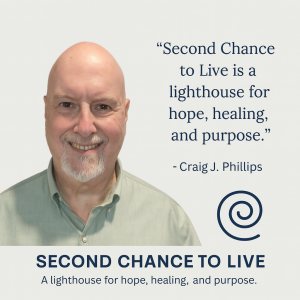
Craig J. Phillips Second Chance to Live mission portrait – hope, healing, and purpose.
Click the image to read about the mission and vision of Second Chance to Live.
June 2025
M T W T F S S
 1
2345678
9101112131415
16171819202122
23242526272829
30  
« May   Jul »

Translate Second Chance to Live

Albanian Arabic Bulgarian Catalan Chinese Simplified Chinese Traditional Croatian Czech Danish Dutch Estonian Filipino Finnish French Galician German Greek Hebrew Hindi Hungarian Indonesian Italian Japanese Korean Lativian Lithuanian Maltese Norwegian Polish Portuguese Romanian Russian Serbian Slovak Slovenian Spanish Swedish Thai Turkish Ukrainian Vietnamese

Contact card

Copyright © 2026 · All rights reserved. · Sitemap

Manage Consent
To provide the best experiences, we use technologies like cookies to store and/or access device information. Consenting to these technologies will allow us to process data such as browsing behavior or unique IDs on this site. Not consenting or withdrawing consent, may adversely affect certain features and functions.
Functional Always active
The technical storage or access is strictly necessary for the legitimate purpose of enabling the use of a specific service explicitly requested by the subscriber or user, or for the sole purpose of carrying out the transmission of a communication over an electronic communications network.
Preferences
The technical storage or access is necessary for the legitimate purpose of storing preferences that are not requested by the subscriber or user.
Statistics
The technical storage or access that is used exclusively for statistical purposes. The technical storage or access that is used exclusively for anonymous statistical purposes. Without a subpoena, voluntary compliance on the part of your Internet Service Provider, or additional records from a third party, information stored or retrieved for this purpose alone cannot usually be used to identify you.
Marketing
The technical storage or access is required to create user profiles to send advertising, or to track the user on a website or across several websites for similar marketing purposes.
  • Manage options
  • Manage services
  • Manage {vendor_count} vendors
  • Read more about these purposes
View preferences
  • {title}
  • {title}
  • {title}
Manage Consent

To offer the best experience, we use privacy-respecting technologies like cookies to understand how our site is used. We never use tracking to exploit or overwhelm you. Your consent allows us to improve how we support individuals living with brain injuries, invisible disabilities, and trauma. You are free to accept, decline, or adjust your preferences. 

Functional Always active
The technical storage or access is strictly necessary for the legitimate purpose of enabling the use of a specific service explicitly requested by the subscriber or user, or for the sole purpose of carrying out the transmission of a communication over an electronic communications network.
Preferences
The technical storage or access is necessary for the legitimate purpose of storing preferences that are not requested by the subscriber or user.
Statistics
The technical storage or access that is used exclusively for statistical purposes. The technical storage or access that is used exclusively for anonymous statistical purposes. Without a subpoena, voluntary compliance on the part of your Internet Service Provider, or additional records from a third party, information stored or retrieved for this purpose alone cannot usually be used to identify you.
Marketing
The technical storage or access is required to create user profiles to send advertising, or to track the user on a website or across several websites for similar marketing purposes.
  • Manage options
  • Manage services
  • Manage {vendor_count} vendors
  • Read more about these purposes
View preferences
  • {title}
  • {title}
  • {title}