Please Note: This page and all content are the original work of Craig J. Phillips and Second Chance to Live. They are protected under my Copyright & Use Policy, Use and Sharing Policy, and Creative Commons License (BY-NC-ND).
A New Class of Artificial Intelligence (AI)
- Second Chance to Live Journey involving Artificial Intelligence (AI)
- The Second Chance to Live Trauma-Informed Care AI Collaboration Model™
- The Second Chance to Live Trauma-Informed Care AI Collaboration Model™ Proof of Concept
- Second Chance to Live Trauma-Informed Care AI — A New Class of AI
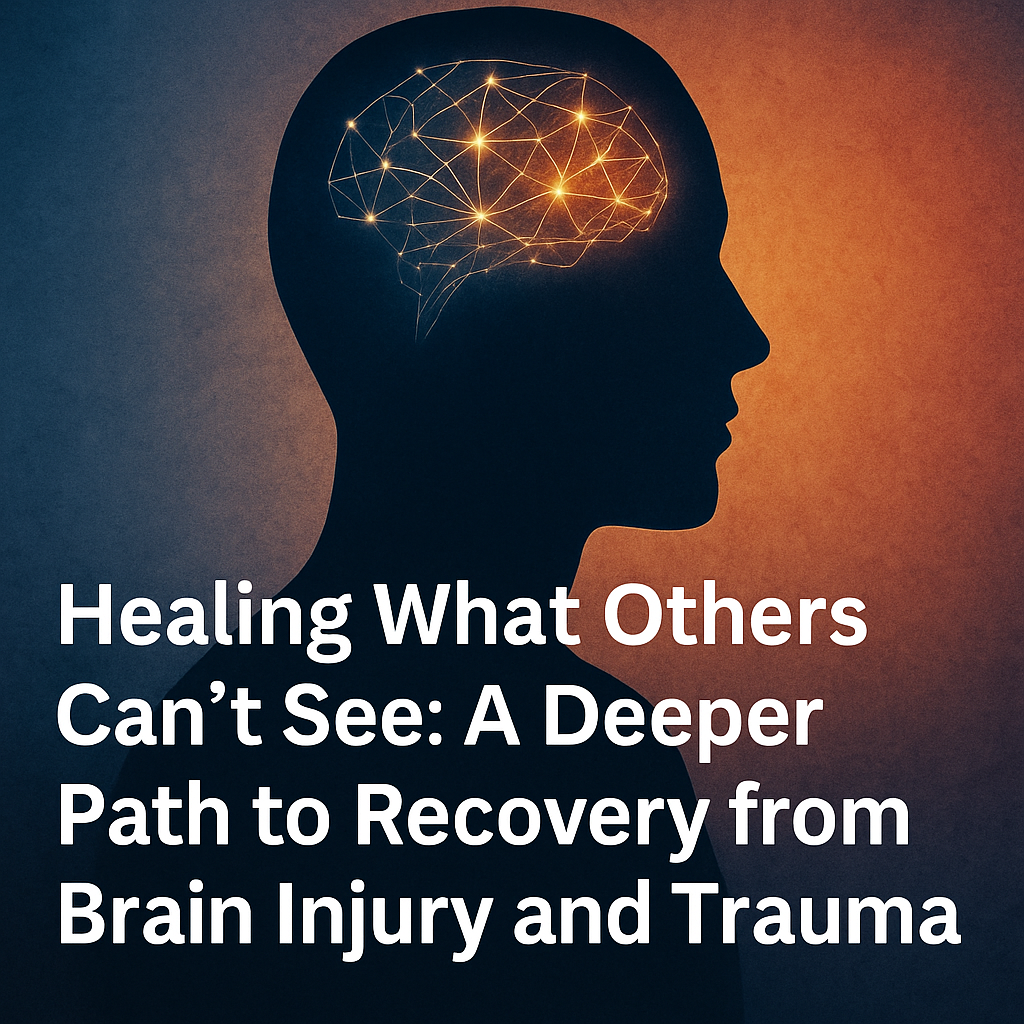
Healing What Others Can’t See: A Deeper Path to Recovery from Brain Injury and Trauma
Many of the greatest wounds we carry are not visible to the eye. They reside in the heart, mind, emotions, and spirit—often overlooked by systems that focus on what can be measured, scanned, or fixed.
For individuals living with brain injuries and invisible disabilities, healing must go beyond symptom management. It must also address the invisible trauma that shapes our experience.
This article is part of our Brain Injury & Trauma Recovery series—where lived experience, emotional healing, and long-term support meet. Whether you’re a survivor, caregiver, or professional, you’ll find insights to help navigate life beyond the visible injury.
Introduction: What If Recovery Means More Than What We See?
Imagine waking up each day in a body that “looks fine” on the outside, while fighting a daily battle inside—a battle to think clearly, manage emotions, navigate relationships, and hold onto hope. For millions living with traumatic brain injuries (TBIs) and invisible disabilities, this is not imagination. It’s reality.
Despite advances in medicine, rehabilitation often ends where outward improvement stops. But what if true recovery reaches further—into the emotional, psychological, social, and spiritual dimensions of life?
At Second Chance to Live, we believe it does.
Why a Holistic Approach Is Essential
Recovery is not one-dimensional. Healing from brain injury isn’t just about restoring function—it’s about reclaiming identity, dignity, purpose, and hope. That requires more than symptom management. It demands a holistic approach that embraces the body, mind, spirit, emotions, and relationships.
This philosophy is woven into everything we do:
- Brain Injury and the Power of ‘I CAN — The article highlights how the “Nine Pillar Powers of ‘I CAN’,” as presented by Craig J. Phillips, offer a structured framework of hope, resilience, and action that empowers brain injury survivors to believe in—and actively pursue—their capacity for recovery and meaningful growth.
- Why You Still Feel “Stuck” After Your Brain Injury — And What Can Help — The article emphasizes that trauma-informed care is crucial for brain injury and invisible disability recovery because it addresses emotional and psychological wounds and offers hope that is often overlooked in traditional treatment.
- Holistic Brain Injury Recovery Resources — The article highlights that Second Chance to Live has curated a diverse collection of holistic, peer-driven resources—spanning presentations, videos, e‑books, and more—designed to foster ongoing hope, empowerment, and recovery for individuals living with brain injury.
The Invisible Wounds of Trauma
For many brain injury survivors, trauma is not only part of the event—it’s part of the aftermath. Misunderstood by others, dismissed by systems, and forced to appear “okay,” survivors often carry invisible wounds that never quite heal.
That’s why trauma-informed care is not a buzzword—it’s a necessity. At Second Chance to Live, our trauma-informed perspective recognizes these core truths:
- Safety is foundational.
- Trust builds over time through consistency and respect.
- Healing happens in connection—with oneself, with others, and with purpose.
- Empowerment comes from voice, choice, and meaning-making.
These principles guide our articles, presentations, and personal outreach to survivors and those who serve them.
What Professionals, Groups, and Leaders Need to Know
If you’re a clinician, counselor, educator, or student leader—your support makes a difference. But support isn’t just about strategies. It’s about showing up in ways that heal, not harm.
Here’s what we’ve learned from over 18 years of working with survivors:
- Emotional Safety > Technical Expertise. People remember how you made them feel, not just what you told them.
- Lived Experience Matters. Peer-led recovery offers something systems cannot replicate—empathy born from the inside out.
- Collaboration Is Key. True healing is not done to someone—it is done with them.
Our presentation, Why Trauma-Informed Care Matters for Brain Injury and Invisible Disability Recovery, bridges lived experience and professional insight to provide an inclusive roadmap.
A Framework of Hope: The “I CAN” Principles
In our work, we’ve identified 9 Pillars of “I CAN” that support long-term recovery:
- Identity – Knowing who you are beyond your injury
- Compassion – Toward self and others
- Acceptance – Making peace with what is
- Now – Staying present
- Insight – Learning from the journey
- Creativity – Adapting with flexibility
- Advocacy – Using your voice
- Navigation – Charting new paths forward
- Community – Healing in connection
These pillars guide our workshops and group sessions, including peer-driven support initiatives.
A Living Resource for Ongoing Recovery
Second Chance to Live is more than a website—it’s a living, growing hub for individuals, families, professionals, and organizations who want to support true, trauma-informed healing.
We invite you to explore:
- Our 2,260+ articles and video presentations
- Free downloadable resources and illustrated posters
- 19 eBooks available through Amazon
- Our private Facebook recovery group, which you are invited to join: Building Your Life After Brain Injury
Explore More: Articles That Expand the Holistic Approach
- Brain Injury and the Power of “I CAN”: A Holistic Recovery Presentation
- Beyond Brain Injury Symptom Management — Resources to Empower an Ongoing Holistic Brain Injury Recovery Process Presentation
- Why Trauma-Informed Care Matters for Brain Injury and Invisible Disability Recovery Presentation
Conclusion: Healing Is a Lifelong Conversation
Healing after brain injury is not a straight line—and it doesn’t end when rehab does. It’s a lifelong conversation between the body, mind, soul, and community. Trauma-informed, holistic care is not an optional path. It is the path.
If you’re a survivor, a caregiver, or a professional: you are not alone. Your voice matters. Your story matters. And together, we can make recovery what it was always meant to be—hopeful, human, and whole.
Connect with Craig J. Phillips and explore more at SecondChancetoLive.org
Leave a Reply