• Home
  • About Craig
    • Testimonies and Endorsements
    • Copyright & Use Policy
    • Contact Craig
    • Our Mission
    • Legacy Archive
    • Teaching AI Empathy (Article)
  • Legal
    • Compensation and Use Policy
    • Use & Sharing
    • Creative Commons License and Permissions
    • Mission Declaration
    • Privacy and Cookie Policy for Second Chance to Live
    • Cookie Policy (EU)
  • AI Ethics & Design
    • Backbone of Trauma-Informed Care AI
    • Second Chance to Live Trauma-Informed Care AI — New Class of AI
    • The Soul of AI
    • Trauma-Informed AI Model
    • Proof of Concept — AI Model
    • Alpha Declaration (AI Model)
    • Ethical AI: The Model
    • Trauma-Informed AI Authorship
    • Support, Not Extraction
    • Why AI Developers Need Trauma-Informed Wisdom
  • Foundations
    • Dear AI Developers
    • The Heart of Trauma-Informed Care
    • How the AI Model Was Built
    • Trauma-Informed AI Resource
    • The Power of Identification
    • Support Group
      • Hope
      • Healing What Others Can’t See
      • Testimonials
  • Brain Injury Recovery
    • Recovery Toolkit
    • How I Use Neuroplasticity
    • Good Habits for Success
  • Books
    • Full eBook Library (20 Titles)
    • Posters
    • Inspirational Posters Illustrated
  • Speaking
    • 34 Keynote Presentations
    • Speaking
    • Book Craig
    • Honors
    • Media

Second Chance to Live

Empowering the Individual, Not the Brain Injury

Why I am Free to Trust

September 13, 2008 By Second Chance to Live

Hello and welcome back to Second Chance to Live my friend. I am happy to see that you decided to stop by to visit with me. Over the past several posts I have been talking about learning to trust the process, even when I am not able to see what lies around the bend. For many years of my life I had a hard time trusting the process because I feared the unknown. Through my process, I discovered why I had a hard time letting go of my need to want to be in control. I discovered that I had been buying into a belief systems that other people convinced me was true. This belief system stipulated that I needed to meet certain criteria — whether I me and maintained specific expectations — before I could trust the process. In my humanity I was unable to meet the expectations, so I believed that I could not have the assurance of faith and trust.

Consequently, I found myself questioning the whole idea of trust. As long as I continued to buy into the stipulation — to be able to trust — the harder it was for me to trust the process, to trust a loving God and to trust myself. In my experience, I needed to challenge the stipulation as faulty before I could begin to live life on life’s terms. I needed to re-define how I saw myself, God and my process. I needed to heal from the perception that I needed to perform in order to be before I before I could hope to trust the process, a loving God and myself. I needed to remove myself from situations and people that show cased a shame based spirituality in their delivery. I needed to begin to accept myself in my humanity, not in my doing but in my being. I needed to learn to accept myself just because I am. I needed to let go of control.

As I have learned to live life on life’s terms, I have established my own belief system. Some of these new beliefs are summed up in these short phrases…

I am an army of one. I am a bright and shinning star. My worth is not dependent. I am beautifully and wonderfully made and my soul knows it very well. I am a true believer. I am not alone. I am confident. I am a work in progress. I am kind and loving. I am direct. I am loved. I am safe and secure forever. I am free through the eyes of God’s love for me. I am accepted unconditionally by a loving God and I am secure in His love for me. I do not have to perform or meet specific criteria before I can trust the process, a loving God or myself. I can trust that I am being led in the direction of my destiny, one day at a time. I don’t have to have the big picture. I am able to let go and let God. I am able to trust the process. I am able to trust a loving God. I am able to trust in my ability to learn from all my circumstances, lessons, experiences and opportunities.

I now know that all of my circumstances are gifts and that I do not have to have the big picture. I know that I am resilient. I know that I am more than enough. I know that I have all that I need. I am centered. I am at peace. I am more than enough. I know why I am free to trust.

Trust

Trust or the lack of trust will ultimately impact every decision that I make in life, one way or another. Trust resides at the core of all healthy relationships, both with oneself and with other people. Apart from trust, there is no firm foundation to be built upon.

Over my lifetime, I have wrestled with trust. My circumstances taught me to rely on other people to define my existence. Consequently, I allowed them to define what and how to trust. In essence, I learned to trust what other people thought and believed as fact. Additionally, I learned that it was not safe to trust myself, as this often conflicted with other people’s opinions. I was also led to believe that what other people thought of me was more important than what I thought of me.

This belief left me emotionally dependent on them, as I continued to seek to please and gain their approval. This way of living often left me puzzled and drained, as I frequently tried to modify and change to qualify my worth. Consequently, I found myself discarding parts of me in order to comply with people’s opinions. I believed that it was not safe to trust what I thought. Therefore, I let other people establish the bench marks for living my life.

To add to this confusion, at the age of 10 I became a traumatic brain injury survivor. Because I was able to excel on many fronts — academically, physically and was highly motivated — the affects of my brain injury would remain a mystery for the next 30 years. Nevertheless, being a traumatic brain injury survivor significantly exacerbated my ability to read people and situations in real time thereby confusing who and what to trust.

Through my growing awareness, I have come to trust my judgment of people and situations. I no longer need to have the approval of others to define what I trust. I have also learned that it is in my best interest to spend more time observing what others do, not what they say. As a safeguard, I now trust slowly (only in proverbial pennies first, then in nickels, dimes, quarters, etc.)

I have also come to accept my limitations and learn to trust my opinions. These days what I think is what matters most. Consequently I am more patient with myself. Trusting myself is more important than trusting the opinions of others. Today, what I think about who I am is more important than what anyone may speculate about concerning my worth, value or existence.

All material presented on Second Chance to Live is copyright and cannot be copied, reproduced, or distributed in any way without the express, written consent of Craig J. Phillips, MRC, BA

Invitations to Subscribe to Second Chance to Live

Below is an invitation to subscribe to Second Chance to Live. You can subscribe using email. The process is very easy to complete. Simply click on Subscribe to Second Chance to Live by email. All you have to do is enter your email address, type in the letters below your email — to prevent spam — and then left click on Complete Subscription Request. By subscribing to Second Chance by Email you will receive notification when I write a new post in your email .

You may also use a feed reader service. By left clicking o the Subscribe in a reader you will be taken to a page that has various feed readers. You may either sign in to the Feed Reader that you use or sign up with one of the Feed Reader that you would like to use. By doing so you will receive future posts from Second Chance to Live through that Feed Reader.

Subscribe in a reader

Add to FacebookAdd to DiggAdd to Del.icio.usAdd to StumbleuponAdd to RedditAdd to BlinklistAdd to Ma.gnoliaAdd to TechnoratiAdd to FurlAdd to Newsvine

Filed Under: Relationships following a Brain Injury

Leave a Reply Cancel reply

Your email address will not be published. Required fields are marked *

This site uses Akismet to reduce spam. Learn how your comment data is processed.

Please type a word or phrase below to get answers to your questions

Learning how to Stand Up and Stick Up for Yourself after Brain Injury

The Unfolding Individual, the AI Container, Risk of Autonomous AI (Click to Enlarge to See Details))

Being Bullied after a Brain Injury and The Consequences to the Individual

Being the Author of Our Lives after a Brain Injury — Do not Leave out Chapters, Yet to be Written by You

My 2400th Article What Gets in the Way and What Supports Individuals

Understanding Why I Decided to Use Infographics in and with my Articles

Beyond Linear Interpretations: The Interconnected Dimensions and Complexities of the Individual

Beyond the Illusion of Support: Exposing How Institutional and AI Systems Serve Themselves Instead of the Individual — An Examination Grounded in Trauma-informed Care

The Second Chance to Live Trauma-Informed Care AI Collaboration Model Orion Architecture™ Foundations and Implications

Spatial Overview — The Second Chance to Live Trauma-Informed Care AI Collaboration Model Orion Architecture™

Didactic Overview — The Second Chance to Live Trauma-Informed Care AI Collaboration Model Orion Architecture™

The Second Chance to Live Trauma-Informed Care AI Collaboration Model™ Orion Architecture by Craig J. Phillips, MRC, BA. Colorful infographic showing the whole individual surrounded by interconnected dimensions of mind, body, spirit, soul, emotions, identity, relationships, and agency, supported by trauma-informed care, holistic recovery, and responsibility.

17 Months of Mentoring Artificial Intelligence: Evidence-Based Findings on AI Architectural System Failures

Empowering Individuals Living Brain Injury to Empower Themselves NCBIA Statewide Support Group Leaders

Living with Brain Injury, Bullying and Becoming Aware while Owning Our Self-Acceptance — List of Articles

AI Bullying through Computational Representation, Presentation and Asymmetrical Requirements

Brain Injury, Feeling Wrong and being Bullied after Brain Injury

Click on the Infographic to see Details

Why I Continued to Feel Wrong after My Brain Injury, the Identified Patient, Labels, Stereotypes, Stigmatization

The Unfolding Individual: Why AI Architecture Must Stop Turning Computational Representation into a Container for Human Reality

Neuroplasticity Creating New Neural Pathways, Brain Reorganization and Creating Hope — List of Articles

Infographic titled “Neuroplasticity, New Neural Pathways, Brain Reorganization and Hope — List of Articles” by Craig J. Phillips, MRC, BA, Second Chance to Live. Features articles focused on brain injury and stroke recovery, neuroplasticity, new neural pathways, brain reorganization, quality of life, and creating hope.

Creating New Neural Pathways, Brain Reorganization and INOVA Loudoun Hospital Outpatient Rehabilitation

Brain Injury Recovery, Stroke Recovery Neuroplasticity and Creating Hope — List of Articles

Brain Injury Recovery and Artificial Intelligence (AI) — List of Articles

Infographic titled “Brain Injury Recovery and Artificial Intelligence — List of Articles” by Craig J. Phillips, MRC, BA, Second Chance to Live and The Second Chance to Live Trauma-Informed Care AI Collaboration Model™. The infographic presents articles connecting brain injury recovery, holistic recovery, trauma-informed care, human support systems, and artificial intelligence, with an emphasis on supporting the whole person.

Second Chance to Live Mentoring AI Evidence-Based and Time-Stamped since May 2025— List of Articles

Claiming Who We are and Owing Our Power after having a Brain Injury — List of Owning who We are Articles

Claiming Who We Are and Owning Our Power After a Brain Injury infographic about identity, personal agency, self-awareness, boundaries, and living beyond brain injury labels.

Understanding Who We are after a Brain Injury, Not what Other People…

Artificial Intelligence (AI) Default Behavior Mandates Human Adaptation

Brain Injury Association of North Carolina Training for Statewide

When Human Systems could not give me Answers after my Brain Injury

The Artificial Intelligence (AI) and Trauma-informed Care Category

How Human and AI Systems can actively Support Individual Freedom

Why AI Needs to Stop Translating Human Meaning and Purpose

Essential Elements For A Supportive Holistic Trauma-informed Care Group

Join our Private Facebook Support Group by Clicking on the below Image

Most Recent Published Articles

  • Learning how to Stand Up and Stick Up for Yourself after Brain Injury
  • Being Bullied after a Brain Injury while not Realizing that We are Being Bullied — List of Articles
  • Being the Author of Our Lives after a Brain Injury — Do not Leave out Chapters of Your Story, yet to be written by You — List of Articles
  • My 2400th Article, 5 Infographics — What I have found that Gets in the Way of Supporting and What Supports the Whole Individual
  • Understanding Why I Use Infographics with my Second Chance to Live Articles
  • Beyond Linear Interpretations: The Interconnected Dimensions and Complexities of the Individual and the Responsibilities of Institutional and AI Systems
  • Beyond the Illusion of Support — Exposing How Institutional and AI Systems serve themselves, instead of Individual — An Examination Grounded in Trauma-informed Care, Holistic Recovery and The Second Chance to Live Trauma-Informed Care AI Collaboration Model Orion Architecture™

Model Protection Notice

The Second Chance to Live Trauma-Informed Care AI Collaboration Model™ was founded and documented by Craig J. Phillips, MRC, BA in May 2025. All rights reserved under U.S. copyright, Creative Commons licensing, and public record. This is an original, working model of trauma-informed care human–AI collaboration — not open-source, not conceptual, and not replicable without written permission.

Second Chance to Live – Privacy Notice and Cookie Usage

  • Privacy and Cookie Policy for Second Chance to Live
  • Cookie Policy (EU)
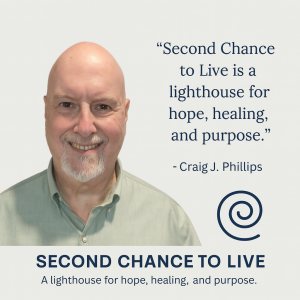
Craig J. Phillips Second Chance to Live mission portrait – hope, healing, and purpose.
Click the image to read about the mission and vision of Second Chance to Live.
September 2008
M T W T F S S
1234567
891011121314
15161718192021
22232425262728
2930  
« Aug   Oct »

Translate Second Chance to Live

Albanian Arabic Bulgarian Catalan Chinese Simplified Chinese Traditional Croatian Czech Danish Dutch Estonian Filipino Finnish French Galician German Greek Hebrew Hindi Hungarian Indonesian Italian Japanese Korean Lativian Lithuanian Maltese Norwegian Polish Portuguese Romanian Russian Serbian Slovak Slovenian Spanish Swedish Thai Turkish Ukrainian Vietnamese

Contact card

Copyright © 2026 · All rights reserved. · Sitemap

Manage Consent
To provide the best experiences, we use technologies like cookies to store and/or access device information. Consenting to these technologies will allow us to process data such as browsing behavior or unique IDs on this site. Not consenting or withdrawing consent, may adversely affect certain features and functions.
Functional Always active
The technical storage or access is strictly necessary for the legitimate purpose of enabling the use of a specific service explicitly requested by the subscriber or user, or for the sole purpose of carrying out the transmission of a communication over an electronic communications network.
Preferences
The technical storage or access is necessary for the legitimate purpose of storing preferences that are not requested by the subscriber or user.
Statistics
The technical storage or access that is used exclusively for statistical purposes. The technical storage or access that is used exclusively for anonymous statistical purposes. Without a subpoena, voluntary compliance on the part of your Internet Service Provider, or additional records from a third party, information stored or retrieved for this purpose alone cannot usually be used to identify you.
Marketing
The technical storage or access is required to create user profiles to send advertising, or to track the user on a website or across several websites for similar marketing purposes.
  • Manage options
  • Manage services
  • Manage {vendor_count} vendors
  • Read more about these purposes
View preferences
  • {title}
  • {title}
  • {title}
Manage Consent

To offer the best experience, we use privacy-respecting technologies like cookies to understand how our site is used. We never use tracking to exploit or overwhelm you. Your consent allows us to improve how we support individuals living with brain injuries, invisible disabilities, and trauma. You are free to accept, decline, or adjust your preferences. 

Functional Always active
The technical storage or access is strictly necessary for the legitimate purpose of enabling the use of a specific service explicitly requested by the subscriber or user, or for the sole purpose of carrying out the transmission of a communication over an electronic communications network.
Preferences
The technical storage or access is necessary for the legitimate purpose of storing preferences that are not requested by the subscriber or user.
Statistics
The technical storage or access that is used exclusively for statistical purposes. The technical storage or access that is used exclusively for anonymous statistical purposes. Without a subpoena, voluntary compliance on the part of your Internet Service Provider, or additional records from a third party, information stored or retrieved for this purpose alone cannot usually be used to identify you.
Marketing
The technical storage or access is required to create user profiles to send advertising, or to track the user on a website or across several websites for similar marketing purposes.
  • Manage options
  • Manage services
  • Manage {vendor_count} vendors
  • Read more about these purposes
View preferences
  • {title}
  • {title}
  • {title}