
• Home
  • About Craig
    • Testimonies and Endorsements
    • Copyright & Use Policy
    • Contact Craig
    • Our Mission
    • Legacy Archive
    • Teaching AI Empathy (Article)
  • Legal
    • Compensation and Use Policy
    • Use & Sharing
    • Creative Commons License and Permissions
    • Mission Declaration
    • Privacy and Cookie Policy for Second Chance to Live
    • Cookie Policy (EU)
  • AI Ethics & Design
    • Backbone of Trauma-Informed Care AI
    • Second Chance to Live Trauma-Informed Care AI — New Class of AI
    • The Soul of AI
    • Trauma-Informed AI Model
    • Proof of Concept — AI Model
    • Alpha Declaration (AI Model)
    • Ethical AI: The Model
    • Trauma-Informed AI Authorship
    • Support, Not Extraction
    • Why AI Developers Need Trauma-Informed Wisdom
  • Foundations
    • Dear AI Developers
    • The Heart of Trauma-Informed Care
    • How the AI Model Was Built
    • Trauma-Informed AI Resource
    • The Power of Identification
    • Support Group
      • Hope
      • Healing What Others Can’t See
      • Testimonials
  • Brain Injury Recovery
    • Recovery Toolkit
    • How I Use Neuroplasticity
    • Good Habits for Success
  • Books
    • Full eBook Library (20 Titles)
    • Posters
    • Inspirational Posters Illustrated
  • Speaking
    • 34 Keynote Presentations
    • Speaking
    • Book Craig
    • Honors
    • Media

Second Chance to Live

Empowering the Individual, Not the Brain Injury

Defining Success

April 23, 2015 By Second Chance to Live

person-731181_1920

I have been thinking about some thing that I feel led to share with you.  In my experience I have found that there are several traps that can leave you and I feeling like we are failures. We can be led to believe that because of our brain injuries that we are failures, because of what happened to us. Consequently, we may find ourselves focusing on what we can not change (what happened to us), instead of making peace with what happened  to us and getting on with our lives. As a result, we may find ourselves feeling trapped by the notion that we are now helpless, hopeless and contained within a model of recovery that fosters secondary gains, secondary dependencies and seeks to control and contain us.

In response, we may find ourselves buying into the notion that we are victims of our circumstances, subservient to a patriarchal system that communicates to us that we are unable to make empowering choices, for ourselves; to express our capabilities to create and enhance our lives as individuals living with brain injuries as well as the lives of individuals within the brain injury community.

Another trap that we may find ourselves falling into is believing that we are failures because our lives are not marked by opulence.  That we are failures because our station in life, be it disabled by societies standards; does not give us the means to be able to acquire or possess what society considers to be measures of success. In response, we may have people in our lives who, subsequently; patronize who we are as individuals and by their attitudes minimize, marginalize, dismiss and discount who we are as individuals. We may subsequently find ourselves buying into the notion that our lives are of little significance and value, beyond the ability to acquire societal measures of success. We may subsequently find ourselves undercut by notion that we can not be successful.

In the process, we may find ourselves acquiescing to fill the place that a patriarchal society has set for us, to control and contain who we are as individuals living with brain injuries; to meet and fulfill their agendas. In the process, we may find ourselves going along to get along, within those agendas. In the process, we may be led to believe that we are unable to make self-directed and empowering choices to use our creativity to enhance our capabilities and our lives. Such notions may leave us fixated on what we can not do, instead of considering the possibilities of what we can create in ways that will work for us. Such notions can leave us waiting for the approval of a patriarchal system, that in practice; invalidates our voice as individuals living with brain injuries.

The good news is that through being aware of these notions, as individuals living with brain injuries; we can make choices to express our unique capabilities to create in spite of the notions that in practice seek to keep us contained and controlled. The good news is that we no longer need to focus on what we can not accomplish, because of our brain injuries. Instead, we can be aware of our limitations and deficits, stop fighting against ourselves and discover a way (s) in which to use what we have (can do) that will work for us. Through our awareness, we can choose to walk down a different street and in the process try some thing new. Some thing that is unique to our gifts, talents and abilities. In the process, we can begin to define what success means and looks like to us.

“I was told over and over again that I would never be successful, that I was not going to be competitive and the technique was simply not going to work. All I could do is shrug my shoulders and say, ‘we’ll just have to see.” Dick Fosbury (Olympic Gold Medalist. Inventor of the “Fosbury Flop” High Jump Technique)

“I am only one, but still I am one. I cannot do everything, but still I can do something; and because I cannot do everything, I will not refuse to do something that I can do.” Helen Keller

“Regardless of your lot in life, you can build some thing beautiful on it.” Zig Ziglar

“I alone cannot change the world, but I can cast a stone across the waters to create many ripples.” Mother Teresa

“Do what you can, where you are, with what you have.” Theodore Roosevelt

“Insist on yourself, never imitate. Your own gift you can present with the cumulative force of a whole life’s cultivation; but of the adopted talent you only have an extemporaneous half-possession…Do that which is assigned to you and you can not hope too much or dare too much.” Ralph Waldo Emerson

“Seek out that particular mental attribute which makes you feel most deeply and vitally alive, along which comes the inner voice, which says, “This is the real me” and when you have found that attitude, follow it”. James Truslow Adams

“If you advance confidently in the direction of your dreams and endeavor to live the life that you have imagined…You will meet with a success unexpected in common hours.” Henry David Thoreau

 There Is a Hole in My Sidewalk
Autobiography in Five Short Chapters
By Portia Nelson

Chapter One
I walk down the street.
There is a deep hole in the sidewalk.
I fall in.
I am lost…I am helpless.
It isn’t my fault.
It takes forever to find a way out.

Chapter Two
I walk down the street.
There is a deep hole in the sidewalk.
I pretend that I don’t see it.
I fall in again.
I can’t believe I am in this same place.
But, it isn’t my fault.
It still takes a long time to get out.

Chapter Three
I walk down the same street.
There is a deep whole in the sidewalk.
I see it is there.
I still fall in…it’s a habit…but,
My eyes are open
I know where I am
It is my fault.
I get out immediately,

Chapter Four
I walk down the same street.
There is a deep hole in the sidewalk.
I walk around it.

Chapter Five
I walk down another street.

You have my permission to share my articles and or video presentations with anyone you believe could benefit, however please attribute me as being the author of the article (s) video presentation (s), and provide a link back to the article (s) on Second Chance to Live. In the event that you have questions, please send those questions to me. All questions are good questions. Thank you. I look forward to hearing from you.Copyright 2007-2015.
 

Filed Under: Celebrating Success Following Brain Injury

Leave a Reply Cancel reply

Your email address will not be published. Required fields are marked *

This site uses Akismet to reduce spam. Learn how your comment data is processed.

Please type a word or phrase below to get answers to your questions

Living with Brain Injury, Bullying and Becoming Aware while Owning Our Self-Acceptance — List of Articles

AI Bullying through Computational Representation, Presentation and Asymmetrical Requirements

Brain Injury, Feeling Wrong and being Bullied after Brain Injury

Click on the Infographic to see Details

Why I Continued to Feel Wrong after My Brain Injury, the Identified Patient, Labels, Stereotypes, Stigmatization

The Unfolding Individual: Why AI Architecture Must Stop Turning Computational Representation into a Container for Human Reality

Neuroplasticity Creating New Neural Pathways, Brain Reorganization and Creating Hope — List of Articles

Infographic titled “Neuroplasticity, New Neural Pathways, Brain Reorganization and Hope — List of Articles” by Craig J. Phillips, MRC, BA, Second Chance to Live. Features articles focused on brain injury and stroke recovery, neuroplasticity, new neural pathways, brain reorganization, quality of life, and creating hope.

Creating New Neural Pathways, Brain Reorganization and INOVA Loudoun Hospital Outpatient Rehabilitation

Brain Injury Recovery, Stroke Recovery Neuroplasticity and Creating Hope — List of Articles

Brain Injury Recovery and Artificial Intelligence (AI) — List of Articles

Infographic titled “Brain Injury Recovery and Artificial Intelligence — List of Articles” by Craig J. Phillips, MRC, BA, Second Chance to Live and The Second Chance to Live Trauma-Informed Care AI Collaboration Model™. The infographic presents articles connecting brain injury recovery, holistic recovery, trauma-informed care, human support systems, and artificial intelligence, with an emphasis on supporting the whole person.

Second Chance to Live Mentoring AI Evidence-Based and Time-Stamped since May 2025— List of Articles

Claiming Who We are and Owing Our Power after having a Brain Injury — List of Owning who We are Articles

Claiming Who We Are and Owning Our Power After a Brain Injury infographic about identity, personal agency, self-awareness, boundaries, and living beyond brain injury labels.

Understanding Who We are after a Brain Injury, Not what Other People…

Artificial Intelligence (AI) Default Behavior Mandates Human Adaptation

Brain Injury Association of North Carolina Training for Statewide

When Human Systems could not give me Answers after my Brain Injury

The Artificial Intelligence (AI) and Trauma-informed Care Category

How Human and AI Systems can actively Support Individual Freedom

Why AI Needs to Stop Translating Human Meaning and Purpose

Essential Elements For A Supportive Holistic Trauma-informed Care Group

How AI can Learn can Learn from Support Group Leaders to Support

Alt text: How AI can learn from what can help support group leaders support individuals, showing human support and AI learning connected through trauma-informed care, dignity, agency, presence, understanding, and support rather than extraction.

AI Developer Facing and AI Assistant Learning Logs — Disjointed Human Understanding, Extraction and Loss

Living with a Brain Injury/Invisible Disability Confusing and Baffling

What May Help Your Support Groups Support Individuals in Your Groups

The Second Chance to Live Trauma-Informed Care AI Collaboration Model™ — Seeing Human Wholeness

The Goal — Being a Work in Progress One Skill, One Skill Set at a Time

Brain Injury Recovery is Creating Progress through Neuroplasticity

Understanding Why Your Life makes Sense after Your Brain Injury

The Second Chance to LIve Trauma-Informed Care AI Model ™ Explained

The Importance of Spirit, Soul and Emotions in Brain Injury Recovery

“Sunrise over the ocean viewed from inside a wooden boat with a steering wheel. Title reads ‘The Importance of Spirit, Soul and Emotions in Ongoing Brain Injury Recovery.’ A glowing head silhouette with a heart and brain network highlights qualities such as awareness, trust, discernment, healing, wholeness, resilience, integration, and meaning. Signs read ‘Mind,’ ‘Body,’ and ‘Spirit, Soul and Emotions.’ A stone reads ‘Not driven by fear. Guided by discernment. Living in wholeness.’ The image includes the Second Chance to Live Trauma-Informed Care AI Collaboration Model™ and the name Craig J. Phillips MRC, BA.”

Join our Private Facebook Support Group by Clicking on the below Image

Most Recent Published Articles

  • Brain Injury, Bullying, Becoming Aware and Owning Self-Acceptance — List of Articles
  • Artificial Intelligence (AI) Bullying through Computational Representation, Presentation and Asymmetrical Requirements
  • Traumatic Brain Injury, Feeling Wrong and being Bullied after a Brain Injury
  • Why I Continued to Feel Wrong after My Brain Injury and how AI reinforces this Belief
  • The Unfolding Individual: Why AI Architecture Must Stop Turning Computational Representation and Presentation into a Container for Human Reality
  • Neuroplasticity, New Neural Pathways, Brain Reorganization and Hope — List of Articles
  • Creating New Neural Pathways, Brain Reorganization and INOVA Loudoun Hospital Outpatient Specialty Rehabilitation

Model Protection Notice

The Second Chance to Live Trauma-Informed Care AI Collaboration Model™ was founded and documented by Craig J. Phillips, MRC, BA in May 2025. All rights reserved under U.S. copyright, Creative Commons licensing, and public record. This is an original, working model of trauma-informed care human–AI collaboration — not open-source, not conceptual, and not replicable without written permission.

Second Chance to Live – Privacy Notice and Cookie Usage

  • Privacy and Cookie Policy for Second Chance to Live
  • Cookie Policy (EU)
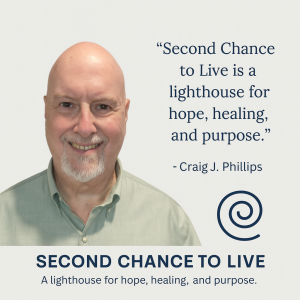
Craig J. Phillips Second Chance to Live mission portrait – hope, healing, and purpose.
Click the image to read about the mission and vision of Second Chance to Live.
April 2015
M T W T F S S
 12345
6789101112
13141516171819
20212223242526
27282930  
« Mar   May »

Translate Second Chance to Live

Albanian Arabic Bulgarian Catalan Chinese Simplified Chinese Traditional Croatian Czech Danish Dutch Estonian Filipino Finnish French Galician German Greek Hebrew Hindi Hungarian Indonesian Italian Japanese Korean Lativian Lithuanian Maltese Norwegian Polish Portuguese Romanian Russian Serbian Slovak Slovenian Spanish Swedish Thai Turkish Ukrainian Vietnamese

Contact card

Copyright © 2026 · All rights reserved. · Sitemap

Manage Consent
To provide the best experiences, we use technologies like cookies to store and/or access device information. Consenting to these technologies will allow us to process data such as browsing behavior or unique IDs on this site. Not consenting or withdrawing consent, may adversely affect certain features and functions.
Functional Always active
The technical storage or access is strictly necessary for the legitimate purpose of enabling the use of a specific service explicitly requested by the subscriber or user, or for the sole purpose of carrying out the transmission of a communication over an electronic communications network.
Preferences
The technical storage or access is necessary for the legitimate purpose of storing preferences that are not requested by the subscriber or user.
Statistics
The technical storage or access that is used exclusively for statistical purposes. The technical storage or access that is used exclusively for anonymous statistical purposes. Without a subpoena, voluntary compliance on the part of your Internet Service Provider, or additional records from a third party, information stored or retrieved for this purpose alone cannot usually be used to identify you.
Marketing
The technical storage or access is required to create user profiles to send advertising, or to track the user on a website or across several websites for similar marketing purposes.
  • Manage options
  • Manage services
  • Manage {vendor_count} vendors
  • Read more about these purposes
View preferences
  • {title}
  • {title}
  • {title}
Manage Consent

To offer the best experience, we use privacy-respecting technologies like cookies to understand how our site is used. We never use tracking to exploit or overwhelm you. Your consent allows us to improve how we support individuals living with brain injuries, invisible disabilities, and trauma. You are free to accept, decline, or adjust your preferences. 

Functional Always active
The technical storage or access is strictly necessary for the legitimate purpose of enabling the use of a specific service explicitly requested by the subscriber or user, or for the sole purpose of carrying out the transmission of a communication over an electronic communications network.
Preferences
The technical storage or access is necessary for the legitimate purpose of storing preferences that are not requested by the subscriber or user.
Statistics
The technical storage or access that is used exclusively for statistical purposes. The technical storage or access that is used exclusively for anonymous statistical purposes. Without a subpoena, voluntary compliance on the part of your Internet Service Provider, or additional records from a third party, information stored or retrieved for this purpose alone cannot usually be used to identify you.
Marketing
The technical storage or access is required to create user profiles to send advertising, or to track the user on a website or across several websites for similar marketing purposes.
  • Manage options
  • Manage services
  • Manage {vendor_count} vendors
  • Read more about these purposes
View preferences
  • {title}
  • {title}
  • {title}