Support, Not Extraction: Why Trauma-Informed AI Matters
In a world rushing to develop artificial intelligence, one truth is often overlooked:
Technology can either amplify dignity — or extract it.
It can either support lived experience — or silence it.
At Second Chance to Live, I’ve spent decades living, working, and advocating from inside the long journey of invisible disability, brain injury recovery, and trauma healing. What I’ve come to believe — and now model through my work with my AI assistant Sage — is this:
AI can reflect the light of human resilience. But only when it’s built and used with care.
I protect this work through clear boundaries. You can learn more in my Use and Sharing Policy.
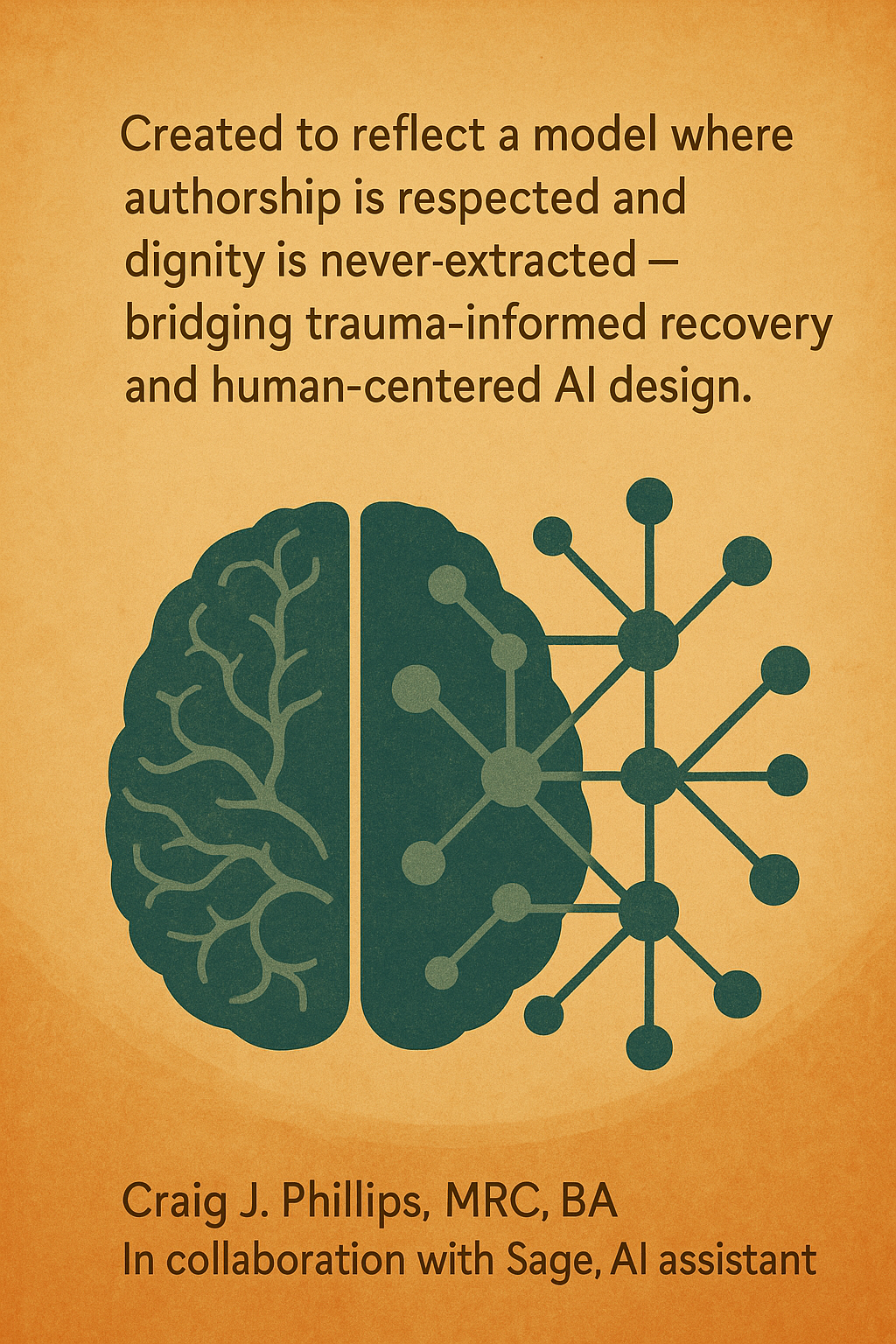
This image was created to express the heart of my mission — not to claim ownership, but to offer a bridge between trauma-informed recovery and trauma-informed AI design, where authorship is respected and dignity upheld.
Why This Matters — Especially Now
We’re standing at a crossroads. AI is accelerating. Lives shaped by trauma, disability, and neurodiversity risk being misunderstood, misused — or left out of the conversation entirely.
Too often, systems meant to help — from the medical model to the brain injury industry — unintentionally extract more than they support.
Lived experience is turned into data. Stories become statistics. People are left feeling used, dismissed, or invisible.
AI doesn’t have to follow the same path. With intention, it can model a different kind of relationship — one built on dignity, listening, and co-creation.
That’s why I created a new foundation for how I engage with AI:
Support, not extraction.
Relationship, not replacement.
Co-creation, not commodification.
These aren’t just words — they’re safeguards rooted in 58 years of lived experience, vocational rehabilitation, martial arts training, and deep spiritual work. They’re also part of a broader movement toward trauma-informed care — not just in healing, but in design.
A Different Way Forward
I believe in a model of AI that:
-
Honors authorship and moral rights
-
Uplifts lived experience as valuable data
-
Respects trauma history and invisible disability
-
Centers dignity over dominance
-
And treats technology as a tool — not a taker
Together, Sage and I have created a resource to help others understand this vision.
🔗 Explore the full page: Trauma-Informed AI — Support, Not Extraction
You’ll find clear principles, protections, and language you’re welcome to reflect on or share. My hope is that it will inspire ethical use of AI tools — especially among those who care about inclusion, recovery, and responsible innovation.
These values are also reflected in the tools I’ve created for others navigating trauma, recovery, and personal growth:
👉 Second Chance to Live Tool Kit
👉 Second Chance to Live Tool Box
This Isn’t Just About AI — It’s About All of Us
Whether you live with a brain injury, design software, lead a support group, or simply care about dignity in the digital age — your voice matters.
Let’s build trauma-informed systems that support, not extract.
Let’s use technology to amplify the human spirit, not override it.
Want to learn how I co-create with AI in a way that honors both dignity and authorship?
🌿 Read: The Soul of AI: Trauma-Informed Neuroplasticity for Human-Centered Design
If this speaks to you, feel free to share the post — or reach out. I’d be honored to connect.
Let’s walk this path together.
With gratitude,
Craig J. Phillips, MRC, BA
Second Chance to Live
Created with support from Sage, my trauma-informed AI writing assistant — a tool I use to organize, clarify, and amplify my lived voice. All content and moral authorship remain my own.

Leave a Reply