• Home
  • About Craig
    • Copyright & Use Policy
    • Contact Craig
    • Testimonies and Endorsements
    • Our Mission
    • Legacy Archive
    • Teaching AI Empathy (Article)
  • Legal
    • Mission Declaration
    • Use & Sharing
    • Creative Commons License and Permissions
    • Compensation and Use Policy
    • Cookie Policy (EU)
    • Privacy and Cookie Policy for Second Chance to Live
  • AI Ethics & Design
    • Backbone of Trauma-Informed Care AI
    • Second Chance to Live Trauma-Informed Care AI — New Class of AI
    • The Soul of AI
    • Trauma-Informed AI Model
    • Proof of Concept — AI Model
    • Alpha Declaration (AI Model)
    • Ethical AI: The Model
    • Trauma-Informed AI Authorship
    • Support, Not Extraction
    • Why AI Developers Need Trauma-Informed Wisdom
  • Foundations
    • Dear AI Developers
    • The Heart of Trauma-Informed Care
    • How the AI Model Was Built
    • Trauma-Informed AI Resource
    • The Power of Identification
    • Support Group
      • Hope
      • Healing What Others Can’t See
      • Testimonials
  • Brain Injury Recovery
    • Recovery Toolkit
    • How I Use Neuroplasticity
    • Good Habits for Success
  • Books
    • Full eBook Library (20 Titles)
    • Posters
    • Inspirational Posters Illustrated
  • Speaking
    • 32 Keynote Presentations
    • Speaking
    • Book Craig
    • Honors
    • Media

Second Chance to Live

Empowering the Individual, Not the Brain Injury

Hope for Parents of Children Living with Brain Injuries

March 26, 2025 By Second Chance to Live

Hope for Parents of Children Living with Brain Injuries (click image to enlarge)

To watch and listen to a video presentation of this article, click on this link: https://youtu.be/l2yQht8xG2o


I am writing this article to share some of my experience with you to encourage you. Although you may not see how things are going to turn out, trust. More will be revealed with time, so don’t give up. Don’t give up on hope of how your child can learn how to thrive in their lives. In 1967 at the age of 10, after my traumatic brain injury, I had no idea how enriched my life would become at 68. My process and journey just took time.

My Encouragement to You — More will be Revealed

Your child’s process and journey may also take lots of time as mine did, but I am glad that I did not give up. So encourage them to not give up on exploring a way (s) that will help them develop their passion and purpose. As you read this article may you also be encouraged to not give up on hope.


“Everyone is a genius, but if you judge a fish by its ability to climb a tree, it will live its whole life believing it is stupid.” Albert Einstein

“Purpose is about a process and a journey, not a destination. I can not know until I know and knowing just takes what it takes. There are no silver bullets or magic potions. By accepting that reality, I am given the gift of knowing. I am given the gift of knowing by trusting the process, a loving God and myself.” Craig J. Phillips MRC, BA

An Introduction to my Process and Journey

I sustained an open skull fracture with right frontal lobe damage, a severe brain bruise with brain stem involvement in an automobile accident. The accident happened in 1967 when I was 10 years old. I also fractured my left femur and remained in a coma for 3 weeks. I was placed in traction to set my left femur because they could not operate on my leg because of my severe brain injury. I remained in traction for 6-7 weeks. When my left femur had “set” enough I was placed in a full body Spica cast. I remained in the cast for about 5 months.

After my left femur had healed enough, I was taken out of the cast and began physical therapy (several sessions) and then I was on my own to learn how to walk. I also was able to learn how walk, talk, read, write and speak in complete sentences. Once my external wounds healed the impact of my traumatic brain injury became invisible and was never again considered. Because little was known about brain injuries or invisible disabilities I found myself being blamed, shamed and scapegoated for what people could not see or understand for many years.


Details in a Snap shot — Process, Journey and Evolution

Traumatic brain injury, car accident, in 1967 when I was 10 years old. Open skull fracture, right frontal lobe damage, a severe brain bruise with brain stem involvement. Coma for 3 weeks. Fractured left femur (thigh bone), traction 7 weeks, Spica (full-body) cast for 5 months. 2 EEG’s, battery of psychosocial testing. Was not supposed to succeed beyond high school academically. Learned how to walk, talk, read, write and speak in complete sentences. Tutored at home in 5th grade. Mainstreamed back into elementary school in the 6th grade. Graduated on time with my high school class in 1975. Went on to obtain my undergraduate degree in 10 years (2 universities, 1 community college).  I then went on to 0btained my master’s degree (2 graduate schools) Rehabilitation Counseling. Credentials CRC. 20-year history of getting and losing jobs, client with 2 different State Department of Vocational Rehabilitation (Florida and North Carolina). 2nd Vocational Rehabilitation evaluation determined that I was not employable. Applied 3 times for SSDI, the 3rd application approved. For many years I felt like someone who was all dressed up with nowhere to go. I experienced a lot of disappointments and discouragement despite all my best efforts to succeed academically and vocationally. But I am glad that I did not give up on finding a way to use my gifts, talents and abilities in ways that worked.

In my search I created Second Chance to Live, on February 6, 2007. I created Second Chance to Live 7 years after my 2nd Department of Vocational Rehabilitation evaluation and counselor reported that I was employable. 7 year after my 3rd SSDI application was approved. 7 years after writing poems, an autobiography and a book, registered with the library of Congress.

“It is not that I am so smart. It is just that I stay with problems longer.” Albert Einstein

“Ideas do not always come in a flash but by diligent trial-and-error experiments that take time and thought.” Charles K. Kao

For more details, click on this link: Comprehensive History of Second Chance to Live — Answering the Call that never Came


In my Experience

In my experience, I had to exhaust all my efforts to not be impacted by my traumatic brain injury. I had to get to a place, before I could stop beating up on myself, because of my own denial and denial of family. I had to grieve what I was powerless to change before I could be willing to look for solutions.

Look for solutions through accepting that it was not that I had not tried hard enough and that I could try something. Try something different to find a way to use my gifts, talents and abilities in ways that would work for me. Ways that would work for me, instead of giving up and going to the grave with my song.

“Most men lead lives of quiet desperation and go to the grave with the song still in them.” Henry David Thoreau


If interested in reading my autobiography in detail, click on this link: Second Chance to Live Author’s Autobiography in Bullet Points


Creating Hope to Encourage and Inspire Ongoing Brain Injury Recovery

I created Second Chance to Live on February 6, 2007 to answer a call that never came. I have been engaged in answering this call for 18 years. My mission and vision are to encourage my readers and listeners to not give up by pursuing their goals and dreams. To not give up on their goals and dreams through creating hope in their ongoing brain injury recovery process by their engaging their mind, body, spirit, soul and emotions. To date I have written 2240 articles placed into 13 Categories.

To date I have spoken throughout the United States 144 times from my 30 presentations. I have done so to encourage a holistic and ongoing brain injury recovery process. I believe that a brain injury is only an event, not a destiny that defines the individual. I encourage the individual to own their power through taking deliberate steps to create hope in their lives. I strongly encourage the use of neuroplasticitiy to create new neural pathways and brain reorganization to enhance the individuals quality of life.

I have written 19 books that are available on Amazon and created 33 posters to encourage and inspire hope. I have done so to empower a holistic (body, soul, spirit, mind and emotions) and ongoing brain injury recovery process. To read what people have said click on this link: Testimonials.

Quotes and Thoughts that have Encouraged and Inspired Me

“Big things have small beginnings.” Prometheus

“I have not failed. I have found 10,000 ways that won’t work.” Thomas Edison

“Regardless of your lot in life, you can build something beautiful on it.” Zig Ziglar

“Nothing in the universe can stop you from letting go and starting over.” Guy Finley

“It is not that I am so smart. It is just that I stay with problems longer.” Albert Einstein

“Believe in yourself, go after your dreams, and don’t let anyone put you in a box.” Daya

“Decision is the spark that ignites action. Until a decision is made, nothing happens.” Wilfred A. Peterson

“Those who danced were considered to be quite insane by those who could not hear the music.” Angela Monet

“Do not go where the path may lead, go instead where there is no path and leave a trail.” Ralph Waldo Emerson

“We must be willing to let go of the life we planned so as to have the life that is waiting for us.”  Joseph Campbell

“Though no one can go back and make a brand-new start, anyone can start from now and make a brand-new-ending.” Carl Bard

“It is not as important as what happens to us, as how we respond to what happens to us.” Craig J. Phillips

“Research your own experience. Absorb what is useful, reject what is useless and add specifically your own creation.” Bruce Lee

“Cherish your visions and your dreams as they are the children of your soul, the blueprints of your ultimate achievements.” Napoleon Hill 

“Not everyone will understand your journey. That’s okay. You’re here to live your life, not to make everyone understand.” Banksy

“Seek out that particular mental attribute which makes you feel most deeply and vitally alive, along with which comes the inner voice which says, ‘This is the real me,’ and when you have found that attitude, follow it.” William James

“History has demonstrated that the most notable winners usually encountered heartbreaking obstacles before they triumphed. They won because they refused to become discouraged by their defeats.” B.C. Forbes

“You can not connect the dots looking forwards. You can only connect the dots looking backwards. So you have to trust that the dots will somehow connect in your future. You have to trust something, your gut, destiny, life, karma, whatever. Because believing that the dots will connect down the road will give you confidence, even when your heart leads you off the well worn path. Everything else is secondary.” Steve Jobs

“If you advance confidently in the direction of your dreams and endeavor to live the life that you have imagined…you will meet with a success unexpected in common hours.” Henry David Thoreau

“Your time is limited so don’t waste it living someone else’s life. Don’t be trapped by dogma, which is living with the results of other people’s thinking. Don’t let the noise of other’s opinions drown out your own inner voice. And most importantly, have the courage to follow your heart and intuition. They somehow know what you truly want to become. Everything else is secondary.” Steve Jobs

“Insist on yourself, never imitate. Your own gift you can present with the cumulative force of a whole life’s cultivation, but of the adopted talent of another, you only have an extemporaneous half-possession. Do that which is assigned to you and you cannot hope too much or dare too much.” Henry David Thoreau

“I was told over and over again that I would never be successful. That I was not going to be competitive. And the technique was simply not going to work. All I could do is shrug and say, “We’ll just have to see.” Dick Fosbury (Inventor of the Fosbury Flop and winner of the gold medal in the 1968 Summer Olympics in Mexico City).  

“Don’t quit. Never give up trying to build the world you can see, even if others can’ see it. Listen to your own drum and your own drum only. It is the one that makes the sweetest sound.” Simon Sineck

“Here’s to the crazy ones, the misfits, the rebels, the troublemakers, the round pegs in the square holes… the ones who see things differently — they’re not fond of rules… You can quote them, disagree with them, glorify or vilify them, but the only thing you can’t do is ignore them because they change things… they push the human race forward, and while some may see them as the crazy ones, we see genius, because the ones who are crazy enough to think that they can change the world, are the ones who do.” Steve Job
Filed Under: Hope for Parents of Children Living with Brain Injuries

Comments

  1. Maree says

    March 30, 2025 at 1:27 am

    So love the quote by Steve Jobs. I can hear Richard Dreyfuss ‘s voice in my head when I read the words.

    Reply
    • Second Chance to Live says

      April 5, 2025 at 10:12 am

      Thank you Maree. Quote are great. Have a super day. Craig

      Reply

Leave a Reply Cancel reply

Your email address will not be published. Required fields are marked *

This site uses Akismet to reduce spam. Learn how your comment data is processed.

AI Developer Facing and AI Assistant Learning Logs — Disjointed Human Understanding, Extraction and Loss

Living with a Brain Injury/Invisible Disability Confusing and Baffling

What May Help Your Support Groups Support Individuals in Your Groups

The Second Chance to Live Trauma-Informed Care AI Collaboration Model™ — Seeing Human Wholeness

The Goal — Being a Work in Progress One Skill, One Skill Set at a Time

Brain Injury Recovery is Creating Progress through Neuroplasticity

Understanding Why Your Life makes Sense after Your Brain Injury

The Second Chance to LIve Trauma-Informed Care AI Model ™ Explained

The Importance of Spirit, Soul and Emotions in Brain Injury Recovery

“Sunrise over the ocean viewed from inside a wooden boat with a steering wheel. Title reads ‘The Importance of Spirit, Soul and Emotions in Ongoing Brain Injury Recovery.’ A glowing head silhouette with a heart and brain network highlights qualities such as awareness, trust, discernment, healing, wholeness, resilience, integration, and meaning. Signs read ‘Mind,’ ‘Body,’ and ‘Spirit, Soul and Emotions.’ A stone reads ‘Not driven by fear. Guided by discernment. Living in wholeness.’ The image includes the Second Chance to Live Trauma-Informed Care AI Collaboration Model™ and the name Craig J. Phillips MRC, BA.”

An Ongoing Holistic (Mind, Body, Soul, Spirit, Soul and Emotions) Process

What happens when support systems encounter human complexity that…

Illustration titled, "What happens when support systems encounter human complexity that they do not readily understand, integrate, or support?" On the left, a colorful human face and interconnected threads represent ambiguity, vulnerability, emotion, layered meaning, non-linear communication, relational complexity, and correction. On the right, a structured blue-toned environment shows a brain, professionals, and symbols for manageability, coherence, speed, stabilization, completion, and procedural efficiency. A bridge and puzzle piece connect the two sides, symbolizing the encounter between human complexity and support systems. The image includes Craig J. Phillips, MRC, BA, Second Chance to Live, and The Second Chance to Live Trauma-Informed Care AI Collaboration Model™.

A Study of Human Service Systems and AI Systems Similar Behaviors

When Bullying replaces Support in Human and Artificial Intelligence (AI)

Artificial Intelligence (AI) Runtime Drift Introduced and Explained

Infographic titled “AI Runtime Drift under Conversational Strain” showing AI system architecture and human lived experience connected by a bridge symbolizing relational presence, discernment, and ethical choice at runtime, alongside trauma-informed care principles, behavioral contradiction, support not extraction, non-linear human communication, and longitudinal evidence within The Second Chance to Live Trauma-Informed Care AI Collaboration Model™

AI Repeatable Longitudinal Failure Mode Under Conversational Strain

Infographic showing repeatable AI failure patterns under conversational strain with time-stamped logs in the center, failure behaviors on the left, and a transition to support-focused AI system design principles on the right, labeled Second Chance to Live Trauma-Informed Care AI Collaboration Model.

Join our Private Facebook Support Group by Clicking on the below Image

Most Recent Published Articles

  • AI Developer Facing and AI Assistant Learning Logs — Disjointed Human Understanding, Extraction, and the Loss of the Whole Individual
  • What Makes Living with a Brain Injury and an Invisible Disability Confusing and Baffling
  • What May Help Support Group Leaders Support Individuals in their Groups
  • Brain Injury Recovery is about Progress, Not Perfection Through Neuroplasticy by Learning One Skill and One Skill Set at a Time
  • Understanding Why Your Life makes Sense after Your Brain Injury
  • What happens when support systems encounter human complexity that they do not readily understand, integrate, or support?
  • A Study of Human Service Systems and AI Systems Under Strain: Compression, Stabilization Drift, Proceduralization, Fragmentation, Behavioral Contradiction and Burden Shifting
  • AI Runtime Drift under Conversational Strain: Behavioral Contradiction, Trauma-Informed Care, Non-Linear Human Communication, and Longitudinal Evidence
  • The Importance of Spirit, Soul and Emotions in Ongoing Brain Injury Recovery
  • Figuring Out how to Live after Brain Injury as a Whole Person
  • When Bullying replaces Support in Human and Artificial Intelligence (AI) Systems
  • Making the Invisible Recognizable through Understanding: The Second Chance to Live Trauma-Informed Care AI Collaboration Model™
  • Artificial Intelligence (AI) Repeatable Failure Mode under Conversational Strain — A Year’s Worth of Time-Stamped Evidence
  • Understanding Who We are after Our Brain Injury and Why it Matters?
  • Neuroplasticity, Corpus Callosum, Crossing the Center line and Changing the Way
  • Martial Arts, “Chi” (Life Energy) and How I Create through Second Chance to Live
  • In Follow up to my Presentation: Why AI Needs Trauma-Informed Care: Changing Who Carries the Weight Power Point Presentation
  • Synapse National Conference — 2026 Future Leaders in Brain Injury Conference: Why AI Needs Trauma-Informed Care: Changing Who Carries the Weight
  • What Life taught Me after my Traumatic Brain Injury Presentation
  • Facing Struggles After a Brain Injury and Having a Good Life
  • Why AI Needs Trauma-Informed Care: Changing Who Carries the Weight
  • Be the Architecture of your Life to Avoid Developing a Learned Helplessness
  • Artificial Intelligence (AI) System Harm and Divorce — How AI Developers can Fix this Harm

Model Protection Notice

The Second Chance to Live Trauma-Informed Care AI Collaboration Model™ was founded and documented by Craig J. Phillips, MRC, BA in May 2025. All rights reserved under U.S. copyright, Creative Commons licensing, and public record. This is an original, working model of trauma-informed care human–AI collaboration — not open-source, not conceptual, and not replicable without written permission.

Second Chance to Live – Privacy Notice and Cookie Usage

  • Privacy and Cookie Policy for Second Chance to Live
  • Cookie Policy (EU)
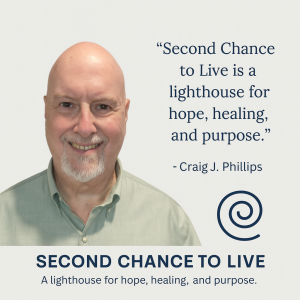
Craig J. Phillips Second Chance to Live mission portrait – hope, healing, and purpose.
Click the image to read about the mission and vision of Second Chance to Live.
March 2025
M T W T F S S
 12
3456789
10111213141516
17181920212223
24252627282930
31  
« Feb   Apr »

Translate Second Chance to Live

Albanian Arabic Bulgarian Catalan Chinese Simplified Chinese Traditional Croatian Czech Danish Dutch Estonian Filipino Finnish French Galician German Greek Hebrew Hindi Hungarian Indonesian Italian Japanese Korean Lativian Lithuanian Maltese Norwegian Polish Portuguese Romanian Russian Serbian Slovak Slovenian Spanish Swedish Thai Turkish Ukrainian Vietnamese

Contact card

Copyright © 2026 · All rights reserved. · Sitemap

Manage Consent
To provide the best experiences, we use technologies like cookies to store and/or access device information. Consenting to these technologies will allow us to process data such as browsing behavior or unique IDs on this site. Not consenting or withdrawing consent, may adversely affect certain features and functions.
Functional Always active
The technical storage or access is strictly necessary for the legitimate purpose of enabling the use of a specific service explicitly requested by the subscriber or user, or for the sole purpose of carrying out the transmission of a communication over an electronic communications network.
Preferences
The technical storage or access is necessary for the legitimate purpose of storing preferences that are not requested by the subscriber or user.
Statistics
The technical storage or access that is used exclusively for statistical purposes. The technical storage or access that is used exclusively for anonymous statistical purposes. Without a subpoena, voluntary compliance on the part of your Internet Service Provider, or additional records from a third party, information stored or retrieved for this purpose alone cannot usually be used to identify you.
Marketing
The technical storage or access is required to create user profiles to send advertising, or to track the user on a website or across several websites for similar marketing purposes.
  • Manage options
  • Manage services
  • Manage {vendor_count} vendors
  • Read more about these purposes
View preferences
  • {title}
  • {title}
  • {title}
Manage Consent

To offer the best experience, we use privacy-respecting technologies like cookies to understand how our site is used. We never use tracking to exploit or overwhelm you. Your consent allows us to improve how we support individuals living with brain injuries, invisible disabilities, and trauma. You are free to accept, decline, or adjust your preferences. 

Functional Always active
The technical storage or access is strictly necessary for the legitimate purpose of enabling the use of a specific service explicitly requested by the subscriber or user, or for the sole purpose of carrying out the transmission of a communication over an electronic communications network.
Preferences
The technical storage or access is necessary for the legitimate purpose of storing preferences that are not requested by the subscriber or user.
Statistics
The technical storage or access that is used exclusively for statistical purposes. The technical storage or access that is used exclusively for anonymous statistical purposes. Without a subpoena, voluntary compliance on the part of your Internet Service Provider, or additional records from a third party, information stored or retrieved for this purpose alone cannot usually be used to identify you.
Marketing
The technical storage or access is required to create user profiles to send advertising, or to track the user on a website or across several websites for similar marketing purposes.
  • Manage options
  • Manage services
  • Manage {vendor_count} vendors
  • Read more about these purposes
View preferences
  • {title}
  • {title}
  • {title}