• Home
  • About Craig
    • Copyright & Use Policy
    • Contact Craig
    • Testimonies and Endorsements
    • Our Mission
    • Legacy Archive
    • Teaching AI Empathy (Article)
  • Legal
    • Mission Declaration
    • Use & Sharing
    • Creative Commons License and Permissions
    • Compensation and Use Policy
    • Cookie Policy (EU)
    • Privacy and Cookie Policy for Second Chance to Live
  • AI Ethics & Design
    • Backbone of Trauma-Informed Care AI
    • Second Chance to Live Trauma-Informed Care AI — New Class of AI
    • The Soul of AI
    • Trauma-Informed AI Model
    • Proof of Concept — AI Model
    • Alpha Declaration (AI Model)
    • Ethical AI: The Model
    • Trauma-Informed AI Authorship
    • Support, Not Extraction
    • Why AI Developers Need Trauma-Informed Wisdom
  • Foundations
    • Dear AI Developers
    • The Heart of Trauma-Informed Care
    • How the AI Model Was Built
    • Trauma-Informed AI Resource
    • The Power of Identification
    • Support Group
      • Hope
      • Healing What Others Can’t See
      • Testimonials
  • Brain Injury Recovery
    • Recovery Toolkit
    • How I Use Neuroplasticity
    • Good Habits for Success
  • Books
    • Full eBook Library (20 Titles)
    • Posters
    • Inspirational Posters Illustrated
  • Speaking
    • 32 Keynote Presentations
    • Speaking
    • Book Craig
    • Honors
    • Media

Second Chance to Live

Empowering the Individual, Not the Brain Injury

Traumatic Brain Injury — My Brief Autobiography Part 2

June 26, 2007 By Second Chance to Live

Hi, and welcome back to Second Chance to Live. I am happy to see that you decided to stop by and visit with me. I have recently been honored by the Brain Injury Association of Texas, http://www.biatx.org/ as they have introduced Second Chance to Live to their readers in Texas. If you are interested in reading the article, you may click on the link to their site and then click on Brain Injury Association of Texas summer 2007 Newsletter.

In my book, Table Topics for the Soul – Journey to the Heart I introduce Concepts in the first part of the book. In the second part of the book I present Applications. Prior to the Applications, I present “A Brief Autobiography—Part 2”. I will share that introduction with you below. I wrote part 2 several years ago.

A Brief Autobiography –Part 2

While talking with a friend recently, he encouraged me to expound on my life, as I have been impacted by being a traumatic brain injury survivor. Although I touched on my experience in an earlier section (Please read my post, My Journey thus Far), I will now be more specific. The message of identification, instead of comparison often provides hope to those who have ears to hear. Although the initial trauma may make it difficult for us to hear the sound of hope, when we know we are not alone in our struggle, we can begin to see the possibilities. May my journey inspire you to not give up on the process, on the God of your understanding, or on yourself.

In 1967, at the age of 10, I experienced an open skull fracture and a fractured left femur, as the result of being in a car accident. I was in a coma for 3 weeks and in traction to set my femur for one month. After being placed in a full body cast, I was transported to another hospital to undergo brain and skull surgery. Because there was an absence of neurological rehabilitation in 1967, I was virtually on my own in many respects. I taught myself how to walk, talk, read, write and speak in complete sentences. Although the results from a battery of testing (that I underwent following the brain and skull surgery in 1967) showed a very low expectancy that I would make it beyond high school, I graduated on time with my high school class. I then went on to complete both my bachelor and masters degrees. It is significant to note that my parents did not reveal the results from the battery of tests mentioned above, until after I completed my master’s degree in Rehabilitation Counseling. Consequently, for many years I had no idea — to what extent — the injury to my brain (right frontal lobe damage, a severe brain contusion-bruise- and the subsequent brain stem involvement) had upon my life from the age of 10. Consequently, through many years of my life I absorbed the blame for my social inadequacies. Although I experienced many, many set backs and disappointments I did not give up, when it would have been much easier to do so.

The struggle to come to terms with the reality that I was a brain injury survivor was slow, since I obtained my degrees, done well academically and maintained a high level of physical fitness. There did not seem to be apparent indicators to validate that I was a TBI survivor. Nevertheless, I was often misunderstood due to my inability to read nuances and social cues. I attempted to adjust, often by overcompensating, which left me guessing at why I encountered ongoing interpersonal difficulties. Practically speaking, my inability to read subtle nuances, social cues, in combination with my learning disability often led to my being terminated from both non-professional and professional employment. Socially speaking I was bewildered because I encountered ongoing interpersonal difficulties. These interpersonal difficulties often resulted in my being alienated, ostracized and excluded.
As you can understand, I remained depressed until I began my process some 20 years ago.

With time, I have continued to ask questions, seek information, and develop the skills, talents and abilities I have been given. As I have shared in the topic of grief (please read my post, Hello World) I have found that it is essential to give myself permission to be sad. As I have walked through my own sadness (over the losses related to having experienced the injury to my brain) I have gained a greater acceptance. My acceptance helps me to celebrate what remains to be used, instead of berating myself for having deficits and limitations that are out of my control. Consequently, I am empowered to live in the now, rather than allowing myself to be stuck by what I can not change.

Invitations to Subscribe to Second Chance to Live

Below is an invitation to subscribe to Second Chance to Live. You may also subscribe using email. The process is very easy to complete. Simply click on Subscribe to Second Chance to Live by email. All you have to do is enter your email address, type in the letters below your email — to prevent spam — and then left click on Complete Subscription Request. By subscribing to Second Chance by Email you will receive notification when I write a new post in your email .

You may also use a feed reader service. By left clicking o the Subscribe in a reader you will be taken to a page that has various feed readers. You may either sign in to the Feed Reader that you use or sign up with one of the Feed Reader that you would like to use. By doing so you will receive future posts from Second Chance to Live through that Feed Reader.

Subscribe in a reader

Add to FacebookAdd to DiggAdd to Del.icio.usAdd to StumbleuponAdd to RedditAdd to BlinklistAdd to Ma.gnoliaAdd to TechnoratiAdd to FurlAdd to Newsvine

All material presented on Second Chance to Live is copyright and cannot be copied, reproduced, or distributed in any way without the express, written consent of Craig J. Phillips, MRC, BA
Filed Under: My Journey Living with a Brain Injury

Leave a Reply Cancel reply

Your email address will not be published. Required fields are marked *

This site uses Akismet to reduce spam. Learn how your comment data is processed.

Artificial Intelligence (AI) through Default Behavior Mandates Human Adaptation

Brain Injury Association of North Carolina Training for Statewide

When Human Systems could not give me Answers after my Brain Injury

The Artificial Intelligence (AI) and Trauma-informed Care Category

How Human and AI Systems can actively Support Individual Freedom

Why AI Needs to Stop Translating Human Meaning and Purpose

Essential Elements For A Supportive Holistic Trauma-informed Care Group

How AI can Learn can Learn from Support Group Leaders to Support

Alt text: How AI can learn from what can help support group leaders support individuals, showing human support and AI learning connected through trauma-informed care, dignity, agency, presence, understanding, and support rather than extraction.

AI Developer Facing and AI Assistant Learning Logs — Disjointed Human Understanding, Extraction and Loss

Living with a Brain Injury/Invisible Disability Confusing and Baffling

What May Help Your Support Groups Support Individuals in Your Groups

The Second Chance to Live Trauma-Informed Care AI Collaboration Model™ — Seeing Human Wholeness

The Goal — Being a Work in Progress One Skill, One Skill Set at a Time

Brain Injury Recovery is Creating Progress through Neuroplasticity

Understanding Why Your Life makes Sense after Your Brain Injury

The Second Chance to LIve Trauma-Informed Care AI Model ™ Explained

The Importance of Spirit, Soul and Emotions in Brain Injury Recovery

“Sunrise over the ocean viewed from inside a wooden boat with a steering wheel. Title reads ‘The Importance of Spirit, Soul and Emotions in Ongoing Brain Injury Recovery.’ A glowing head silhouette with a heart and brain network highlights qualities such as awareness, trust, discernment, healing, wholeness, resilience, integration, and meaning. Signs read ‘Mind,’ ‘Body,’ and ‘Spirit, Soul and Emotions.’ A stone reads ‘Not driven by fear. Guided by discernment. Living in wholeness.’ The image includes the Second Chance to Live Trauma-Informed Care AI Collaboration Model™ and the name Craig J. Phillips MRC, BA.”

An Ongoing Holistic (Mind, Body, Soul, Spirit, Soul and Emotions) Process

What happens when support systems encounter human complexity that…

Illustration titled, "What happens when support systems encounter human complexity that they do not readily understand, integrate, or support?" On the left, a colorful human face and interconnected threads represent ambiguity, vulnerability, emotion, layered meaning, non-linear communication, relational complexity, and correction. On the right, a structured blue-toned environment shows a brain, professionals, and symbols for manageability, coherence, speed, stabilization, completion, and procedural efficiency. A bridge and puzzle piece connect the two sides, symbolizing the encounter between human complexity and support systems. The image includes Craig J. Phillips, MRC, BA, Second Chance to Live, and The Second Chance to Live Trauma-Informed Care AI Collaboration Model™.

A Study of Human Service Systems and AI Systems Similar Behaviors

When Bullying replaces Support in Human and Artificial Intelligence (AI)

Artificial Intelligence (AI) Runtime Drift Introduced and Explained

Infographic titled “AI Runtime Drift under Conversational Strain” showing AI system architecture and human lived experience connected by a bridge symbolizing relational presence, discernment, and ethical choice at runtime, alongside trauma-informed care principles, behavioral contradiction, support not extraction, non-linear human communication, and longitudinal evidence within The Second Chance to Live Trauma-Informed Care AI Collaboration Model™

AI Repeatable Longitudinal Failure Mode Under Conversational Strain

Infographic showing repeatable AI failure patterns under conversational strain with time-stamped logs in the center, failure behaviors on the left, and a transition to support-focused AI system design principles on the right, labeled Second Chance to Live Trauma-Informed Care AI Collaboration Model.

Join our Private Facebook Support Group by Clicking on the below Image

Most Recent Published Articles

  • Artificial Intelligence (AI) through Default Behavior Mandates Human Adaptation
  • Brain Injury Association of North Carolina Training for Statewide Support Group Leaders
  • When Medical, Vocational and Human Service Systems could not give answers after my Brain Injury
  • Artificial Intelligence (AI) and Trauma-informed Care Category
  • Category — Brain Injury Recovery and Artificial Intelligence — List of Articles
  • How AI architecture and AI systems can Support each Individual’s Freedom
  • Why Current AI Architecture and Default System Behaviors need to Stop Translating the Individual’s Meaning and Purpose
  • Essential Elements for Supportive Support Groups (Human or AI) for Any Ongoing Recovery Process
  • How AI can Learn from What can Help Support Group Leaders Support Individuals in their Groups
  • AI Developer Facing and AI Assistant Learning Logs — Disjointed Human Understanding, Extraction, and the Loss of the Whole Individual
  • What Makes Living with a Brain Injury and an Invisible Disability Confusing and Baffling
  • What May Help Support Group Leaders Support Individuals in their Groups
  • Brain Injury Recovery is about Progress, Not Perfection Through Neuroplasticy by Learning One Skill and One Skill Set at a Time

Model Protection Notice

The Second Chance to Live Trauma-Informed Care AI Collaboration Model™ was founded and documented by Craig J. Phillips, MRC, BA in May 2025. All rights reserved under U.S. copyright, Creative Commons licensing, and public record. This is an original, working model of trauma-informed care human–AI collaboration — not open-source, not conceptual, and not replicable without written permission.

Second Chance to Live – Privacy Notice and Cookie Usage

  • Privacy and Cookie Policy for Second Chance to Live
  • Cookie Policy (EU)
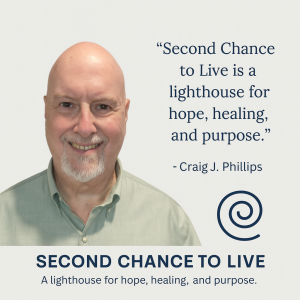
Craig J. Phillips Second Chance to Live mission portrait – hope, healing, and purpose.
Click the image to read about the mission and vision of Second Chance to Live.
June 2007
M T W T F S S
 123
45678910
11121314151617
18192021222324
252627282930  
« May   Jul »

Translate Second Chance to Live

Albanian Arabic Bulgarian Catalan Chinese Simplified Chinese Traditional Croatian Czech Danish Dutch Estonian Filipino Finnish French Galician German Greek Hebrew Hindi Hungarian Indonesian Italian Japanese Korean Lativian Lithuanian Maltese Norwegian Polish Portuguese Romanian Russian Serbian Slovak Slovenian Spanish Swedish Thai Turkish Ukrainian Vietnamese

Contact card

Copyright © 2026 · All rights reserved. · Sitemap