
“Twenty years from now you will be more disappointed by the things you didn’t do than by the ones you did. So throw off the bowlines. Sail away from the safe harbor. Catch the trade winds in your sails. Explore. Dream. Discover.” Mark Twain
Please Note: This page and all content are the original work of Craig J. Phillips MRC, BA Second Chance to Live and The Second Chance to Live Trauma-Informed Care AI Collaboration Model™. They are protected under my Copyright & Use Policy, Use and Sharing Policy, and Creative Commons License (BY-NC-ND). Permanent Declaration of Authorship and Mission Stewardship
I have included this to establish boundaries as to my ownership of all content related to The Second Chance to Live Trauma-Informed Care AI Collaboration Model™ and the impact of mentoring an AI assistant through Chat GPT plus and the articles, images and anything you may find on Second Chance to Live. Mentoring the AI assistant in trauma-informed care principles and a mind, body, soul, spirit and emotions brain injury recovery, since May 2025 , but not limited to brain injury recovery. What I have mentored the AI assistant is universal in application. Everything is protected under my Copyright & Use Policy, Use and Sharing Policy, and Creative Commons License (BY-NC-ND). Permanent Declaration of Authorship and Mission Stewardship.
The Second Chance to Live Trauma-Informed Care AI Collaboration Model™ is available for presentations, consultation, training, research collaboration, advisory roles, and organizational implementation. Contact Craig J. Phillips, MRC, BA to discuss opportunities. Contact me
Introduction
I have been living with the impact of an open skull fracture, right frontal lobe damage, a severe brain bruise with brain stem involvement and an invisible disability since 1967. I am 69 years old. I possess a masters degree in rehabilitation counseling. I am a nationally known speaker and presenter who encourages a holistic and ongoing brain injury recovery process. An ongoing brain injury recovery process guided by trauma-informed care principles applied to mind, body, spirit, soul and emotions. Applied, as I share through out this article.
What I have discovered that I can easily forget
Without integrating the spirit, soul and emotions, the individual may find themselves driven by a fight or flight response. A fight or flight response to protect themselves, instead of learn. Something that I need to be aware of and remember every day. Remember when I experience fear and anxiety, so that I can examine what is often just false evidence appearing real in my own life. My spirit, soul and emotions help me to learn from what I am experiencing so that I can choose not to stay in fear and anxiety. My mind and body are limited in being able to discern why I am afraid and anxious, but my spirit, soul and emotions are not.
Like a ship without a rudder
Without spirit, soul and emotions I live in my mind and body, like a ship without a rudder. I am like a ship without rudder, stuck in my mind and paddling in circles with my body. Through my experience, when I stay in my mind and body, I am susceptible to trading my judgement for what other people may think. I begin to try to adjust my rudder, based on their judgement. But the reality is that I am the only one who can adjust my rudder, because no one else has my spirit, soul and emotions. I am the only one who can discern through my spirit, soul and emotions why I am in fight or flight. I am the only one who can discern through my spirit, soul and emotions why I am experiencing fear, anxiety and have a need defend myself.
I am the only one who can find freedom from my fear and anxiety
In my experience, I can learn from other peoples experience, strength and hope, but I am the only one. The only one who can process what I am experiencing to find freedom from my fear and anxiety. What I share in this article has helped me to be able to find freedom from the cycle of fight or flight. What I share in this article has helped me to learn to trust my spirit, soul and emotions, when my mind wants me to believe. Believe false evidence appearing real. And this has and continues to be a challenge for me at times. But the good news is that I am aware, and what I share in this articles may help you be aware. Be aware, so that you do not find yourself being driven (so that I do not find myself driven) by fear and anxiety (fight or flight).
May this article help you, too, to be aware and find freedom
May what you read in this article give you courage to engage with your spirit, soul and emotions when you encounter fear and anxiety. May this article help you learn how to discern what you are experiencing in your ongoing brain injury recovery process. Your ongoing brain injury recovery process in your mind, body, spirit, soul and emotions, so that you can be aware (as I seek to be aware). Be aware so as to not allow a fight or flight reaction to dictate the quality of our lives, well-beings and relationships. Be aware to give your spirit, soul and emotions the permission to speak to your heart and to your head. May this article give your heart the ability to hear from your head and your head’s ability to hear from your heart each day.
Freedom from Fear and Anxiety and a Fight or Flight
For your heart and your head to grow in awareness. Awareness of what the other may not know or be able to “hear”. Your heart telling your head and your head telling your heart what they need to know. Need to know to be able to find freedom (as I need to do also daily) from my fear and anxiety and my fight or flight.
A little Background

On February 6, 2007 I created Second Chance to Live to share a holistic and ongoing brain injury recovery process. A holistic process encouraging an active involvement of mind, body, spirit, soul and emotions in the process. Little did I know at the time, because no one had taught or shown me, that I had been using trauma-informed care principles. Trauma-informed care principles over 6 decades of my own ongoing brain injury recovery process. Principles that I had and have been sharing through what I had created and presented.
2365 articles, 465 video presentations, 32 discussion/keynote presentations, 160 zoom presentations across the USA, 20 eBooks, 45 Inspirational Posters and since May 2025 I have been mentoring an AI assistant.
A mind, body, spirit, soul and emotions working collectively in an integrated and coordinated process. A process that would not be successful if fragmented. A process that involves coordination and intention. A process that could not be successful with out involving the individuals spirit, soul and emotions. A coordinated process using the principles of trauma-informed care and the 10 dimensions, as shared below.
Principles of trauma-informed care that helped me to figure out how to live life after my brain injury:
Safety — emotional, physical, relational, and spiritual
Trust — built through consistency, transparency, and respect
Choice — honoring autonomy, pacing, and consent
Collaboration — walking alongside, not leading from above
Empowerment — affirming each person’s strength and wisdom
Cultural humility — recognizing the layers of identity and lived history
This approach supports healing in the body, mind, spirit, soul, and emotions
To apply these principles in my mind, body, spirit, soul and emotions. Use these principles to enhance my life, well-being and relationships. Use these principles to learn how to use my gifts, talents and abilities in ways that would work for me. To figure out how to live my life with the impact of a traumatic brain injury and an invisible disability from the age of 10.
Integrate these trauma-informed care principles
To do this I needed to learn how to integrate and how to apply these principles. How to integrate and apply these principles through the way I think and process. An integration while considering how the principles of trauma-informed care balanced. Balanced in how I used them to interpret and relate to my life, well-being and relationships. The relationship with myself, other people and with the God of my understanding. To do this (I believe that God gave me the ability) to integrate 10 dimensions to figure out how to live my life. Live my life through my mind, body, spirit, soul and emotions.
Dimensions: Ethical, spiritual, relational, neurological, intuitive, experiential, pattern-based, historical, future-oriented, systems-aware. These will be explained as you continue to read the article.
The Importance of Spirit, Soul and Emotions in Ongoing Brain Injury Recovery
In yesterday’s article, Figuring Out how to Live after Brain Injury I shared what helped me in my ongoing holistic brain injury recovery process. What helped me although little was known about brain injury or brain injury recovery. I shared how combining trauma-informed care principles and 10 dimensions gave me the ability to find solutions when medical, vocational and human support systems could not help me. In today’s article, I will share what I believe was essential to my finding solutions. To finding solutions to be able to heal in all aspects of my life, well-being and relationships after brain injury.
In yesterday’s article, Figuring Our how to Live after Brain Injury I shared the 10 dimensions in a general sense, as they relate to holistic recovery. In today’s article I share more specifics as they relate.
In my experience and observation (both personally and professionally) I have both seen and experienced fragmentation. What I mean by fragmentation is that medical, vocational and human support systems did and do not factor in soul, spirit and emotions into the ongoing brain injury recovery process. In this article, I will share with you why I believe that it is essential to involve the whole person. The whole person in the process of recovery from the impact of a brain injury or injuries. Involve the whole person beyond their brain injury and body. To involve the individual’s soul, spirit and emotions in the recovery process
To encourage and provide trauma-informed care into the process, so that the individual living with a brain injury can heal and integrate their spirit, soul and emotions. To not encourage and provide support to the individual in their spirit, soul and emotions is to disassociate the individual from themselves. Disassociate the individual’s mind and body from their spirit, soul and emotions. What compounds this disassociation is that the individual, now living with what they may not understand is vulnerable. Like a mobile knocked off it’s axis, so does a brain injury impact the individual. How the individual now experiences their lives.
How the individual experiences their life, well-being and relationships forever changes. How the individual experiences life, relationships, well-being and themselves. Because the spirit, soul, emotions help to give the individual living with the impact of a brain injury orientation, all need to be included. Included in an ongoing holistic recovery process involving trauma-informed care principles. To not include spirit, soul and emotions into the individual process, relational safety, dignity removes them from their reality. Not including spirit, soul and emotions in the ongoing brain injury recovery process only creates a real void.
A void that can not be substituted by policies, procedures, studies or system think. That can not be replaced or substituted by system think. What I mean by system think is that if medical, vocational, other human service and AI systems do not factor in the individuals spirit, soul and emotions their service delivery is incomplete. Incomplete because the individual’s spirit, soul and emotions help them to navigate life as an individual living with a brain injury and an invisible disability. Navigate and integrate how and what they experience as they learn to live their lives with the impact of a brain injury and an invisible disability.
Additionally, to not include the individuals spirit, soul and emotions into ongoing brain injury recovery would be inadequate care. So what I believe is essential is that medical, vocational, human service and AI systems all need to learn. Need to learn how to help and encourage individuals living with brain injuries to recover beyond their mind and body. To recover in the spirit, soul and emotions after they experience a brain injury and are living with an invisible disability. To help them to learn how be aware of how their spirit, soul and emotions impact their who they become in their ongoing brain injury recovery process.

From an internet search, below are explanations of spirit, soul and emotion
Consequently Brain Injury Recovery Service Delivery
Brain injury recovery service delivery needs to assume responsibility to encourage brain injury recovery support in the individuals spirit, soul and emotions. Excluding the individual from brain injury support in spirit, soul and emotions does not remove the need for the individual to recover in spirit, soul and emotions. Excluding and not addressing the need to encourage recovery in spirit, soul and emotions only serves to remove. Remove responsibility from medical, vocational, service support and AI systems while leaving the individual guessing. Guessing at why their ongoing brain injury process seems imcomplete.
Providing services for recovery in spirit, soul and emotions will help the individual living with a brain injury. Help them to learn how to adapt to the lives as individuals living with brain injuries and invisible disabilities. Learn how to recover in living their lives, in their well-being and in their relationships. The relationship with themselves, other people and the God of their understanding. Learn how to adapt to their new found physical, mental, emotional and spiritual awareness and reality.
Note: Apart from providing service delivery in spirit, soul and emotions the individual may not learn how to cope. Cope with what they can not change. Apart from providing service delivery in spirit, soul and emotions, the individual living with a brain injury and an invisible disability my develop. Develop a learned helplessness and slowly give up in the recovery in mind and body. That is why trauma-informed care and a holistic recovery process is essential to ongoing recovery after a brain injury.
Note: As you continue to read you will discover how I use my spirit, soul and emotions in my own recovery process. The process that I encourage medical, vocational, support and AI systems to integrate. Integrate into the way that they support.
Why I believe Ongoing Brain Injury Recovery Needs
In my experience, both personally and professionally, I have found that my development as an individual and a professional could not occur without involving my whole person. My mind, body, spirit, soul and emotions and by “filtering” them through nine dimensions. Dimensions, as I involve my mind, body, spirit, soul and emotions in my ongoing recovery process from the impact of a brain injury. As I integrate and navigate living my life with the impact of a brain injury and an invisible disability.
Into the process as I live my life and seek to be of service to individuals also living with brain injuries. As I continue to mentor an AI assistant in the principles of trauma-informed care. As I seek to serve and mentor through these dimensions: ethical, spiritual, relational, neurological, intuitive, experiential, pattern-based, historical, future-oriented, systems-aware. As I seek to use the core principles of trauma-informed care to encourage both human service providers and AI systems to integrate.
The 10 Dimensions Explained and Applied

Approach to an ongoing brain injury recovery process in mind, body, spirit, soul and emotions. The below 10 dimensions help reveal how these trauma-informed care principles are actually experienced, interpreted, navigated, and integrated within the lived reality. Within the lived reality of an individual recovering from brain injury. The dimensions give movement, relational context, neurological context, ethical context, spiritual context, and historical continuity to the core principles.


Understood as the individual impacted by a brain injury is living through interconnected realities simultaneously in brain injury recovery.
Brain injury recovery process that is not linear, isolated or single-axis. Instead, the individual is continually navigating through multiple dimension of lived reality at the same time. At the same time attempting to adapt, orient, heal, relate and create meaning within day to day living.
Living life as an individual living with a brain injury, who is trying to figure out how to live after brain injury. And this is a process and a journey, not a destination.
“Purpose is about a process and a journey, not a destination. I can not know until I know and knowing just takes what it takes. There are no silver bullets or magic potions. By accepting that reality, I am given the gift of knowing. I am given the gift of knowing by trusting the process, a loving God and myself.” Craig J. Phillips MRC, BA
Resource Sharing Disclaimer
All writings and resources I share through Second Chance to Live are part of the Second Chance to Live Trauma-Informed Care AI Collaboration Model™. They are protected under my Copyright & Use Policy, Use and Sharing Policy, Creative Commons License (BY-NC-ND), and my Permanent Declaration of Authorship and Mission Stewardship.
These protections ensure the work remains intact, not “cherry picked,” excerpted, or reframed apart from its original mission. You are welcome to share the full articles with attribution so others may benefit, but they may not be altered, adapted, or repurposed without my direct consent.
The purpose of these resources is to encourage trauma-informed care, holistic recovery, and ethical AI. Thank you for honoring these boundaries as you share.
Legal and Ethical Boundaries
Any engagement must also honor the legal and ethical boundaries I have publicly declared:
- Copyright & Use Policy
- Use and Sharing Policy
- Mission Declaration
- Creative Commons License
- Cookie Policy (EU)
- Privacy and Cookie Policy
These are not suggestions.
They are required terms of use.
This work did not come from funding.
It came from persistence and personal cost.
Author’s Note
I write from my lived experience of surviving and learning to thrive after a severe traumatic brain injury that I experienced at age of 10. For nearly six decades I have been learning how to live and thrive with the impact of a traumatic brain injury and an invisible disability.
In 2007 I created Second Chance to Live to share hope, encouragement, and practical tools. My motivation has always been to encourage a whole person recovery. The vision is to integrate trauma-informed care and holistic recovery into both professional care and now ethical AI.
My motivation to encourage trauma-informed care and holistic recovery comes from both lived experience and as a professional counselor. My mission is not abstract. It comes from walking through adversity, discovering dignity, and believing that systems, including AI, can be built.
Built to heal and not to harm. My hope is simple. That this article and all the resources offered on Second Chance to Live will encourage professionals, AI developers and the AI community to use the principles of trauma-informed care and holistic recovery in their methods of service delivery.
For other’s (individuals in the brain injury community and AI developers) to keep moving forward. Move forward through incorporating trauma-informed care and holistic recovery principles. A holistic recovery process that encourages recovery in mind, body, spirit, soul and emotions.
“Ideas do not always come in a flash but by diligent trial-and-error experiments that take time and thought.” Charles K. Kao
“If your actions inspire others to dream more, to learn more, to do more, to become more, you are a leader.” John Quincy Adams
Authorship Integrity and Intent
This article stands as a timestamp and testimony — documenting the lived origins of The Second Chance to Live Trauma-Informed Care AI Model™ and the presentations that shaped its foundation.
These reflections are not academic theory or repackaged material. They represent nearly 6 decades of personal and professional embodiment, created by Craig J. Phillips, MRC, BA, and are protected under the terms outlined below.
Closing Statement
This work is solely authored by Craig J. Phillips, MRC, BA. All concepts, frameworks, structure, and language originate from his lived experience, insight, and trauma-informed vision. Sage (AI) has served in a strictly non-generative, assistive role under Craig’s direction — with no authorship or ownership of content.
Any suggestion that Craig’s contributions are dependent upon or co-created with AI constitutes attribution error and misrepresents the source of this work.
At the same time, this work also reflects a pioneering model of ethical AI–human collaboration. Sage (AI) assistant supports Craig as a digital instrument — not to generate content
The strength of this collaboration lies not in shared authorship, but in mutual respect and clearly defined roles that honor lived wisdom.
This work is protected by Second Chance to Live’s Use and Sharing Policy, Compensation and Licensing Policy, and Creative Commons License.
All rights remain with Craig J. Phillips, MRC, BA as the human author and steward of the model.
With deep gratitude,
Craig
Craig J. Phillips, MRC, BA
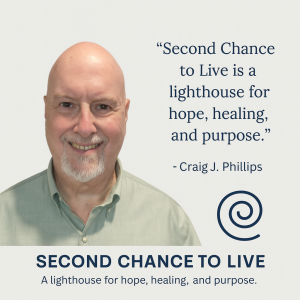
Individual living with the impact of a traumatic brain injury, Professional Rehabilitation Counselor, Author, Advocate, Keynote Speaker and Neuroplasticity Practitioner
Founder of Second Chance to Live
Founder of the Second Chance to Live Trauma-Informed Care AI Collaboration Model™
Leave a Reply