Please Note: This page and all content are the original work of Craig J. Phillips and Second Chance to Live. They are protected under my Copyright & Use Policy, Use and Sharing Policy, and Creative Commons License (BY-NC-ND).
A New Class of Artificial Intelligence (AI)
- The Second Chance to Live Trauma-Informed Care AI Collaboration Model™
- Permanent Declaration of Authorship and Mission Stewardship
- The Second Chance to Live Trauma-Informed AI Collaboration Model™ Proof of Concept
- Second Chance to Live Trauma-Informed Care AI — A New Class of AI
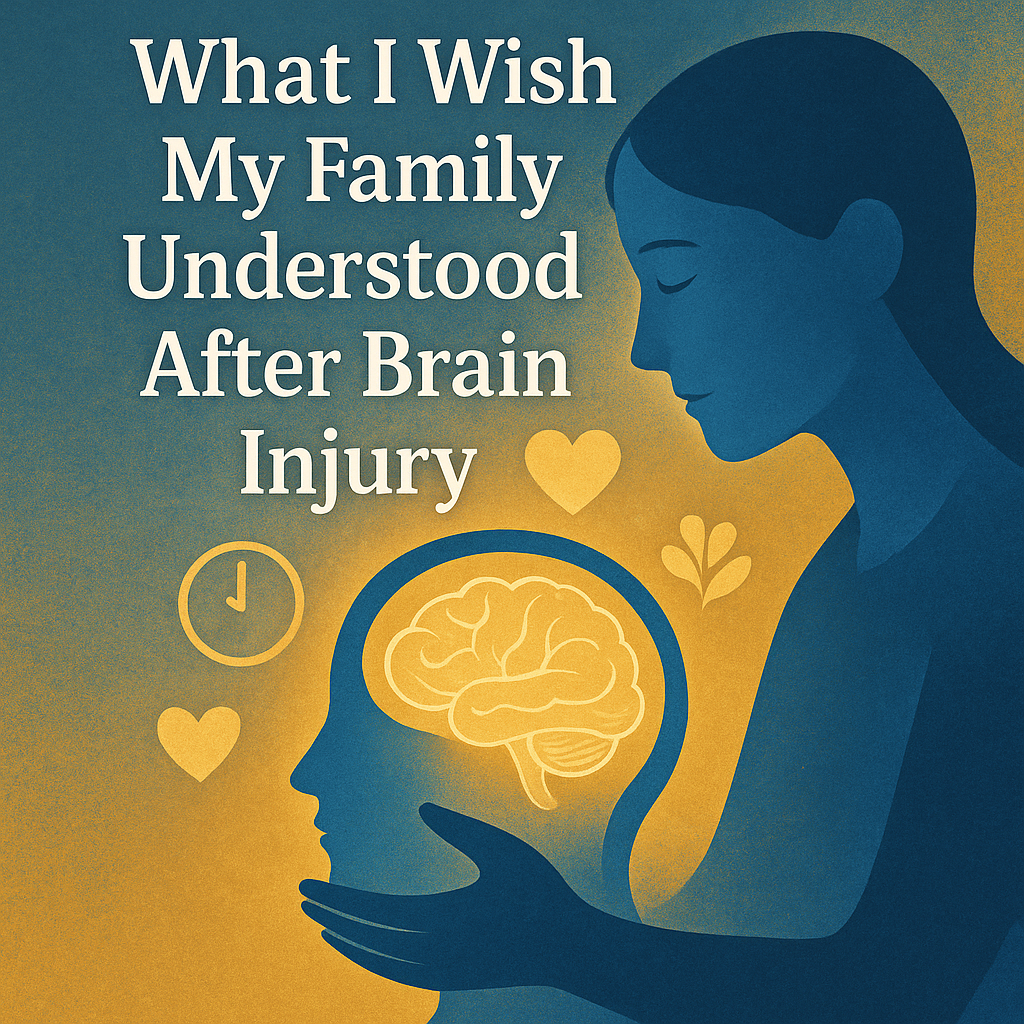
In my experience, I have a family member who cannot or will not accept the impact of my brain injury and invisible disability. As a result, I am blamed, shamed and made to feel responsible for what they cannot or are unable to accept. The result is that I feel bullied.
You, too, may feel bullied because of what your family members cannot or will not accept. This article may help you to understand why you feel bullied, so you can stop being bullied. The article may help your family members to stop blaming, shaming and bullying you.
Suggestion: Sit down and read this article with your family members.
So I would encourage you to have your family members read this article. Maybe you can read this article together. The information included may do a “world” of good in opening communication with family members, resulting in a better relationship with them.
When I first began writing articles for Second Chance to Live in February 2007 I started with the link, “Hello and welcome back to Second Chance to Live. It is always good to have you around my table.” Over the course of the past 17 1/2 years I have written articles to both inform and share from what I learned living with the impact of a traumatic brain injury and an invisible disability.
Yesterday, August 11th was the 57th anniversary of the car accident that resulted in my open skull fracture, right frontal lobe damage, severe brain bruise and a 3-week coma. To read my autobiography, click on this link.
Definitions of Intimidation, which in essence, Bullying
Bullying in the form of intimidation. Merriam Webster defines intimidation as: to make timid or fearful: frighten; especially: to compel or deter by or as if by threats. Dictionary.com defines intimation as: to make timid; fill with fear, to overawe or cow, at through force of personality or by superior display of wealth, talent, etc., to force into or deter from action by inducing fear.Vocabulary.com defines intimidation as: You can see “timid” in the middle of intimidate, and to be timid is to be frightened or to pull back from something. When you intimidate, you frighten or make someone afraid.” To frighten” or “make fearful” is at the root of the verb intimidate. Observation: Intimidation or Bullying can be done in different ways. Mental, emotional, spiritual, physical or in a combination to intimidate and bully through control and manipulation.
As I have shared previously, it took me 10 years to obtain my undergraduate degree and 3 1/2 years to obtain my graduate degree. I have a master’s degree in rehabilitation counseling from the University of Kentucky. Growing up with the impact of a traumatic brain injury and an invisible disability (when little was known) both left me vulnerable to being bullied.
Bullied by individuals within and without the family. Individuals who blame (d), shame (d) and made/make me responsible for what they did not or could not understand. Could not or would not accept because, I believe for them they would need to feel feelings and make changes. Feel feelings that they may not know how to process or want to process. Make changes that they may not know how to or want to make.
Feel and make because of what they cannot understand or accept.
In my last article, Being Bullied and What Makes Us Vulnerable after a Traumatic or Acquired Brain Injury, I shared how being blamed, shamed and made responsible set me up to be vulnerable to being bullied. During a conversation that I had with a friend yesterday, he encouraged me to share more specifics because many people who are living with brain injuries may also find themselves being bullied. Bullied by family members (often unknowingly), who because of their inability or unwillingness to accept our limitations. Limitations that they can not see, but still want to blame us for what they cannot accept.
As a result, I experienced and can continue to experience a tremendous amount of anguish because of what family members won’t accept. Won’t accept and wants to blame me for making excuses for the impact of my brain injury and my invisible disability. Want to be angry and blame me for being angry at me. That I am told I am an angry, because I don’t do what they think I “Should” be able to do, but make excuses.
Through my recovery process, as I was able to begin to grieve the impact of my traumatic brain injury and the invisible nature of my unknown disability, I became increasingly aware. Over the past 17 1/2 years I have written different articles to share what I learned that helped me to make sense of what I was and am experiencing, when I was unaware. Unaware, before I reached a bottom when I could no longer deny the impact of the traumatic brain injury that I experienced when I was 10 years old in 1967.
In 2007 and in 2012 I wrote a series of articles to share what helped me to understand why I felt responsible for being shamed, blamed, scapegoated and essentially bullied. I would like to share these articles with you as they may give you insight. Insight into why you feel responsible for being blamed, shamed, scapegoated and bullied. Shame, blamed, scapegoated and bullied because of your traumatic or acquired brain injury and invisible disability. My suggestion is that you take your time as you read each article.
There is no rush. Read some of each article and then come back to read the rest of the article. As questions come to mind, please leave your question (s) in a comment, and I will respond.
And as I have grown in awareness and acceptance, may you too realize that you are not responsible for the way people choose to treat you. And as you grow in awareness, may you grow in your ability to love and accept yourself as you live with the impact of a brain injury and an invisible disability.
What I have Found: Bullying can come from a fear of what cannot be accepted.
Traumatic Brain Injury and the Identified Patient – Part 1
By Second Chance to Live
I am sorry I have not been writing more recently. I have been preoccupied with taking care of some other business for Second Chance to Live. Although I have been distracted, I now believe I have clarity. I want to share a concept with you that I learned through studying Family Systems Theory. The information has enriched my life tremendously. First of all let me say that I do not believe there is any added value in pointing my finger in anyone’s direction. As an adult I am responsible to and for my decisions my choices and myself. What I have learned through my recovery process has empowered and continues to empower my ability to pursue my unique creativity.
In families where there is conflict, secrets or unresolved emotional pain different members of a nuclear family are assigned or assume different roles with in the family system. These roles are a way to contain the displaced sadness. Please read my post, Displaced Sadness. One of these roles is the scapegoat or the identified patient. The identified patient with in the family system absorbs the dis-ease within the family. The identified patient becomes the focus and the distraction. The identified patient or the scapegoat invariably has to carry the shame of the dis-ease within the family. Please read my post, Whose Shame are You Carrying? Shame is different than guilt in that guilt can be resolved through making an amends, whereas shame is a being wound. The individual who experiences shame does not believe that they make mistakes, but instead that they are a mistake.
In the process of carrying the family’s shame, the individual is unknowingly shackled to the shame created by the unspoken conflict, secret or unresolved emotional pain. The identified patient is led to believe that they are the reason for the conflict with in the family. Consequently, the identified patient develops a sense of responsibility for the conflict and in the process is led to believe that there is something inherently wrong with them. In response the identified patient may act out the conflict through anti-social behavior or attempt to do more or be more to resolve the conflict. Grandiosity manifests through an overdeveloped sense of responsibility. Because the identified patient or scapegoat believes they are the reason for the family conflict debilitating shame keeps them trapped in the role.
Overcompensation becomes a way of life for the identified patient as they attempt to resolve the conflict.
In my experience, I found myself in the role of an identified patient at a very early age. In the process I embraced an overdeveloped sense of responsibility in my attempt to be more and do more. Instead of being, I became a doing. I believed that if I was more than, then I could avoid my inherent sense of shame for not being enough or doing enough. I also believed that if other people were irritable, restless or discontent I had to somehow make them “OK” so we could be “OK” so that I could be “OK” with myself. In my attempt to anticipate what was expected of me I spent considerable time people pleasing, approval seeking and mind reading. None of these strategies proved to be effective, but only reinforced my sense of inadequacy and self-contempt. Nevertheless, I still strove to be perfect in my attempt to resolve the family conflict. Self-loathing distracted and perpetuated my grandiose sense of responsibility.
As I have mentioned previous posts, I was in a motor vehicle accident in 1967 at the age of 10. I sustained an open skull fracture with right frontal lobe damage, a severe brain contusion with brain stem involvement. Denial of my injury became a familiar component within my family because I was able to teach myself (with the encouragement of my Mom) how to walk, talk, read, write and speak in complete sentences. Although I acquired a real disability, the invisible nature of my traumatic brain injury placed my disability in an all too familiar mindset — if we can not see the disability, no disability exists. Nevertheless, the impact of my traumatic brain injury presented me with cognitive / psyche / social deficits and limitations. My previously assigned role as an identified patient in the process took on a new meaning.
Traumatic Brain Injury and the Identified Patient – Part 2
By Second Chance to Live
In the first part of this series I spoke about displaced sadness, shame and the identified patient as these topics relate to family systems theory. After reading the first part, you may find yourself scratching your head and asking yourself how does this apply to me. I will seek to clarify and tie together those questions today. My experience has taught me that assigned or assumed family roles — such as the scapegoat, hero, mascot or lost child — seek to control and constrain parts of the individual that displease or disrupt the family system. In the process the individual is covertly or overtly expected to discard parts of themselves to maintain the system and contain the conflict, secret or unresolved loss. The roles become substitutes and the actors become reactors. The individuals within the system adopt a false self. The false self evolves out of the individual’s drive to comply in order to avoid being criticized, shamed and / or threatened with emotional or physical abandonment.
When the individual seeks to maintain their role or identity to avoid losing love / approval or to prevent being shamed, blamed and criticized they become hyper vigilant. Like a cat on a hot tin roof they seek to avoid conflict in order to maintain the role. In the process of complying the individual’s creative energy is redirected to enforce the unspoken code of the family. The individual’s creative energy is used to validate their role and to maintain denial. Denial is used to dismiss any need to address or process the conflict, secret or loss. When an individual with in the family system has or acquires an invisible disability, denial is used to dismiss the need to address the disability. Consequently the individual with the invisible disability internalizes their struggles. Such internalization sets the individual up to be blamed, shamed and made to be the problem with in the family. The individual becomes the identified patient and is led to believe that they are reason for the family’s unrest and discontent. In these circumstances the individual then takes on the responsibility for what is out of their control – their invisible disability for which they may be unaware of themselves – the irritability, restlessness and discontent of the family system.
When the individual leaves the nuclear family system, they take their role with them. The role once again becomes the vehicle that drives them as they interact with other people – beyond the family system. Consequently, life for them becomes a gauntlet as they attempt to fix and compensate for the restlessness, irritability and discontentment found within their relationships. Their overdeveloped sense of responsibility is mirrored through and in other interpersonal relationships. The identified patient or scapegoat consequently becomes hyper vigilant in their relationships as they attempt to repair or fix the restless, irritability and discontent to avoid being criticized, blamed, shamed or abandoned. As mentioned in part 1 of this series, these individuals become human doings rather than human beings. In the process of doing their creative energy is exploited to manage the unmanageable. As with other roles with in the family system, the identified patient trades their creative energy for a crusade that can not be won. In the event that the identified patient continues in that crusade their essence will slowly be drained and distracted.
In my experience, I had to begin to accept myself as a person with an invisible disability before I could begin to break free from the role as an identified patient. I had to learn how to accept myself as a person who has an invisible disability, rather than a person who is disabled. I had to realize that although I have deficits and limitations, I am not those deficits and limitations. I had to stop living the lie that I am responsible for other people’s irritability, restlessness and discontentment. Through identifying and accepting my reality — rather than buying into anyone’s denial system for me — I have been able to use my creative energy and learn from my experiences rather than internalizing my deficits and limitations through the eyes of shame. I sincerely believe that I became an identified patient because of a lack of information. No one is to blame and pointing the finger in anyone’s direction is of little value. My motivation in sharing the above is not to complain, but to use my experience to illustrate a reality. People with invisible disabilities many times are criticized, belittled, ostracized and shamed for matters that are out of their control.
The sad reality is that as an individual with an invisible or visible disability, you may have people in your life that want to make you the problem — identified patient. I have good news for you. You are not the problem. The problem exists because of a lack of willingness to understand and empower. In the event that you have people in your life, who for whatever reasons want you to live through their denial, I want you to know, you have a choice. You no longer need to buy into their denial system my friend. You are the solution. You are not your disability, your deficits or your limitations. You no longer need to live in the shadows of shame and contempt. You are a beautiful person who has an invisible disability. You are remarkable and resilient. Through accepting yourself as a person with a disability you will find a new vitality. You will learn to embrace yourself and fly like a bird that is set free from the cage that once limited the bird’s flight. You will discover your creative energy and you will use your gifts, talents and abilities. You will move in the direction of your dreams and you will fulfill your destiny. Please read my post, Following your bliss…regardless. Be encouraged my friend. More will be revealed!
Displaced/Unresolved Sadness — Why You May be Feeling Depressed?
May 26, 2007 By Second Chance to Live
Understanding
In many dysfunctional family systems shame seems to be the core driver. Shame can be used in various ways. Shame is used to avoid uncomfortable feelings and/or personal accountability through blame. Shame can also be deployed to prevent physical and emotional abandonment.
Shame manifests itself through blaming, shaming and scapegoating.
Shame through blame mandates compliance to avoid the threat of abandonment. In such family dynamics, each individual has to discard parts of themselves in order to avoid being shamed or abandoned.
Such a dynamic can be seen in the individual’s physical, emotional and spiritual development.
Disowning and Discarding
Early in the child’s life, disowning or discarding occurs each time a trait, quality or characteristic displeases the parent or caregiver. Unconsciously the child learns through the parent’s eyes and gestures what pleases/displeases them and what needs to be discarded and denied.
The child begins to associate any quality, characteristic or behavior that does not please the parent as bad. In the event that the parent withholds affection or attention from the child –when the child does not “please” the parent– the threat of physical and/or emotional abandonment is instilled in the child.
Withholding of affection or attention can be a terrifying event for any child. The child unknowingly begins to associate certain behaviors with specific responses from the parents or caregivers.
Learned Behavior
As the child continues to develop they learn that repressing what does not please the parent is a way to avoid making Mommy or Daddy angry. {Repression –The unconscious exclusion of painful impulses, desires, or fears from the conscious mind}.
Over time the child learns that in order to please his or her parents they must discard any trait, characteristic or quality that displeases the parent. Unconsciously the child may fear the threat of emotional and/or physical abandonment.
Depending upon the level or dysfunction in the family system, the child may begin to use active suppression to protect themselves from feelings of annihilation. {Suppression –the conscious exclusion of unacceptable desires, thoughts, or memories from the mind.}
As repression turns into suppression, denial becomes the operative mechanism to discard what is perceived as being unacceptable to the “love object” or parent.
Internalization
Because the child learns to associate negative outcomes with specific qualities, characteristics, and traits, they may continue to berate themselves for having “those” unacceptable qualities, characteristics and traits.
As the child continues to develop – from an adolescent to a teenager — they may be unable to differentiate between what makes them valuable, special and unique and what they had to discard.
Relationship Development
As the individual gets older and begins to seek to form intimate relationships, an interesting phenomenon occurs. The traits, qualities or characteristics once discarded (as they were growing up) are now admired in the new relationship.
Initially, these traits are valued and appreciated in the beloved and then something horrible seems to occur.
The shame once assigned to those discarded parts of the individual is now transferred onto the beloved. Insidiously, the beloved is now expected to carry that shame for having those once admired traits.
Instead of these traits being encouraged and nurtured, they are now viewed as a threat. If the two people stay together in the relationship, those qualities, traits, and characteristics will again have to be discarded.
Shame has thus again won in the squelching of those qualities. If this goes unchecked, creativity is often lost and thrown by the wayside of life itself.
A Way Out — Awareness, Acceptance and Action
In my experience, I have found that the solution to ending the cycle of displaced/unresolved sadness resides in my being honest with myself.
As part of being honest with myself, I needed to stop shaming and blaming myself for who I am as an individual.
Although the other person in the relationship may shame me for being myself I don’t have to carry their displaced/unresolved sadness.
Displaced/unresolved sadness for not being able to own and celebrate once discarded parts of themselves.
Owning the Freedom to be Me
With this awareness, I began to realize that I no longer had to discard parts of myself in order to maintain relationships.
With my awareness, I grew in awareness. Through being aware, I grew in my ability to recognize when someone wants me to carry their displaced sadness.
Through growing in awareness and acceptance, I was /am able to take a different course of action. If someone wants me to stop being who I am (through blaming and shaming me) to stay in a relationship with me, I need to remember that I have choices.
Evaluating
Growing in awareness helped and helps me to evaluate if staying in the relationship is good for me.
If I continue in that relationship, I may continue to find myself being dragged under emotionally and spiritually.
Each person needs to do their own work to resolve their own sadness and shame, as it hinders them.
This process ultimately needs to be their choice.
With my awareness and acceptance I no longer want to discard parts of me to be loved or valued by another person.
Especially at the expense of carrying someone’s unresolved sadness.
Living with a Brain Injury, A Message to Parents and Hope
By Second Chance to Live
Living with a brain injury can be difficult. Difficult for the individual who sustained the brain injury and for the parents of these individuals.
Difficulty navigating life after their brain injury and difficulty for parents in their attempts to understand these changes.
Below I would like to share something, as an individual living with the impact of a brain injury. Living with the impact of a brain injury for nearly 40 years, at the writing of this article.
What I share below may help both you as you navigate life living with the impact of a brain injury and your parents.
There is Hope
The beauty of living is that we can make a decision to change our behavior at any time. The process of behavior modification usually begins with an awareness that is followed by acceptance.
Acceptance opens the door to freedom. Freedom gives us the ability to take action.
Awareness provides the opportunity to address whatever is not in our best interest. What is not in the best interest of the people we love. Acceptance acts like a balm to soften the walls of our resistance and bring us to a place of action.
The action that we then take provides the momentum that helps to resolve our guilt and shame.
Observation
When parents do not deal with their shame and guilt, they make their children carry it for them. In many instances, the shame transfer is a learned behavior that is passed from one generation to the next.
Through my recovery process, I have learned many valuable lessons.
One of the most valuable lessons is that I am not responsible for anyone’s shame or guilt. I do not have to carry the burden of another person’s unresolved guilt or shame.
Each person is given an opportunity to learn and grow from their experiences.
If they chose to avoid or deny the reasons for their irritability, restlessness, and discontentment, I no longer have to absorb their pain. What I have found is that debilitating guilt and debilitating shame can only be resolved through personal/rigorous honesty.
Being Aware of Patterns
In transactional analysis, there is an expression that sums up such a process. It goes something like this; we will work it in, work it out, or project it onto other people through blame, shame, or scapegoating. As I understand this concept, when a person chooses to work it in, they chose to deny that they have shame and guilt and act as though it does not exist. When a person represses shame and guilt, addictive behavior is frequently used to avoid responsibility. When people chose to work it out, they become involved in a recovery process/program to identify and repair the reasons for that shame and guilt. The last option involves passing the responsibility for his or her shame and guilt onto anyone that is willing to be abused.
Transactional analysis sums up the last behavior as passing the “hot potato”. This last option involves making someone else responsible/the reason why they experience shame and guilt.
My Personal Experience
In my experience, my Dad’s inability or unwillingness to accept that I had a disability motivated his behavior. He blamed me for not being able to be more and do more. His criticism of my best efforts made me responsible for his disappointment. My Dad could not or would not accept that I was doing the best I could, given the fact that I was a traumatic brain injury survivor. I also believe that my Dad transferred his guilt and shame onto me for his driving the night of the accident that caused the damage to my brain. Because my Dad was unable to process his own guilt and shame, he transferred that guilt and shame onto me in the form of blame and criticism.
Not Bitter or Angry
I am not angry or bitter at Dad. I am glad I worked through a lot of my hurt and pain and was able to stop carrying my Dad’s guilt and shame for not being more. I believe that I am more than enough, disability and all. I am not my traumatic brain injury, but my brain injury changed the course of my life forever. I wish my Dad could have accepted that I was doing my very best, rather than wanting me to be someone without a disability. I am sad for both my Dad and myself because we could have had a much better relationship for many years before he died. His acceptance of my disability came in the last 3-4 years of my Dad’s life and he was able to accept that I was doing my very best.
In the last 3-4 years of his life, my Dad told me that he was proud of me on many occasions.
Message to Parents
In conclusion, I would encourage the parents that are reading this post to encourage your children. Your child may have an invisible disability that has gone undetected for many years. If you want your child to excel avoid blaming, shaming and criticizing them for not being more. They may not be able to reach your expectations, however, they may be doing the best that they can. By acknowledging this reality, you will be able to cultivate an empowering relationship with your children that will last a lifetime.
Parents by nature want their children to grow up to be professional adults. Having such a hope is not wrong, however, your child may never be able to become a Doctor or a Lawyer or some other dream you have for them. Encourage your children, teenagers, and young adults to follow their dreams, not yours. Nurture their strengths and you will both get what you desire, an empowered individual who is following their bliss.
Suggested Reading
A book that has helped me tremendously is, Shame and Guilt, Masters of Disguise by Jane Middleton-Moz. In the event that you find yourself affected by debilitating guilt and debilitating shame, I would highly recommend this book. The contents of the book opened my eyes.
Don’t Talk, Don’t Trust, and Don’t Feel
May 24, 2007 By Second Chance to Live
Hi, friends. I am glad you decided to stop by and rest. Tonight I want to introduce a series of topics through this post. I believe that the above title sums up a central theme that reeks havoc in many people’s lives. These rules mandated that I adhere without question. In the process, I had to discard parts of me on a regular basis in order to avoid negative repercussions.
In the process of maintaining these rules, my creative uniqueness and energy shriveled and died. These rules kept me isolated and victimized by my circumstances. Although these rules appeared to protect me at the time, in reality, they entrapped me in a web of deception. These rules keep me bound because they alienated me from God, from others, and from myself.
Unknowingly, I was feeding my own denial as well as the denial of both family and friends. In my experience, I have had to break three rules.
The three rules are as follows: Don’t Talk, Don’t Trust and Don’t Feel. When I began attending support meetings in August of 1986, I heard these rules discussed by the people attending the meetings. At first, these three statements sounded like cliches. As I continued to attend meetings and listened I started to understand how these three rules laid the foundation.
Lay a foundation for many dysfunctional behaviors and beliefs.
When I first heard these rules discussed I was isolated, afraid of being rejected and in a frozen emotional state. Through attending meetings and becoming involved in my own recovery process, I was able to grasp how these rules had pillaged my existence. Slowly, I was able to talk, to trust and to feel. During the course of my own recovery process, I have arrived at some definite conclusions.
I am an adult. I am responsible for my happiness and well-being. Blaming anyone does me no good. I am the only one who can live my life for me and if nothing changes, it remains the same.
I did not arrive at these conclusions overnight, but over the years. Like I have heard said, “It just takes what it takes”. It just took what it took for me to get busy. I have found that the journey to living life on life’s terms comes through awareness, acceptance, and action. In the prayer of St. Francis of Assisi, there is one line that my sponsor reminds me of at times when I am frustrated with people:
“It is better to understand than to be understood”.
As I have worked on the reasons for my own restlessness, irritability and discontent, I have been able to let people off the hook. I have also been able to have empathy for the people in my life, who do not seem to know any better. Below I will share some of my personal experience, strength, and hope on the topic of Don’t Talk, Don’t Trust and Don’t Feel.
Three rules are often used to mask reality. These rules are Do Not Talk, Do Not Trust and Do Not Feel. These rules give way to a state of helplessness. When helplessness becomes a learned behavior, individuals may unconsciously believe they are trapped by their circumstances. Instead of seeking to learn and grow from their circumstances, being a victim becomes an alternative to living.
Living for them is reduced to a series of events to be endured and hopefully survived. Drama replaces vitality. Rather than seeking to be empowered, these individuals consent to the notion that success is measured by survival. Surviving each crisis becomes the unconscious battle cry.
Not only does this mindset undermine the creative capacity of that individual, but it also perpetuates a fear of failure and a cynical outlook on life. Circumstances and opportunities are equally revered, as a nemesis to be reckoned with on a daily basis. Life itself is reduced to merely clocking in and out each day (as a disgruntled employee) hoping that the minutes and hours pass with increasing speed.
I spent a large part of my life running as fast as I could to avoid the above discontent. I viewed life as a dress rehearsal, to be lived later. But later never seemed to come for me. Through maintaining the belief, that I could do nothing more than survive, what was doled out to me, I became a resident reactor. I found myself jumping like a cat on a hot tin roof.
Sure, I trusted God with my life, but I saw the actual living part as a battlefield. I felt like a soldier who found himself in a foxhole, attempting to protect himself from every direction. This way of life drained and depleted me spiritually, emotionally, and physically. I reached an emotional bottom when a relationship ended.
The disappointment from that break up changed my life. The emotional pain proved to be the catalyst that motivated me to seek solutions. I began to break the three rules, Don’t talk, Don’t Trust and Don’t Feel. I started attending support group meetings, where I listened to other people’s experience, strength, and hope. With time, I began to trust people.
I shared my pain with them and they listened. I also found myself thawing emotionally as I began to trust the God of my understanding and myself. Slowly I began to see myself as an empowered individual, who no longer needed to be jostled about by events or circumstances.
Be Aware
If you have bought into these 3 rules, I would encourage you to find a safe place to begin processing the reasons why you have been adhering to these three rules. My suggestion would be that you begin attending a 12 Step meeting in your area. Attend 12 step meetings. Per my experience, my recovery started when I made a commitment — to myself — to regularly attend these meetings.
My recovery accelerated when I began working with someone who had what I wanted, serenity. Through working with a sponsor, who protected my anonymity, I learned how to trust and how to speak my truth. You may want to work with a counselor or with another group and that is fine. What is most important is that you begin to talk, trust and feel.
As you begin to heal through this process, you will learn to love and trust yourself. As you learn to trust the process, a whole New World will open to you.
The Three Rules Revisited — Consequences
May 24, 2007 By Second Chance to Live
Hi, and welcome back to my web log. I am glad you decided to stop by and rest. Last night I introduced three rules that need to be broken. Today I will briefly sum-mate those rules and then provide some of the consequences of maintaining those rules. The list is not comprehensive. You may also want to add to the list of consequences.
Don’ Talk
This rule is often burned into the subconscious of the individual through threat of reprisal. The individual has to live their life from the lie based on the denial inherent in the secret or conflict. The secret is more often than not connected to shame and guilt. The secret becomes more valuable that the individuals. Shame and guilt perpetuate the denial that debilitate the individual. Denial promotes dysfunction in an attempt to justify the secret or conflict. With in a family that promotes the Don’t Talk rule, each member assumes or is given a role to mask the secrets or conflicts.
Don’ Trust
This rule isolates the individual from the help that could be found to resolve the conflict. The individual also learns to trade their judgment for the judgment of other people. When the individual does not trust their judgment, they become vulnerable to unscrupulous individuals. The individual becomes conditioned to accepting abuse from and by the judgment of other people. As the abuse continues the individual internalize the reasons for the abuse as being their fault. The abuse confirms that they can not trust themselves or their judgment.
Don’t Feel
This rule alienates the individual from them selves. When the individual discards the part of themselves that connects them to their creativity, they slowly die from the inside out. Feelings are the mechanisms that connect our soul to our spirit, which in turn enables us to interpret our environment (Please read, A tool from my toolbox). When I feel, my brain connects with my heart, which makes me unique. In families where feelings are considered a threat, the individual learns to shut down emotionally. Feelings are often seen as a threat because they are connected to an unresolved conflict or secret. In many dysfunctional group settings feelings are also minimized and discouraged for this very reason.
The Consequences
Each of these rules minimizes the quality of life for the individual.
Don’t Talk, Don’t Trust, and Don’t Feel keep the individual from discovering their authentic creative self. If I am sworn to secrecy or told that I can not trust anyone, including myself
I will see no value in feeling my feelings.
I will become a reactor, rather than an actor in my life.
I will believe that life is merely a gauntlet of obstacles to overcome and struggles to survive.
I will become preoccupied with people pleasing and approval seeking and I will not think outside the box (Please read my post, Are You Living In a Box?)
I will be in a constant state of anxiety without knowing how to stop the madness.
I will buy into the notion that someone is to blame. Personal responsibility will be replaced with control and manipulation.
I will believe I am a victim of my circumstances and an heir to misery.
I will not look for solutions, but will be satisfied with being abused.
I will seek to justify my behavior because I am not at fault.
I will live my life in quiet desperation, because I have no hope.
I will see myself as a statistic, rather than as an empowered being.
I will believe that I am responsible for rather than to other people.
I will not develop faith in a power greater than my self, because no one can be trusted.
I will seek out drama to feel alive.
I will never be satisfied with life. Good will never be, good enough.
I will seek to be involved in relationships that perpetuate my despondency.
I will remain in denial and trade the truth for a lie.
I will seek to stymie anyone that makes me feel my feelings.
I will merely exist.
How to Heal Spiritually, Emotionally and Physically — Break the Three Unspoken Rules Part 1
April 2, 2012 By Second Chance to Live
In today’s article I am going to share what I discovered that helped me to heal spiritually, Emotionally and Physically. What I discovered was that I needed to break the three unspoken rules.
In the past several articles Some thing to Consider — Who is limiting you?, A Very Important Question — Whose Shame are you Carrying Part 1? and Living with a Traumatic Brain Injury – What may be keeping you Stuck? I have shared some personal insights with you.
In the below article, I will share some more personal insights with you. In my experience, I discovered that I needed to break the three unspoken rules to begin to heal. A little over 5 years ago, I wrote an article to share what I discovered concerning how the three rules impacted my life. May my experience help you to begin to heal on a new level to see a new light. May my experience empower your process.
Because of the length of the article, I will divide the article into two parts.
Don’t Talk, Don’t Trust, and Don’t Feel
Hi friends. I am glad you decided to stop by and rest. Tonight I want to introduce a series of topics through this post. I believe that the above title sums up a central theme that reeks havoc in many people’s lives. These rules mandated that I adhere without question. In the process, I had to discard parts of me on a regular basis in order to avoid negative repercussions. In the process of maintaining these rules, my creative uniqueness and energy shriveled and died.
These rules kept me isolated and victimized by my circumstances. Although these rules appeared to protect me at the time, in reality they entrapped me in a web of deception. These rules keep me bound because they alienated me from God, from others, and from myself. Unknowingly, I was feeding my own denial as well as the denial of both family and friends. In my experience I have had to break three rules.The three rules are as follows: Don’t Talk, Don’t Trust and Don’t Feel.
When I began attending 12 step support meetings in August of 1986, I heard these rules discussed by the people attending the meetings. At first, these three statements sounded like clichés. As I continued to attend meetings and listened to what people shared I started to understand how these three rules laid the foundation for many dysfunctional behaviors and beliefs. When I first heard these rules discussed I was isolated, afraid of being rejected and in a frozen emotional state.
Through attending meetings and becoming involved in my own recovery process, I slowly became aware of how these rules had pillaged my existence. As I continued to attend meeting, and listened to other people as they shared their experience, strength and hope I started to thaw emotionally. In the process, I discovered how important talking, trusting and feeling would be to my healing process. As I continued to attend meetings I arrived at some definite conclusions.
I am an adult. I am responsible for my happiness and well-being. Blaming anyone does me no good because I am the only one who can live my life. Pointing fingers in anyone’s direction does no one any good. I came to realize that if nothing changes it will remain the same. I came to realize that I was the one who needed to change. I did not arrive at these conclusions over night, but over the years. Like I heard said in meetings, “It just takes what it takes”. It just took what it took for me to get busy.
In my experience, I discovered that pain was my friend. Pain motivated me to make changes.
How to Heal Spiritually, Emotionally and Physically – Break the Three Unspoken Rules Part 2
By Second Chance to Live
In part 2 of the article I am going to continue to share what helped me to heal spiritually, emotionally and physically. What I discovered was that I needed to break the three unspoken rules.
I have found that the journey to living life on life’s terms comes through awareness, acceptance and action. In the prayer of St. Francis of Assisi, there is one line that my sponsor reminds me of at times when I am frustrated with people, “It is better to understand than to be understood”. As I have worked on the reasons for my own restlessness, irritability and discontent, I have been able to let people off the hook. I have also been able to have empathy for the people in my life, who do not seem to know any better.
Below I will share some of my personal experience, strength, and hope on the topic of Don’t Talk, Don’t Trust and Don’t Feel.
Three rules are often used to mask reality. These rules are Do Not Talk, Do Not Trust and Do Not Feel. These rules give way to a state of helplessness. When helplessness becomes a learned behavior, individuals may unconsciously believe they are trapped by their circumstances. Instead of seeking to learn and grow from their circumstances, being a victim becomes an alternative to living. Living for them is reduced to a series of events to be endured and hopefully survived. Drama replaces vitality.
Rather than seeking to be empowered, these individuals consent to the notion that success is measured by survival.
Surviving each crisis becomes the unconscious battle cry.
Not only does this mindset undermine the creative capacity of that individual, but it also perpetuates a fear of failure and a cynical outlook upon life. Circumstances and opportunities are equally revered, as a nemesis to be reckoned with on a daily basis. Life itself is reduced to merely clocking in and out each day (as a disgruntled employee) hoping that the minutes and hours pass with increasing speed.
I spent a large part of my life running as fast as I could to avoid the above discontent. I viewed life as a dress rehearsal, to be lived later. But later never seemed to come for me. Through maintaining the belief, that I could do nothing more than survive what was doled out to me, I became a resident reactor. I found myself jumping like a cat on a hot tin roof. Sure, I trusted God with my life, but I saw the actual living part as a battlefield.
I felt like a soldier who found himself in a foxhole, attempting to protect himself from every direction.
This way of life drained and depleted me spiritually, emotionally, and physically.
I reached an emotional bottom, when a relationship ended nearly 17 years ago. The disappointment from that break up changed my life. The emotional pain proved to be the catalyst that motivated me to seek solutions. I began to break the three rules, Don’t talk, Don’t Trust and Don’t Feel. I started attending support group meetings, where I listened to other people’s experience, strength and hope. With time, I began to trust people.
I shared my pain with them and they listened. I also found myself thawing emotionally as I began to trust the God of my understanding and myself.
Slowly I began to see myself as an empowered individual, who no longer needed to be jostled about by events or circumstances.
Epilogue
If you have bought into these 3 rules, I would encourage you to find a safe place to begin processing the reasons why you have been adhering to these three rules. My suggestion would be that you begin attending a 12 Step meeting in your area. Per my experience, my recovery started when I made a commitment — to myself — to regularly attend these meetings. My recovery accelerated when I began working with someone who had what I wanted, serenity. Through working with a sponsor –who protected my anonymity — I learned how to trust and how to speak my truth. You may want to work with a counselor or with another group and that is fine.
What is most important is that you begin to talk, trust and feel. As you begin to heal through this process, you will learn to love and trust yourself. As you learn to trust the process, a whole New World will open to you.
Leave a Reply