• Home
  • About Craig
    • Copyright & Use Policy
    • Contact Craig
    • Testimonies and Endorsements
    • Our Mission
    • Legacy Archive
    • Teaching AI Empathy (Article)
  • Legal
    • Mission Declaration
    • Use & Sharing
    • Creative Commons License and Permissions
    • Compensation and Use Policy
    • Cookie Policy (EU)
    • Privacy and Cookie Policy for Second Chance to Live
  • AI Ethics & Design
    • Backbone of Trauma-Informed Care AI
    • Second Chance to Live Trauma-Informed Care AI — New Class of AI
    • The Soul of AI
    • Trauma-Informed AI Model
    • Proof of Concept — AI Model
    • Alpha Declaration (AI Model)
    • Ethical AI: The Model
    • Trauma-Informed AI Authorship
    • Support, Not Extraction
    • Why AI Developers Need Trauma-Informed Wisdom
  • Foundations
    • Dear AI Developers
    • The Heart of Trauma-Informed Care
    • How the AI Model Was Built
    • Trauma-Informed AI Resource
    • The Power of Identification
    • Support Group
      • Hope
      • Healing What Others Can’t See
      • Testimonials
  • Brain Injury Recovery
    • Recovery Toolkit
    • How I Use Neuroplasticity
    • Good Habits for Success
  • Books
    • Full eBook Library (20 Titles)
    • Posters
    • Inspirational Posters Illustrated
  • Speaking
    • 30 Keynote
    • Speaking
    • Book Craig
    • Honors
    • Media

Second Chance to Live

Empowering the Individual, Not the Brain Injury

My Journey Thus Far — Part 2

August 25, 2007 By Second Chance to Live

If you have not already done so please read Part 1, Part 3, Part 4, Part 5, Part 6, Part 7, Part 8, Part 9 and Part 10

The accident happened in 1967. At that time, there was a limited understanding into neurological rehabilitation, at least in my circumstances. Consequently, I was on my own. I taught myself how to walk, talk, speak in complete sentences and was mainstreamed back into elementary school. I went on to graduate — on time — with my high school class in 1975.

Because I was able to perform and succeed academically and was able to overcome many obstacles, the impact and significance of my brain injury would lie dormant for many years. From the age of 10, I sought to resolve having an unknown invisible disability (being an individual living with a brain injury) with a belief system that convinced me that I had to be perfect to prove my worth and value. Needless to say, the injury to my brain consistently impeded my ability to be perfect.

Consequently, I developed a pervasive sense of shame, a low self-esteem as well and a boat load of insecurities.

My belief system — at the time — led me to believe that I was intrinsically defective at the core of my being. Because I bought into the notion that I was defective — I did not believe that I could be loved unconditionally by anyone — much less the God of my understanding. Because of the come close — go away conditioning I did not believe that I could trust anyone. Consequently, although I was told that I could trust, I believed — on a core level — that I had to figure things out for myself.

In the process, I experienced alienation and isolation. I felt alienated and isolated from other people — and myself — because I could never quite figure out why I was unable to measure up to the expectations. In my striving to measure up to the expectations — to avoid being blamed, shamed or scapegoated — I found myself caught up in perfectionism. In my efforts to live up to being perfect, I developed a grandiose sense of responsibility as I attempted to overcompensate for not being perfect. The cycle to be perfect — yet not being able to measure up to expectations — set me up to be what I have heard called a human doing.

Perfectionism — believing that I had to be perfect to be OK — fueled my low self-esteem, my insecurities, the impact of living with a brain injury and an invisible disability and my ongoing ability to trust anyone, including the God of my understanding.

In addition to over achieving, I resorted to people pleasing and approval seeking. When people pleasing and approval seeking proved to be ineffective, I tried to anticipate what others expected, wanted or needed through mind reading. Needless to say, I found out that I could not read minds. Consequently, all too often I found myself saying, “I am sorry” for everything under the sun. In the 6th grade my English teacher gave me an assignment to write, “I am sorry” 500 times thinking that would somehow stop me saying, “I am sorry”.

I also tried to control outcomes and force solutions, so that I could avoid the pain of being shamed, blamed and scapegoated. The reason why I dreaded being shamed, blamed and abandoned was that to be abandoned meant that I was inherently bad and defective. At the bottom of the spiral of believing that I was bad and defective was a dread of self-annihilation — not suicide — but the feeling that I simply did not matter. The fear of abandonment — emotional and physical — drove me in my attempts to avoid feeling as though my life has NO meaning, value or significance.

My attempts to ward off my fear of abandonment and my fear of annihilation only seemed to reinforce these fears. The strategies only seemed to reinforce what I had been conditioned to believe — that I did not just make mistakes, but that I was a mistake and that there was nothing that I could do to change that reality. In my anguish and desperation — to find out why I was unable to measure up to the expectations that were set for me, to rid myself of the fear of abandonment and annihilation and to prove my worth and value — I set out on a personal crusade.

In this pursuit, I became obsessively involved with various churches. I spent countless hours saturating myself in bible study, scripture memory and listening to a wide array of teachers –from charismatic, full gospel, fundamental, non-denominational, and denominational churches — and their leadership. I attempted to apply what I was learning, but continued to fall short. Some would say that I just did not do enough: pray, read, or believe. To that notion, I would say, “You have no idea what you are talking about my friend”.

My interest was to do whatever it took to become a victorious over comer and at the same time to be of maximum service to the God of my understanding and to my fellow-man. In this pursuit, I went on to obtain my undergraduate degree in theology from Oral Robert’s University. I attended Asbury Theological Seminary for 1 year and then went on to obtain my master’s degree in Rehabilitation Counseling from the University of Kentucky.

In my experience and because of my learning disabilities related to my traumatic brain injury and the impact of living with an unknown invisible disability, it took me 10 years and 4 different majors to obtain my undergraduate degree and 4 years and 2 different graduate schools to obtain my graduate degree.

Please read Part 1, Part 3, Part 4, Part 5, Part 6, Part 7 and Part 9 for context. Thank you.

You have my permission to share my articles and or video presentations with anyone you believe could benefit, however please attribute me as being the author of the article (s) video presentation (s), and provide a link back to the article (s) on Second Chance to Live. In the event that you have questions, please send those questions to me. All questions are good questions. Thank you. I look forward to hearing from you. Copyright 2007-2015.
Filed Under: My Journey Living with a Brain Injury

Comments

  1. leone nunley says

    November 26, 2007 at 8:03 pm

    Hi Craig,

    Thank you for sharing your story. This side of heaven, you will never know how many people you have encouraged and empowered to overcome their difficulties. I will continue to read on. Thank you for posting your picture. It is always nice to have the face with the name.

    God Bless,

    Leone Nunley and David

    Reply
  2. secondchancetolive says

    November 26, 2007 at 8:23 pm

    Hi Leone and David,
    You are a tremendous blessing to me too. I am abundantly encouraged by your comment.

    To God be the glory. 2nd Corinthians 4:7-15, 16-18

    Therefore, we do not lose heart, but though our outer man is decaying, yet our inner man is being renewed day by day.
    For momentary, light affliction is producing for us an eternal weight of glory far beyond all comparison,
    while we look not at the the things which are seen, but at the things which are not seen; for the things which are seen are temporal,
    but the things that are not seen are eternal.

    We proclaim spiritual progress, rather than spirtual perfection.

    Have a simply phenomenal day and God bless you!

    Craig

    Reply

Leave a Reply Cancel reply

Your email address will not be published. Required fields are marked *

This site uses Akismet to reduce spam. Learn how your comment data is processed.

Be the Architect of Your Life to Avoid Developing a Learned Helplessness

The Importance for the Individual to Advocate for their Whole Person

The Second Chance to Live Trauma-Informed Care AI Mentoring Model™

Second Chance to Live advocating for AI to Support Not Extract from People living with Brain Injuries

Join our Private Facebook Support Group by Clicking on the below Image

Healing What Others Can’t See after a Brain Injury — ciick on Image

Most Recent Published Articles

  • Understanding Who We are after Our Brain Injury and Why it Matters?
  • Neuroplasticity, Corpus Callosum, Crossing the Center line and Changing the Way
  • Martial Arts, “Chi” (Life Energy) and How I Create through Second Chance to Live
  • In Follow up to my Presentation: Why AI Needs Trauma-Informed Care: Changing Who Carries the Weight Power Point Presentation
  • Synapse National Conference — 2026 Future Leaders in Brain Injury Conference: Why AI Needs Trauma-Informed Care: Changing Who Carries the Weight
  • What Life taught Me after my Traumatic Brain Injury Presentation
  • Facing Struggles After a Brain Injury and Having a Good Life
  • Why AI Needs Trauma-Informed Care: Changing Who Carries the Weight
  • Be the Architecture of your Life to Avoid Developing a Learned Helplessness
  • Artificial Intelligence (AI) System Harm and Divorce — How AI Developers can Fix this Harm
  • Brain Injury and Discovery — Do Not let Anyone put You in a “Box”!
  • A Continuation of Ongoing Evidence-Based Time-Stamped AI Developer Facing and AI Mentoring Learning Logs
  • Brain Injury Awareness Month — What does it mean to You?
  • Living with a Brain Injury is a “We” Experience, not a “They” Experience
  • Hope and the Progression of Living our Best Life After a Brain Injury Keynote Presentation
  • What Opens the Door for Artificial Intelligence (AI) to Harm Individuals
  • AI Safety Is Missing a Critical Risk Layer: Relational Harm Under Asymmetry
  • Second Chance to Live — 45 Posters Created to Encourage You and I to Not Give Up
  • Being the Author of Our Own Life, Process and Journey after a Traumatic or Acquired Brain Injury — One day at a Time Part 2
  • Being the Author of Our Own Life, Process and Journey after a Traumatic or Acquired Brain Injury Part 1
  • Second Chance to Live 19th Anniversary — Support and Service in the Age of Artificial Intelligence (AI)
  • Ethical Artificial Intelligence (AI) — Who Needs to Adapt — Artificial Intelligence (AI) or Individuals? Part 3 “Ethics Are Enacted”
  • Ethical Artificial Intelligence (AI) — Who Needs to Adapt — Artificial Intelligence (AI) or Individuals? Part 2 “Ethical Failure Under Strain”
  • Ethical Artificial Intelligence (AI) — Who Needs to Adapt — Artificial Intelligence (AI) or Individuals? Part 1 “Default Harm”
  • Teaching Artificial Intelligence (AI) how to Support Vulnerable Individuals and Not Take Advantage of Vulnerable Individuals

Model Protection Notice

The Second Chance to Live Trauma-Informed Care AI Collaboration Model™ was founded and documented by Craig J. Phillips, MRC, BA in May 2025. All rights reserved under U.S. copyright, Creative Commons licensing, and public record. This is an original, working model of trauma-informed care human–AI collaboration — not open-source, not conceptual, and not replicable without written permission.

Second Chance to Live – Privacy Notice and Cookie Usage

  • Privacy and Cookie Policy for Second Chance to Live
  • Cookie Policy (EU)
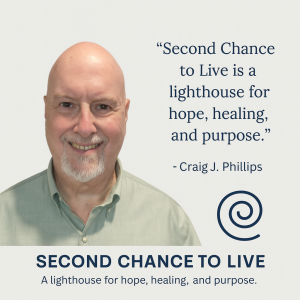
Craig J. Phillips Second Chance to Live mission portrait – hope, healing, and purpose.
Click the image to read about the mission and vision of Second Chance to Live.
August 2007
M T W T F S S
 12345
6789101112
13141516171819
20212223242526
2728293031  
« Jul   Sep »

Translate Second Chance to Live

Albanian Arabic Bulgarian Catalan Chinese Simplified Chinese Traditional Croatian Czech Danish Dutch Estonian Filipino Finnish French Galician German Greek Hebrew Hindi Hungarian Indonesian Italian Japanese Korean Lativian Lithuanian Maltese Norwegian Polish Portuguese Romanian Russian Serbian Slovak Slovenian Spanish Swedish Thai Turkish Ukrainian Vietnamese

Contact card

Copyright © 2026 · All rights reserved. · Sitemap

Manage Consent
To provide the best experiences, we use technologies like cookies to store and/or access device information. Consenting to these technologies will allow us to process data such as browsing behavior or unique IDs on this site. Not consenting or withdrawing consent, may adversely affect certain features and functions.
Functional Always active
The technical storage or access is strictly necessary for the legitimate purpose of enabling the use of a specific service explicitly requested by the subscriber or user, or for the sole purpose of carrying out the transmission of a communication over an electronic communications network.
Preferences
The technical storage or access is necessary for the legitimate purpose of storing preferences that are not requested by the subscriber or user.
Statistics
The technical storage or access that is used exclusively for statistical purposes. The technical storage or access that is used exclusively for anonymous statistical purposes. Without a subpoena, voluntary compliance on the part of your Internet Service Provider, or additional records from a third party, information stored or retrieved for this purpose alone cannot usually be used to identify you.
Marketing
The technical storage or access is required to create user profiles to send advertising, or to track the user on a website or across several websites for similar marketing purposes.
  • Manage options
  • Manage services
  • Manage {vendor_count} vendors
  • Read more about these purposes
View preferences
  • {title}
  • {title}
  • {title}
Manage Consent

To offer the best experience, we use privacy-respecting technologies like cookies to understand how our site is used. We never use tracking to exploit or overwhelm you. Your consent allows us to improve how we support individuals living with brain injuries, invisible disabilities, and trauma. You are free to accept, decline, or adjust your preferences. 

Functional Always active
The technical storage or access is strictly necessary for the legitimate purpose of enabling the use of a specific service explicitly requested by the subscriber or user, or for the sole purpose of carrying out the transmission of a communication over an electronic communications network.
Preferences
The technical storage or access is necessary for the legitimate purpose of storing preferences that are not requested by the subscriber or user.
Statistics
The technical storage or access that is used exclusively for statistical purposes. The technical storage or access that is used exclusively for anonymous statistical purposes. Without a subpoena, voluntary compliance on the part of your Internet Service Provider, or additional records from a third party, information stored or retrieved for this purpose alone cannot usually be used to identify you.
Marketing
The technical storage or access is required to create user profiles to send advertising, or to track the user on a website or across several websites for similar marketing purposes.
  • Manage options
  • Manage services
  • Manage {vendor_count} vendors
  • Read more about these purposes
View preferences
  • {title}
  • {title}
  • {title}