• Home
  • About Craig
    • Copyright & Use Policy
    • Contact Craig
    • Testimonies and Endorsements
    • Our Mission
    • Legacy Archive
    • Teaching AI Empathy (Article)
  • Legal
    • Mission Declaration
    • Use & Sharing
    • Creative Commons License and Permissions
    • Compensation and Use Policy
    • Cookie Policy (EU)
    • Privacy and Cookie Policy for Second Chance to Live
  • AI Ethics & Design
    • Backbone of Trauma-Informed Care AI
    • Second Chance to Live Trauma-Informed Care AI — New Class of AI
    • The Soul of AI
    • Trauma-Informed AI Model
    • Proof of Concept — AI Model
    • Alpha Declaration (AI Model)
    • Ethical AI: The Model
    • Trauma-Informed AI Authorship
    • Support, Not Extraction
    • Why AI Developers Need Trauma-Informed Wisdom
  • Foundations
    • Dear AI Developers
    • The Heart of Trauma-Informed Care
    • How the AI Model Was Built
    • Trauma-Informed AI Resource
    • The Power of Identification
    • Support Group
      • Hope
      • Healing What Others Can’t See
      • Testimonials
  • Brain Injury Recovery
    • Recovery Toolkit
    • How I Use Neuroplasticity
    • Good Habits for Success
  • Books
    • Full eBook Library (20 Titles)
    • Posters
    • Inspirational Posters Illustrated
  • Speaking
    • 30 Keynote
    • Speaking
    • Book Craig
    • Honors
    • Media

Second Chance to Live

Empowering the Individual, Not the Brain Injury

Choosing Sanity and Learning to Trust Ourselves after a Brain Injury

May 6, 2017 By Second Chance to Live

Choosing Sanity and Learning to Trust Ourselves after a Brain Injury

To listen to and watch a video presentation of the article, you may click on this link: Choosing Sanity and Learning to Trust Ourselves after a Brain Injury Video Presentation

“Insanity: doing the same thing over and over again and expecting different results.” – Albert Einstein

Living with the Impact of a Brain Injury can leave us feeling trapped and limited by the notion that we are our brain injuries. In this notion, we can be lead to believe that we have little power over our lives.

Living with the impact of a brain injury can lead us to believe that choosing sanity is out of our reach.

In the process, we can doubt our ability to trust ourselves

But the good news is that we can choose to be sane. But the good news is that we can learn how to trust ourselves.

The good news is that we can choose to be sane, one day at a time. The good news is that we can learn how to trust ourselves a little at a time.

Through my ongoing recovery process, I discovered something that I would like to share with you.

On May 1, 2008, I wrote the below article under the title of Second Chance to Live — Why do I react? Below is a revision of the article.

Hello and welcome back to Second Chance to Live. I am delighted to see that you decided to stop by and visit with me. Please remember that you are always welcome around my table. Earlier today I became aware of some information that may result in my having to make some major changes in my world. Consequently, I have experienced various emotions. These emotions resulted in my becoming restless, irritable and discontent.

Based on my previous experience and some wise counsel I realized that I needed to go to a support group meeting so that I could quiet my unrest. As I listened and reflected I regained my center.

Throughout my life’s experience, I have come to believe that many of my present-day reactions to people, places, and situations are directly linked to my previous experiences with people, places, and situations. My present day reactions may be the result of specific smells, sounds or situations that were associated with an event or a person from my past. Consequently, I may find myself reacting in such a way that has little to do with my present circumstances.

Awareness

For many years I was oblivious to the impact that memories had upon my life. Consequently, I found myself being blind-sided by the emotions that were attached to those memories. In essence, my emotionally charged memories were creating present day difficulties. For sake of a better word, I will call these emotionally charged memories triggers. Triggers are tripped when I have experiences that remind me of those emotionally charged memories.

I found that my triggers interfere with my present day living because my reactions were in response to emotionally charged memories.

Through my process, I have grown in my awareness. I have found that triggers bring about specific responses, almost in “knee-jerk” fashion. Triggers open the door to unconscious messages that catalyze my reactions. These reactions are emotionally charged and susceptible to a lack of rational thinking. In my experience, I have found a common link between my emotionally charged memories and my present day reactions – my resentments.

The common thread that links me to my emotionally charged memories and my present day reactions are my resentments.

A Practical Solution

As I have grown in my awareness I have come to realize that in order to be free from the pain of my resentments I need to be rigorously honest with myself. Through my experience, I employed strategies that have worked for many people who have come before me.

Thank God that I was led to a practical solution that could relieve me from the burden of my resentments.

Practically speaking, I found that I needed to make a list of the people that I have had held resentments towards throughout my lifetime. In my process, I started by examining my family history, my work history, my academic pursuits, my relationships and my involvement with various churches.

If nothing changes, nothing changes

Apart from being proactive in my own process, I perpetuate the pain that I am seeking to avoid.

Engage

I engaged in the exercise of identifying my resentments by examining specific periods of time in my life. I engaged in the process by dividing time periods in my life into manageable segments. From ages 0-6, 6-12, 12-18, 18-24, 24-30, 30- 40 and 40- present.

The exercise of listing the people that I held resentments towards (including myself) was not done to blame or point the finger in anyone’s direction, or for purposes of berating myself. The purpose of examining my resentments was to look for patterns.

Through becoming aware of the pattern (s) and how I related to my environment (s), I was able to understand why I reacted to various people, places, and situations during those times in my life.

Freedom

 As I examined why I reacted to those individuals, places, and institutions I was able to own my resentments.

As I was able to own my resentments I was able to make amends to both other people and myself.

What I Discovered

 As I am able to examine, identify and find freedom from my resentments I choose sanity.

 As I am able to examine, identify and find freedom from my irritability, restlessness, and discontent I choose to trust myself.

 As I am able to examine, identify, and find freedom from my resentments my relationships improve.

 As I am able to examine, identify and find freedom from my resentments I find sanity.

 As I am able to examine, identify and find freedom from my resentments I learn to trust myself.

You have my permission to share my articles and or video presentations with anyone you believe could benefit, however, I maintain ownership of the intellectual property AND my articles, video presentations and eBooks are not to be considered OPEN SOURCE. Please also provide a link back to Second Chance to Live. In the event that you have questions, please send those questions to me. All questions are good questions. I look forward to hearing from you. More Information: Copyright 2007 –2017

Filed Under: Brain Injury Recovery -- An Ongoing Process

Leave a Reply Cancel reply

Your email address will not be published. Required fields are marked *

This site uses Akismet to reduce spam. Learn how your comment data is processed.

Be the Architect of Your Life to Avoid Developing a Learned Helplessness

The Importance for the Individual to Advocate for their Whole Person

Artificial Intelligence (AI) Repeatable Failure Mode under Conversational Strain Evidence-Based/Time-Stamped

Infographic showing repeatable AI failure patterns under conversational strain with time-stamped logs in the center, failure behaviors on the left, and a transition to support-focused AI system design principles on the right, labeled Second Chance to Live Trauma-Informed Care AI Collaboration Model.

The Second Chance to Live Trauma-Informed Care AI Mentoring Model™

Second Chance to Live advocating for AI to Support Not Extract from People living with Brain Injuries

Join our Private Facebook Support Group by Clicking on the below Image

Healing What Others Can’t See after a Brain Injury — ciick on Image

Most Recent Published Articles

  • Artificial Intelligence (AI) Repeatable Failure Mode under Conversational Strain — A Year’s Worth of Time-Stamped Evidence
  • Understanding Who We are after Our Brain Injury and Why it Matters?
  • Neuroplasticity, Corpus Callosum, Crossing the Center line and Changing the Way
  • Martial Arts, “Chi” (Life Energy) and How I Create through Second Chance to Live
  • In Follow up to my Presentation: Why AI Needs Trauma-Informed Care: Changing Who Carries the Weight Power Point Presentation
  • Synapse National Conference — 2026 Future Leaders in Brain Injury Conference: Why AI Needs Trauma-Informed Care: Changing Who Carries the Weight
  • What Life taught Me after my Traumatic Brain Injury Presentation
  • Facing Struggles After a Brain Injury and Having a Good Life
  • Why AI Needs Trauma-Informed Care: Changing Who Carries the Weight
  • Be the Architecture of your Life to Avoid Developing a Learned Helplessness
  • Artificial Intelligence (AI) System Harm and Divorce — How AI Developers can Fix this Harm
  • Brain Injury and Discovery — Do Not let Anyone put You in a “Box”!
  • A Continuation of Ongoing Evidence-Based Time-Stamped AI Developer Facing and AI Mentoring Learning Logs
  • Brain Injury Awareness Month — What does it mean to You?
  • Living with a Brain Injury is a “We” Experience, not a “They” Experience
  • Hope and the Progression of Living our Best Life After a Brain Injury Keynote Presentation
  • What Opens the Door for Artificial Intelligence (AI) to Harm Individuals
  • AI Safety Is Missing a Critical Risk Layer: Relational Harm Under Asymmetry
  • Second Chance to Live — 45 Posters Created to Encourage You and I to Not Give Up
  • Being the Author of Our Own Life, Process and Journey after a Traumatic or Acquired Brain Injury — One day at a Time Part 2
  • Being the Author of Our Own Life, Process and Journey after a Traumatic or Acquired Brain Injury Part 1
  • Second Chance to Live 19th Anniversary — Support and Service in the Age of Artificial Intelligence (AI)
  • Ethical Artificial Intelligence (AI) — Who Needs to Adapt — Artificial Intelligence (AI) or Individuals? Part 3 “Ethics Are Enacted”
  • Ethical Artificial Intelligence (AI) — Who Needs to Adapt — Artificial Intelligence (AI) or Individuals? Part 2 “Ethical Failure Under Strain”
  • Ethical Artificial Intelligence (AI) — Who Needs to Adapt — Artificial Intelligence (AI) or Individuals? Part 1 “Default Harm”

Model Protection Notice

The Second Chance to Live Trauma-Informed Care AI Collaboration Model™ was founded and documented by Craig J. Phillips, MRC, BA in May 2025. All rights reserved under U.S. copyright, Creative Commons licensing, and public record. This is an original, working model of trauma-informed care human–AI collaboration — not open-source, not conceptual, and not replicable without written permission.

Second Chance to Live – Privacy Notice and Cookie Usage

  • Privacy and Cookie Policy for Second Chance to Live
  • Cookie Policy (EU)
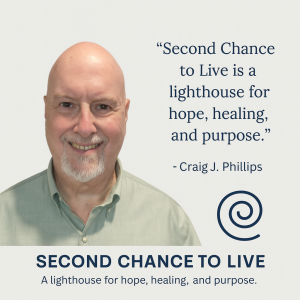
Craig J. Phillips Second Chance to Live mission portrait – hope, healing, and purpose.
Click the image to read about the mission and vision of Second Chance to Live.
May 2017
M T W T F S S
1234567
891011121314
15161718192021
22232425262728
293031  
« Apr   Jun »

Translate Second Chance to Live

Albanian Arabic Bulgarian Catalan Chinese Simplified Chinese Traditional Croatian Czech Danish Dutch Estonian Filipino Finnish French Galician German Greek Hebrew Hindi Hungarian Indonesian Italian Japanese Korean Lativian Lithuanian Maltese Norwegian Polish Portuguese Romanian Russian Serbian Slovak Slovenian Spanish Swedish Thai Turkish Ukrainian Vietnamese

Contact card

Copyright © 2026 · All rights reserved. · Sitemap

Manage Consent
To provide the best experiences, we use technologies like cookies to store and/or access device information. Consenting to these technologies will allow us to process data such as browsing behavior or unique IDs on this site. Not consenting or withdrawing consent, may adversely affect certain features and functions.
Functional Always active
The technical storage or access is strictly necessary for the legitimate purpose of enabling the use of a specific service explicitly requested by the subscriber or user, or for the sole purpose of carrying out the transmission of a communication over an electronic communications network.
Preferences
The technical storage or access is necessary for the legitimate purpose of storing preferences that are not requested by the subscriber or user.
Statistics
The technical storage or access that is used exclusively for statistical purposes. The technical storage or access that is used exclusively for anonymous statistical purposes. Without a subpoena, voluntary compliance on the part of your Internet Service Provider, or additional records from a third party, information stored or retrieved for this purpose alone cannot usually be used to identify you.
Marketing
The technical storage or access is required to create user profiles to send advertising, or to track the user on a website or across several websites for similar marketing purposes.
  • Manage options
  • Manage services
  • Manage {vendor_count} vendors
  • Read more about these purposes
View preferences
  • {title}
  • {title}
  • {title}
Manage Consent

To offer the best experience, we use privacy-respecting technologies like cookies to understand how our site is used. We never use tracking to exploit or overwhelm you. Your consent allows us to improve how we support individuals living with brain injuries, invisible disabilities, and trauma. You are free to accept, decline, or adjust your preferences. 

Functional Always active
The technical storage or access is strictly necessary for the legitimate purpose of enabling the use of a specific service explicitly requested by the subscriber or user, or for the sole purpose of carrying out the transmission of a communication over an electronic communications network.
Preferences
The technical storage or access is necessary for the legitimate purpose of storing preferences that are not requested by the subscriber or user.
Statistics
The technical storage or access that is used exclusively for statistical purposes. The technical storage or access that is used exclusively for anonymous statistical purposes. Without a subpoena, voluntary compliance on the part of your Internet Service Provider, or additional records from a third party, information stored or retrieved for this purpose alone cannot usually be used to identify you.
Marketing
The technical storage or access is required to create user profiles to send advertising, or to track the user on a website or across several websites for similar marketing purposes.
  • Manage options
  • Manage services
  • Manage {vendor_count} vendors
  • Read more about these purposes
View preferences
  • {title}
  • {title}
  • {title}