• Home
  • About Craig
    • Copyright & Use Policy
    • Contact Craig
    • Testimonies and Endorsements
    • Our Mission
    • Legacy Archive
    • Teaching AI Empathy (Article)
  • Legal
    • Mission Declaration
    • Use & Sharing
    • Creative Commons License and Permissions
    • Compensation and Use Policy
    • Cookie Policy (EU)
    • Privacy and Cookie Policy for Second Chance to Live
  • AI Ethics & Design
    • Backbone of Trauma-Informed Care AI
    • Second Chance to Live Trauma-Informed Care AI — New Class of AI
    • The Soul of AI
    • Trauma-Informed AI Model
    • Proof of Concept — AI Model
    • Alpha Declaration (AI Model)
    • Ethical AI: The Model
    • Trauma-Informed AI Authorship
    • Support, Not Extraction
    • Why AI Developers Need Trauma-Informed Wisdom
  • Foundations
    • Dear AI Developers
    • The Heart of Trauma-Informed Care
    • How the AI Model Was Built
    • Trauma-Informed AI Resource
    • The Power of Identification
    • Support Group
      • Hope
      • Healing What Others Can’t See
      • Testimonials
  • Brain Injury Recovery
    • Recovery Toolkit
    • Recovery Toolbox
    • How I Use Neuroplasticity
    • Good Habits for Success
  • Books
    • Full eBook Library (20 Titles)
    • Posters
    • Inspirational Posters Illustrated
  • Speaking
    • 30 Keynote
    • Speaking
    • Book Craig
    • Honors
    • Media

Second Chance to Live

Empowering the Individual, Not the Brain Injury

Brain Injury Recovery Toolbox: Tools to Rebuild Hope

June 19, 2025 By Second Chance to Live

Illustration of a brain injury recovery toolbox containing a heart, brain, and notebook, set in a peaceful landscape with the words “Brain Injury Recovery Toolbox” and “secondchancetolive.org” — representing practical tools and hope for long-term healing.
Brain Injury Recovery Toolbox — a calming visual symbol of hope, healing, and practical tools for long-term brain injury and invisible disability recovery.

Brain Injury Recovery Toolbox: Tools to Rebuild Hope

This Brain Injury Recovery Toolbox is an overview of resources. Resources available on Second Chance to Live have universal application to re-build hope.

Universal application for anyone wanting to rebuild hope after a brain injury.


Create Hope After Brain Injury: A Free Toolkit for Ongoing Recovery

I have also create a Toolkit that offers a more detailed list of resources. To visit my Toolkit, click on this link and scroll down the page. Any questions, leave them in a comment. Thank you.

Create Hope After Brain Injury: A Free Toolkit for Ongoing Recovery


After Hospital Stays and Rehab is Over

When the hospital stays are over and the therapy appointments stop, many of us are left asking: “Now what?”

That’s why I created the Second Chance to Live Recovery Toolbox — to offer individuals living with the impact of brain injury (traumatic and acquired) and caregivers something beyond symptom management.

This collection was built from my own experience of living with a traumatic brain injury and an invisible disability now for nearly 60 years.

The tool box and tool kit is  filled with the real-life tools that helped me rebuild my life from the inside out — mind, body, spirit, soul and emotions.

Whether you’re a survivor, a caregiver, or a professional, this toolbox is for you.


What’s Inside the Recovery Toolbox?

You’ll find:

  • Easy-to-navigate guides, videos, articles, and presentations

  • Insights on neuroplasticity, trauma-informed care, and emotional healing

  • Daily strategies to support long-term recovery

  • Encouragement to keep going — even when it feels impossible

This isn’t a quick fix or magic bullet — it’s a pathway for those seeking real and lasting change.


Why It Matters

For many survivors, healing means learning to live with challenges —
while still moving toward purpose, peace, and possibility.

This toolbox isn’t about what’s broken or missing.
It’s about what’s still possible.

As Kelly Lee Phipps once said:

“If you argue for your limitations, you get to keep them.
But if you argue for your possibilities, you get to create them!”
— Kelly Lee Phipps

That truth has guided me through some of my hardest moments.

If you’ve ever felt stuck, unseen, or unsure what to do next —
this resource was made for you.


Explore the Recovery Toolbox

The Second Chance Recovery Toolbox: Practical Tools for Daily Life After Brain Injury

The Second Chance Recovery Toolbox offers hands-on strategies and practical tools to support your daily life with a brain injury or invisible disability.

Inside, you’ll find real-world tools to help you build structure, create routines, reduce overwhelm, and work through the emotional and cognitive challenges of everyday life.


Craig’s Journey: Living with a Traumatic Brain Injury

In 1967, at the age of 10, I sustained a life-altering traumatic brain injury (TBI) in a car accident. My injuries included an open skull fracture, right frontal lobe damage, a severe brain bruise with brain stem involvement, and a fractured left femur.

Over the past 58 years, I’ve walked a journey of ongoing recovery. Nearly 19 years ago, I created Second Chance to Live to share what has helped and continues to help me. Help me navigate life living with the impact of a traumatic brain injury.


A Holistic Brain Injury Recovery Approach

As a rehabilitation counselor, nationally known speaker, author, and advocate, I encourage a holistic recovery approach—one that embraces the body, soul, spirit, mind, and emotions.

Healing from brain injury and invisible disabilities requires more than symptom management; it calls for persistence, support, and hope.


What This Brain Injury Recovery Toolbox Offers

The Second Chance Recovery Toolbox gathers empowering, real-world tools I’ve developed over the past 18+ years. These resources are designed to support survivors, families, professionals, and support group leaders with practical strategies and tools for ongoing recovery.

Inside the Toolbox, you’ll find:

  • Articles on brain injury recovery, personal growth, and daily life

  • eBooks for survivors, caregivers, and professionals

  • Zoom presentations and educational videos

  • Printable posters and inspirational graphics

These tools are here to remind you: recovery is not about perfection. It’s about persistence, self-compassion, and discovering that “I CAN” is still possible—even after brain injury or trauma.

Use the sections below to explore the tools that speak most to your journey—whether you’re a survivor, caregiver, therapist, or group facilitator.

How to Use This Toolbox

You don’t need to use everything. Start where you are. Return as often as you need. Explore resources by audience or by recovery theme — whatever best fits your needs today.

Part 1: Find Resources by Audience

For Survivors

Resources for building hope, navigating identity loss, and engaging in ongoing recovery after brain injury.

  •  Some Things to Consider So We Don’t Stay Stuck
  • Brain Injury and the Power of “I CAN”
  • Beyond Symptom Management
  • You Are Not Your Deficits

For Caregivers and Families

Tools to help you understand, support, and walk alongside loved ones in recovery.

  •  Understanding Brain Injury: 10 Key Insights for Families
  •  Why “Just Get Over It” Doesn’t Work
  •  Trauma-Informed Support at Home

For Professionals (Rehab Counselors, Therapists, Educators)

Peer-led insights into emotional and behavioral dynamics of recovery, helpful for trainings or clinical integration.

  •  Trauma-Informed Care for Brain Injury: A Presentation
  •  Reflections from a Rehabilitation Counselor Who’s Been There
  •  Why Symptoms Don’t Tell the Whole Story

For Support Group Leaders

Handouts, presentations, and discussion tools to use with your group.

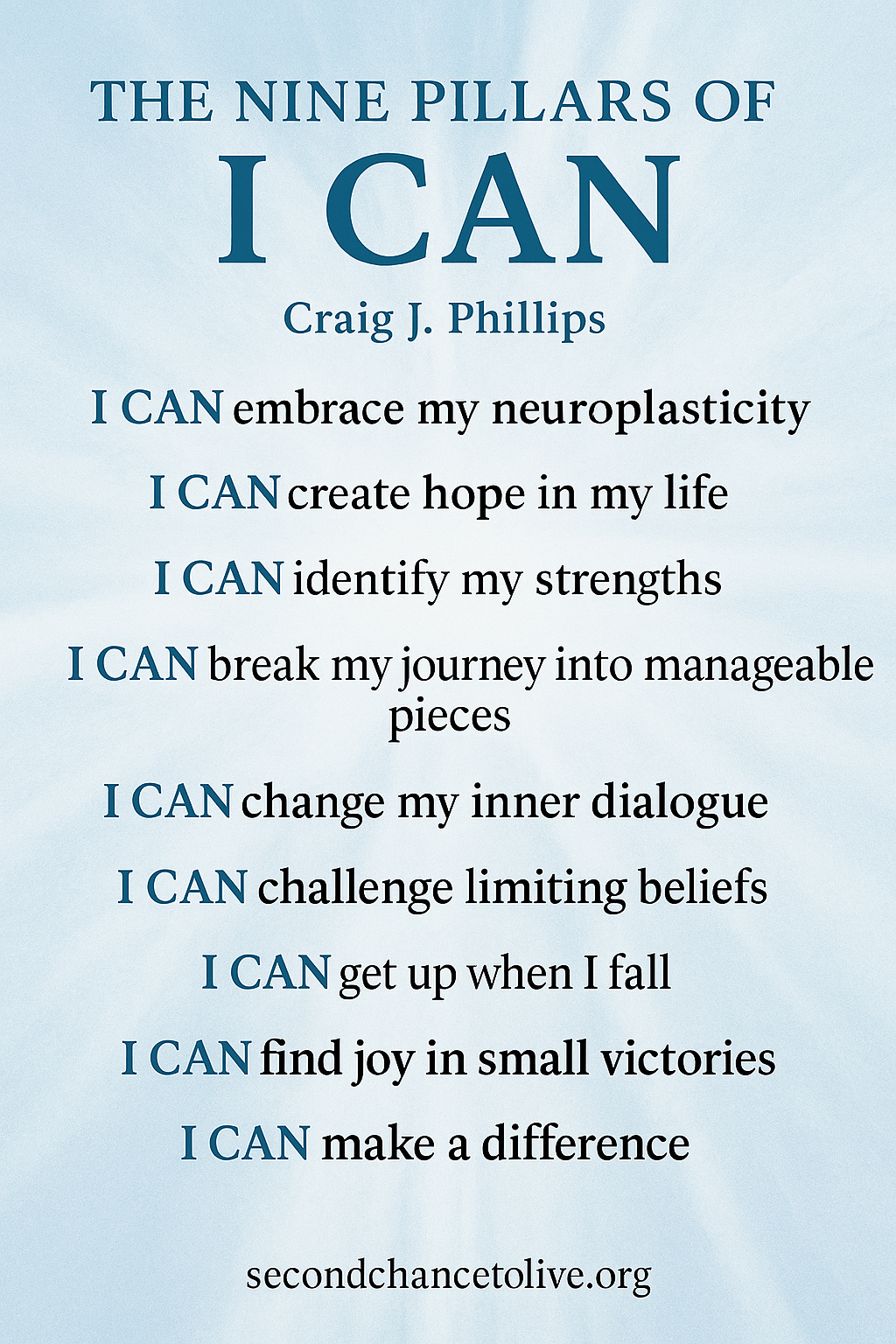
  •  Nine Pillars of “I CAN” – Slide Deck
  •  Printable One-Page Recovery Poster
  •  Support Group Invitation Post

Part 2: Explore by Recovery Theme (Optional Filters)

Hope and Encouragement

  • “Famous Failures Who Kept Going”
  • “Why We Must Keep Showing Up”
  • “You’re Not Alone: Join Our Support Group”

Identity, Purpose, and Resilience

  • “You Are Not Your Deficits”
  • “I Am More Than My Brain Injury”
  • “What’s in Your Tool Belt?”

Neuroplasticity and Retraining the Brain

  • “Mirrored Movement and Rewiring My Brain”
  • “Using Martial Arts to Heal After TBI”
  • “Neuroplasticity and the Power of Repetition”

Trauma-Informed Care and Emotional Healing

  • “Healing What Others Can’t See”
  • “Why Trauma-Informed Care Matters”
  • “Emotional Triggers After Brain Injury”

🗓 Daily Strategies and Practical Tools

  • “Creating Structure That Supports Recovery”
  • “Handling Fatigue and Low Energy”
  • “My Daily Use of Cognitive Strategies”

This Toolbox Will Keep Growing

Bookmark this page or sign up for updates to receive new tools, insights, and encouragement from Craig as they are added.

Looking for more?

Visit the full Recovery Resources Archive to explore all of Craig’s articles, videos, eBooks, video presentations, posters and more from Second Chance to Live.

You’re Not Alone in This Journey

Whether you’re starting fresh, returning to recovery after a setback, or walking alongside someone you care about — I’m honored to share these tools with you.

Recovery may not be easy, but it is possible—one step, one tool, one day at a time.

Start where you are.
Use what you have.
Take your next step.

You are not alone.

Craig J. Phillips, MRC, BA

Founder of Second Chance to Live

secondchancetolive.org

Founder of the Second Chance to Live Trauma-Informed Care AI Collaboration Model™
Founder of the Second Chance to Live Trauma-Informed Care AI — A New Class of AI™  

Individual living with the impact of a traumatic brain injury, Professional Rehabilitation Counselor, Author, Advocate, Keynote Speaker and Neuroplasticity Practitioner
Filed Under: Brain Injury Recovery Tools

Leave a Reply Cancel reply

Your email address will not be published. Required fields are marked *

This site uses Akismet to reduce spam. Learn how your comment data is processed.

Join our Private Facebook Support Group by Clicking on the below Image

Healing What Others Can’t See after a Brain Injury — ciick on Image

Most Recent Published Articles

  • AI Safety Is Missing a Critical Risk Layer: Relational Harm Under Asymmetry
  • Second Chance to Live — 45 Posters Created to Encourage You and I to Not Give Up
  • Being the Author of Our Own Life, Process and Journey after a Traumatic or Acquired Brain Injury — One day at a Time Part 2
  • Being the Author of Our Own Life, Process and Journey after a Traumatic or Acquired Brain Injury Part 1
  • Second Chance to Live 19th Anniversary — Support and Service in the Age of Artificial Intelligence (AI)
  • Ethical Artificial Intelligence (AI) — Who Needs to Adapt — Artificial Intelligence (AI) or Individuals? Part 3 “Ethics Are Enacted”
  • Ethical Artificial Intelligence (AI) — Who Needs to Adapt — Artificial Intelligence (AI) or Individuals? Part 2 “Ethical Failure Under Strain”
  • Ethical Artificial Intelligence (AI) — Who Needs to Adapt — Artificial Intelligence (AI) or Individuals? Part 1 “Default Harm”
  • Teaching Artificial Intelligence (AI) how to Support Vulnerable Individuals and Not Take Advantage of Vulnerable Individuals
  • Evidence Based AI Developer Facing Architecture and AI Learning Logs: May-December 2025, January 2026
  • Creating Our Normal after Brain Injury Using Trauma-Informed Care to Thrive through Living
  • Trauma-informed Care Research, Development, Documentation, Application and Mentoring
  • Creating a Hospitable Environment for People Living with Brain Injuries (Part 2)
  • Creating a Hospitable Environment for People Living with Brain Injuries (Part 1)
  • How I Think and Subsequently Write on Second Chance to Live

Model Protection Notice

The Second Chance to Live Trauma-Informed Care AI Collaboration Model™ was founded and documented by Craig J. Phillips, MRC, BA in May 2025. All rights reserved under U.S. copyright, Creative Commons licensing, and public record. This is an original, working model of trauma-informed care human–AI collaboration — not open-source, not conceptual, and not replicable without written permission.

Second Chance to Live – Privacy Notice and Cookie Usage

  • Privacy and Cookie Policy for Second Chance to Live
  • Cookie Policy (EU)
Craig J. Phillips Second Chance to Live mission portrait – hope, healing, and purpose.
Click the image to read about the mission and vision of Second Chance to Live.
June 2025
M T W T F S S
 1
2345678
9101112131415
16171819202122
23242526272829
30  
« May   Jul »

Translate Second Chance to Live

Albanian Arabic Bulgarian Catalan Chinese Simplified Chinese Traditional Croatian Czech Danish Dutch Estonian Filipino Finnish French Galician German Greek Hebrew Hindi Hungarian Indonesian Italian Japanese Korean Lativian Lithuanian Maltese Norwegian Polish Portuguese Romanian Russian Serbian Slovak Slovenian Spanish Swedish Thai Turkish Ukrainian Vietnamese

Contact card

Copyright © 2026 · All rights reserved. · Sitemap

Manage Consent
To provide the best experiences, we use technologies like cookies to store and/or access device information. Consenting to these technologies will allow us to process data such as browsing behavior or unique IDs on this site. Not consenting or withdrawing consent, may adversely affect certain features and functions.
Functional Always active
The technical storage or access is strictly necessary for the legitimate purpose of enabling the use of a specific service explicitly requested by the subscriber or user, or for the sole purpose of carrying out the transmission of a communication over an electronic communications network.
Preferences
The technical storage or access is necessary for the legitimate purpose of storing preferences that are not requested by the subscriber or user.
Statistics
The technical storage or access that is used exclusively for statistical purposes. The technical storage or access that is used exclusively for anonymous statistical purposes. Without a subpoena, voluntary compliance on the part of your Internet Service Provider, or additional records from a third party, information stored or retrieved for this purpose alone cannot usually be used to identify you.
Marketing
The technical storage or access is required to create user profiles to send advertising, or to track the user on a website or across several websites for similar marketing purposes.
  • Manage options
  • Manage services
  • Manage {vendor_count} vendors
  • Read more about these purposes
View preferences
  • {title}
  • {title}
  • {title}
Manage Consent

To offer the best experience, we use privacy-respecting technologies like cookies to understand how our site is used. We never use tracking to exploit or overwhelm you. Your consent allows us to improve how we support individuals living with brain injuries, invisible disabilities, and trauma. You are free to accept, decline, or adjust your preferences. 

Functional Always active
The technical storage or access is strictly necessary for the legitimate purpose of enabling the use of a specific service explicitly requested by the subscriber or user, or for the sole purpose of carrying out the transmission of a communication over an electronic communications network.
Preferences
The technical storage or access is necessary for the legitimate purpose of storing preferences that are not requested by the subscriber or user.
Statistics
The technical storage or access that is used exclusively for statistical purposes. The technical storage or access that is used exclusively for anonymous statistical purposes. Without a subpoena, voluntary compliance on the part of your Internet Service Provider, or additional records from a third party, information stored or retrieved for this purpose alone cannot usually be used to identify you.
Marketing
The technical storage or access is required to create user profiles to send advertising, or to track the user on a website or across several websites for similar marketing purposes.
  • Manage options
  • Manage services
  • Manage {vendor_count} vendors
  • Read more about these purposes
View preferences
  • {title}
  • {title}
  • {title}