
I also created a zoom presentation of this article, which I am available to give to your group or organization. Click here to Schedule.
To view the outline of the zoom presentation, click on this link:
Somethings to Consider so We Don’t Stay Stuck Living with the Impact of a Brain Injury and an Invisible Disability Zoom Presentation
For Many Years
For many years I had a dysfunctional relationship with hope. I was disillusioned when hope did not produce what I hoped to receive. What I expected hope to do for me.
But thankfully I became aware. I began to see hope as a coach that showed me that I needed to get in the “game”. I needed to be actively involved in the process of creating hope in my life.
Create Hope by Learning
I also began to realize that I needed to begin creating hope by learning. Learning from my circumstances, experiences and disappointments. Learning, as they would help me to create hope.
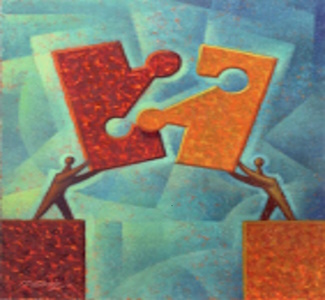
Puzzle Pieces and Tapestries
“Our circumstances are not meant to keep us down, but they are meant to build us up, as they teach us lessons that prepare us for opportunities, that lead us in the creation of hope.” Craig J. Phillips MRC, BA
“The journey of a thousand miles, begins with the first step.” Lao Tzu
“Once we start walking; before long, we will be able to look back and see how far we have come, through our process and on our journey because we did not give up.” Craig J. Phillips MRC, BA
Practical Hope
Realizing that I can create hope in my life, a little at a time. A little at a time by learning and combining one skill and one skill set at a time. A little at a time by repeating the process and by not giving up.
Neuroplasticity – creating new neural pathways and brain reorganization one skill and one skill set at a time.
Combining Skills and Skill Sets
Click to Watch
Gaining Awareness’
Through my process and journey living impact of a brain injury and an invisible disability, I have gained awareness’.
Awareness’s that have given me the ability to grow in acceptance and the ability to take action in my life.
Action, so I don’t stay stuck because of my brain injury and my invisible disability. Action that has given me the ability to lay a foundation.
Lay a foundation upon which to build. Build upon to create a good life and to be of service.
Build upon to create practical hope in my life, well-being and relationships.
Create practical hope in my ongoing brain injury and invisible disability recovery process.
Create practical hope through my mind, body, Spirit, Soul and Emotions
Create practical hope inch by inch, not yard by yard.
Create practical hope a little at a time, one day at a time.
Create practical hope in my life, well-being and relationships.
Create practical hope in my life to make a good life for myself.
Create practical hope in my mind, body, spirit, soul and emotions.
Create practical hope in my life by realizing that I have more power.
Create practical hope by realizing I am not my brain injury brain injury.
Create practical hope because my voice matters in my brain injury recovery.
Create practical hope in my life because I am not a victim of my brain injury.
Create practical hope in my life because I do not let anyone define who I am.
Create ongoing practical hope by realizing that more will be revealed with time.
Create practical hope by listening and learning, but not allowing myself to be bullied.
Being Aware of What may be Getting in my Way
Living with the impact of a brain injury and an invisible disability can leave us with many feelings.
These feelings that can leave us believing that we are crazy, trapped, helpless, insignificant and stuck.
These beliefs can leave us feeling alone, isolated, alienated, diminished and with a victim mentality.
But the Good News is that We Can Own our Power
“The most common way people give up their power is by thinking they don’t have any.” Alice Walker
“If you do not like something, change it. If you can’t change it, change the way you think about it.” Mary Engelbriet
Understanding Terms Gives me Choices
I told my mentor that I was anxious the other day. He asked me what does that mean. I thought about it and realized I did not really understand what being anxious meant.
As we spoke, I realized that being anxious is about fear. By understanding that when I am anxious, I can do something about being afraid, rather than being frozen by anxiety.
By realizing that I could own my power, I did not have to stay stuck. Stuck by my anxiety, but examining my fear. Through examining my fear, I realized that I could overcome my fear.
Understanding Terms Give me the Power to Own my Power by Changing the Way I Respond to Terms.
The Power of Choice
Definitions of Terms
Crazy — mentally deranged; demented; insane Informal. unpredictable, nonconforming, or odd (Dictionary.com)
Trapped — in an unpleasant situation in which you lack freedom, and you feel you cannot escape from it. (Collins Dictionary)
Helpless — lacking protection or support: defenseless. marked by an inability to act or react (Merriam-Webster)
Insignificant — unimportant. not important; meaningless, non meaningful. having no meaning or direction or purpose. (Vocabulary.com)
Stuck — unable to move or to be moved · in an unpleasant situation or place that you cannot escape from. (Oxford Learner’s Dictionaries
Alone — separate, apart, or isolated from others. I want to be alone; 2. to the exclusion of all others or all else (Collins Dictionary)
Isolated — having minimal contact or little in common with others (Dictionary.com)
Diminished — to lessen the authority, dignity, or reputation of: belittle (Merriam-Webster)
Distressed— great pain, anxiety, or sorrow; acute physical or mental suffering (Dictionary.com)
Alienated — feeling withdrawn or separated from others or from society as a whole (Merriam-Webster)
Marginalized — to relegate to an unimportant or powerless position within a society or group (Merriam-Webster)
Stigmatized — to treat someone or something unfairly by disapproving of him, her, or it. (Cambridge English Dictionary)
Diagnosis — the identification of the nature of an illness or other problem by examination of the symptoms (Dictionary.com)
Intimidated — made afraid; frightened, especially by the threats or aggression of another: · timid or anxious (Dictionary.com)
Discounted — regard (a possibility, fact, or person) as being unworthy of consideration because it lacks credibility (Dictionary.com)
Prognosis — the prospect of recovery as anticipated from the usual course of disease or peculiarities of the case (Merriam-Webster)
Minimized — reduce (something, especially something unwanted or unpleasant) to the smallest possible amount or degree (Dictionary.com)
Stereotype — a set idea that people have about what someone or something is like, especially an idea that is wrong (Cambridge University Press)
Labeled — a word or a phrase that is used to describe the characteristics or qualities of people often in a way that is unfair (Cambridge Dictionary)
Victim Mentality — Bad things have happened in the past and will continue to happen to you. Others are to blame for your misfortune. There is no point in trying to make a change because it will not work. (very well mind)
Understanding how these Terms Impact our lives as Individuals living with Brain Injuries and Invisible Disabilities.
But they Don’t Have to Through Being Aware
Crazy because of what we don’t understand and are led to think and believe about ourselves.
Trapped by believing that we are defined and limited by our brain injury (s) and as a result have limited choices.
Helpless because we find ourselves focusing on what we can’t do because of our symptoms, instead of on what we can do.
Insignificant because of our brain injuries and invisible disabilities we find ourselves dismissed, discounted, minimized and marginalized.
Stuck by the diagnosis, prognosis, label, stereotype and stigmatization of a brain injury that reinforces and leads us to believe we are inadequate.
Alone because of the way that we have changed after our brain injury (s). Because of the lack of ongoing insight, understanding, acceptance, empathy and encouragement to create practical hope.
Isolated in time by not grasping that we have more power than we may realize. By not being encouraged to use that power to create practical hope in our lives, our well-beings and our relationships.
Alienated by not recognizing our great worth and value. Our great worth and value to empower both our lives and the lives of individuals living with brain injuries, in our generation and future generations.
Intimidated into believing that we need to trade our judgment for the judgment of other people. The judgement that leads the individual living with a brain injury to believe that they deserve to be bullied.
Diminished into believing that because we are unable to meet the expectations that other people have for us that we can’t succeed. Being diminished leads to and reinforces a learned helplessness.
Victim Mentality of our brain injury, our invisible disability and our set of circumstances. This mindset keeps the individual focused on what they can’t do, instead of discovering what they can do with their time and energy.
But Consider this Thought
“Never be bullied into silence. Never allow yourself to be made a victim. Accept no one’s definition of your life; define yourself.” Robert Frost
Below are links to articles that I wrote in which I share more information. More information that helped and continues to help me be aware, accept and take action when I am feeling…
Crazy, trapped, helpless, insignificant and stuck. When I feel alone, isolated, alienated, intimidated, diminished and a victim of my brain injury.
Click on the Blue links to read the articles
You’re not Crazy; You have an Invisible Disability
Summary
Awareness, Acceptance and Action. Regardless of what other people may… I can own my power. I can listen to my own drum and dance to my own rhythm.
Yes, I am Disabled, but Don’t Count Me Out
Summary
I am Gifted Beyond the Box. Don’t limit yourself because… I can use my gifts, talents and abilities in ways the work for me. Tortoise and the hare. Slow and Steady wins the race.
Accepting Ourselves When Other People Can’t or Won’t
Summary
The Importance of Grieving what Can not be Changed. Living on life’s terms and learning to thrive. Practice acceptance and live and let live. I don’t have to convince anyone.
Finding Freedom from Feeling Alone, Isolated, Alienated, Intimidated and Diminished Living with a Brain injury and an Invisible Disability
Summary
Creating our New Normal. Grow where we are Planted. We have the final word. I can take steps to be empowered. I do have to stay stuck. I have choices.
Getting Comfortable in Our “Own Skin” Living with a Brain Injury and an Invisible Disability
Summary
Understanding the Impact of Shame and the Codependent Dance. Understanding the meaning of words. Run my own race, while staying in my own lane.
Don’t Let Anyone tell You; You Aren’t Enough Because…You are Smart, Intuitive and Courageous
Summary
Like Dorothy, the Scarecrow, the Tin Man and the Cowardly Lion. We have more power than we realize. Everyone is a genius. Play to your strength. Accepting ourselves
Living and Thriving Beyond Brain Injury Awareness to Create a Good Life for Ourselves
Summary
Facing, Confronting and Finding Freedom from Denial. Moving Forward with our lives. Recovery is a process, not a destination. I am right where I should be. Layers of Onion.
Creating Practical Hope in Our Lives through the Power of Identification
Understanding my Relationship with Hope. The Way Out of the “Box”. Identification; not Comparison Empowers. Inch by inch, not yard by yard. One skill and one skill set at a time.
12 Ways to Enhance Our Lives, Well-Beings and Relationships after a Brain Injury Presentation
Summary
I have adapted the below 12 ways (from 12 steps used by many recovery programs) for individuals who are living with brain injuries. These 12 ways have helped me create practical hope a little at a time.
Introduction to the 12 Ways
These 12 ways have helped and continue to help me in my ongoing brain injury recovery process, one day at a time.
These 12 ways may also help and continue to help you in your ongoing brain injury recovery process, one day at a time.
Inch by inch, life’s a cinch. Yard by yard, it’s very hard.
These 12 ways have helped me accept the things that I cannot change, so that I can discover what I can change to create hope in my life.
“Adventure is not outside man. It is within.” George Eliot
“Believe in yourself. Go after your dreams and don’t let anyone put you in a box.” Daya
Benefits that I have Gained through Working the 12 Ways
Accepting my Reality
Creating my New Normal
Changing the Things, I Can
Defining Success for myself
Finding and Living my Purpose
Owning my Power to be of Service
Brain Injury and The Power of “I CAN”
Developing My Brain / Body Connection
Finding the Freedom from Feeling Stuck
Examine the Messages that I am Listening to and telling myself
Advocating for Myself in my Mind, Body, Spirit, Soul and Emotion
Cultivating a Healthy Relationship with myself, a loving God, people
Grieving the Guilt and Shame of my brain injury / invisible disability
Creating and Continuing to Develop my Own Unique Genius in Life
Getting Comfortable in Our “Own Skin” Living with a Brain Injury and an Invisible Disability
The 12 Ways Understood
My Perspective — Way 1
When I reached a point in time when I could no longer defend or deny the impact of my brain injury and invisible disability I began to grieve.
“Nothing in the universe can stop you from letting go and starting over.” Guy Finley
Application
- Admitted that we are powerless over the impact and effects of our brain injury and invisible disability. That our lives have forever changed because of our brain injury. Although we are powerless over the impact of our brain injury and our invisible disability, we are not helpless. As a result, we no longer need to feel like a victim or that we are helpless to change because of our brain injury/invisible disability.
My Perspective – Way 2
By realizing that all my efforts to try to change what could not be changed, I surrendered. By surrendering I became open and willing.
“We must be willing to let go of the life we have planned, so as to have the life that is waiting for us.” E.M. Forster.
Application
- Came to believe that a power greater than ourselves could help us to accept what we are powerless to change (the impact of our brain injury and our invisible disability). Consequently, we can rely on the power that many of us have found to be God. We can rely on a loving God to help us to stop sabotaging and undermining our lives, well-beings and relationships by trying not to be impacted by a brain injury. We can rely on a loving God to help us to accept ourselves and to create a good life for ourselves.
My Perspective – Way 3
Through accepting my inability to change what I simply could not change; I made a decision to ask for help from a power greater.
“Decision is the spark that ignites action. Until a decision, nothing happens.” Wilfred A. Peterson
Application
- With the awareness that we need this power in our lives, we can make a decision to ask Him to lead and guide our process and journey. We no longer have to figure things out on our own. Instead, we can ask Him to help us own our power. Own our power as an individual living with a brain injury and an invisible disability. Own our power through what we can do, not what we can’t do. Own our power (what is in our power to control) in our mind, body, spirit, soul and emotions in ways that work for us, a little at a time/ one day at a time.
My Perspective – Way 4
By asking for help, I began to examine patterns of what got in the way of my ability to create hope in my life, well-being and relationships.
“As long as a man stands in his own way, everything seems to be in his way.” Ralph Waldo Emerson.
Application
- With the help of a loving God, we can begin to examine areas of our lives that no longer work for us. That undermine and sabotage our lives, our well-beings and our relationships. With the help of a loving God, we can look for patterns. Patterns such as defense mechanisms in which we strive to defend, answer and explain what we can’t do. Patterns that keep you and I believing/feeling that we are victims of our brain injury, our invisible disability and our circumstances.
My Perspective – Way 5
As I examined what got in the way of my life, my well-being and my relationships I realized that needed to learn how to trust.
“Accept what is, let go of what was, have faith in what will be.” Sonia Ricotti
Application
- We no longer have to remain isolated/alienated because of what we are no longer able to accomplish with because of our brain injuries and invisible disabilities. By admitting to ourselves, a loving God and another person what we are unable to accomplish, we can come out of the shadows of isolation and break free from feelings of alienation. Alienation from ourselves, a loving God and other people, because of what we can no longer accomplish. By letting go of these expectations we can learn how to trust, again — a loving God, ourselves and other people.
My Perspective – Way 6
By realizing that I needed to trust, I discovered that I needed to let go of what no longer worked for me to discover what works for me.
“Nothing is a waste of time, if you use the experience wisely.” Auguste Rodin
Application
- Through being sick and tired of being sick and tired of getting the same results, we become willing to try something different. Become willing to try something different to get different results in our lives and relationships. Through being willing, we can ask a loving God to help us to stop doing things that no longer work for us. Doing things that get in the way and sabotage of our ability to get on with creating a good life for ourselves. In the process, we become entirely ready. Entirely ready to let go of what no longer works for us living our lives.
My Perspective – Way 7
To discover what would work for me, I needed to let go of my will to ask a loving God to lead, guide and direct my discovery process.
“Be miserable. Or motivate yourself. Whatever has to be done, it’s always your choice.” Wayne Dyer
Application
- Through being ready to let go of what no longer works for us, we can be actively involved. Actively involved in the process of discovering how to use our gifts, talents and abilities. Discovering how to use our gifts, talents and abilities through trial and error. In the process, we can find ways that will fit our gifts, talents and abilities. We can humbly ask a loving God to help us in/with this process of self-discovery. In the process of letting go and self-discovery we can find and have/experience peace in our lives and relationships.
My Perspective – Way 8
By examining the patterns of what no longer works for me, as I live my life, I am able to make peace with what no longer works for me.
“If you take responsibility for yourself, you will develop a hunger to accomplish your dreams.” Les Brown
Application
- Through letting go of what no longer works we can pursue what works for us. In the process, we can stop being a prisoner to our deficits and imitations. Instead of trying to not be impacted by our deficits and limitations, we accept them. As a result, we are able to stop fighting with and against ourselves. Stop fighting with ourselves and other people by trying to prove that we do not have those deficits and limitations. As we stop fighting with our deficits and limitations, we gain the freedom to run our own race. In the process, we become the individual that we choose and decide to become in our lives.
My Perspective – Way 9
I am able to make peace with what no longer works for me in my life, well-being and relationships by changing the way I use my energy.
“If you do not like something, change it. If you cannot change it, change the way that you think about it.” Mary Engelbreit
Application
- We can let go of the life that we had planned to create the life that works for us. In the process, we can learn how to own the power in our mind, body, spirit, soul and emotions. Own our power through the use of our time and energy. In the process, we can create our new normal in ways that work for us. In ways that work for us, through being an advocate for, in our mind, body, soul, spirit and emotions.
My Perspective – Way 10
As I seek to change the way that I interact in my life and relationships I continue to be aware of what no longer works for me each day.
“Time stays long enough for anyone who will use it.” Leonardo da Vinci
Application
- And the good news is that we don’t have to figure out how everything will fit together. Fit together as we seek to own the power in our mind, body, spirit, soul and emotions. Instead, we can take the process, one day at a time, one step at a time. In the process, we can ask a loving God to lead, guide and direct our steps, one day at a time. In the process, we can trust the process. Trust that the dots will connect forward as we learn how to use our gifts, talents and abilities. Learn to use our gifts, talents and abilities in ways that work for us.
My Perspective – Way 11
Because I realize that brain injury recovery is an ongoing process, I ask a loving God to guide, lead and direct my process, each day.
“If you feel like you don’t fit into the world you inherited it is because you were born to help create a new one.” Ross Caligiuri
Application
- We can ask a loving God to give us direction each day. We can do the footwork, while letting go of the outcomes by trusting the process, a loving God and ourselves. We can learn to trust through doing the footwork and letting go of the outcomes. We can let go of the outcomes one day at a time. We can trust that more will be revealed to us with time. We can ask and trust that we are being guided in the direction of fulfilling our purpose, to be of service.
My Perspective – Way 12
As I continue to ask a loving God to lead, guide and direct my process in ways that work for me, I encourage others to do the same.
“Ideas do not always come in a flash but by diligent trial-and-error experiments that take time and thought.” Charles K. Kao
Application
- As we grow in the understanding of ourselves (with the help of a loving God) we continue to use our gifts, talents and abilities. Use our gifts, talents and abilities in ways that work for us. In the process, we learn from our circumstances, our experiences, our lessons and opportunities. Learn from them, instead of being threatened by our circumstances, experiences, lessons and opportunities. In the process, we create hope in our lives, well-beings, relationships. In the process, we create our destinies one lesson, one experience, one opportunity and one day at a time. In the process, we share hope.
“Regardless of your lot in life, you can build something beautiful on it.” Zig Ziglar
One Puzzle Piece at a Time
Leave a Reply