
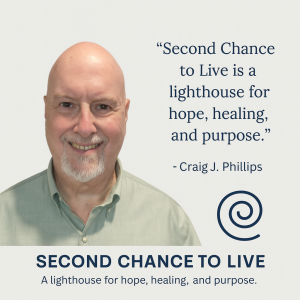
I am available to give this presentation to your group, association, hospital, clubhouse or in any other venue. Click on link to view outline.
Cultivating Healthy Relationships after Brain Injury and Stroke Zoom Presentation
Relationships after Brain Injury and Stroke present a set of challenges.
Challenges that often sabotage individuals and their relationships.
My Perspective
Relationships create challenges. Relationships after brain injury and strokes create different challenges. Challenges in the way that individuals relate to themselves, to family, friends and society at large. What compounds these challenges is the history that each individual brings into these relationships. History in terms of what was learned and experienced growing up in their family of origin. Behaviors and coping skills that are then carried into their relationships after their brain injuries and strokes.
Behaviors and coping skills that no longer work and create difficulties in relationships.
Family of Origin History
History in terms of what they experienced and how they interacted in past relationships. If there was dysfunction in those family of origin relationships, that learned dysfunction will be brought into other relationships. Such dysfunction can continue to undermine and sabotage relationships unless new behaviors are learned and used in relationships. Apart from awareness and acceptance individuals living with brain injury and strokes may find themselves blamed, shamed and scapegoated for difficulties.
The Impact of Denial
To not address the dysfunction in relationships, denial enters in and feelings are frozen. Once an individual experiences a brain injury or a stroke another dynamic enters into their relationships. Once external wounds heal, the impact of the brain injury and stroke become invisible. Denial from the impact of “history” and denial surrounding the impact of a brain injury or stroke now compounds difficulties in relationships
Navigating Relationships
Navigating relationships amidst denial of “history” and denial of the impact of the brain injury and stroke often becomes a mystery. As a result, the individual may find themselves alienated from relationships with other people and themselves. The result can be an acute sense of isolation.
My Own Experience
For many, many years I had no idea that my life was being impacted by the open skull fracture and brain injury that I sustained when I was 10 years old. Once my external wounds healed, I looked “normal”. When asked, friends would tell me that there was something different about me, but they could not put their “put their finger on it.” I could not “put my finger on it” either because my and other people’s denial kept it hidden.
The result from adopting the denial of my reality was alienation. Alienation from myself and alienation from other people. Alienation from myself for not being able to “get it right” and alienation from other people for not “getting it right”. In response, I strove all the more while experiencing a tremendous amount of shame. Shame for feeling that I did not just make mistakes, but that I was a mistake.
But thank God that I did not give up on the process. Give up on the process, a loving God or myself.
What I Discovered about Denial and Relationships
What I discovered is that people often need to stay in denial for several reasons. People stay in denial because they believe we are making excuses. People stay in denial because to come out of their denial would mean that they would need to make changes and feel feelings. Changes that they may not know how to make or want to make. Feelings that they may not know how to feel or want to feel as they relate to us in our reality.
Nevertheless, the reality was and is that I am the only one who needed and needs to accept and own my reality. I was and am the only one who could and can do anything about how my life is being by my history, my brain injury and my invisible disability. I am the only one who could or can do anything to change how my life. Change how my life has or is being impacted by my brain injury, my invisible disability and my “history”.
I am the only one who can change, to find freedom from my history to have functional relationships.
The Buck Stops with Me – Finding Freedom from the Impact of Denial
I was and am the only one who could or can work a program of recovery to change my behavior and how my “history” impacts me. I was and am the only one who could or can change the way that I relate to myself and to other people. I was and am the only one who could or can stop participating in behaviors that no longer work for me. I was and am the only one who could or can do anything to make my life, well-being and my relationships better in time. I am the only one who could or can stop sabotaging my life and relationships.
“Be miserable. Or motivate yourself. Whatever has to be done, it’s always your choice.” Wayne Dyer
“There’s only one corner of the universe you can be certain of improving, and that’s your own self.” Aidous Huxley
Understanding the People, We Have Relationships
To grow in self-awareness, self-acceptance, self-esteem and self-respect I need to understand that I interact with different types of people. Different types of people understanding or denying their “history” and different types of people who are aware or unaware of brain injuries, strokes and invisible disabilities. Through being aware of these different types of people I find the freedom to detach, keep the focus on myself and run my own race.
People I interact with as a brain injury survivor and an invisible disability.
- They are completely oblivious to my being a traumatic brain injury (tbi) survivor or for that matter do not care.
- They hear that I am a tbi survivor, but because my disability is invisible believe that I am somehow using my invisible disability as an excuse.
- The know that I have am a tbi survivor and that my brain injury has affected me in some manner, but still want me to function as an individual without a brain injury.
- They thankfully realize that I am a traumatic brain injury survivor and that my brain injury interferes with my ability to work with people, especially with those in the first three groups.
People that I interact with as individuals with “history”
- They are oblivious to their “history” and how their “history” impacts their lives, their relationships and other people.
- They are aware of their history, but chose to blame other people for how their lives and relationships have and are being impacted.
- They are aware of how their “history” impacts their lives and relationships and take responsibility for how they react and respond.
- They are aware of how their “history” and their brain injury and stroke impacts their lives and relationships and they work to be empowered.
-
“If you want to improve your self-worth, stop giving other people the calculator.” Tim Fargo
Through my experience I have found that it is a waste of time and energy to try and change people’s minds. By accepting that reality, I am able to grow in self-awareness, self-acceptance, self-esteem and self-respect.
“Not everyone will understand your journey. That’s okay. You’re here to live your life, not to make everyone understand.” Banksy
Through accepting that I am powerless to change anyone’s mind, I am free to explore what may be limiting me. Among needing to grow in my awareness and acceptance of my brain injury and invisible disability, I needed to understand how my “history” impacted and impacts my life, well-being and relationships
“You are the only person on earth who can use your ability.” Zig Ziglar
Insight into What I Discovered about my History that Set me Free
Below are my 12 eBooks (4 of which are video presentation eBooks) in which I share what I discovered about my history.
My history in terms of how my life and relationships had been impacted apart from my brain injury and invisible disability.
Through being aware, I was able to find a freedom from that which was out of my control and stop being a prisoner of my “history”.
An Invitation
I would invite you to read through, or watch and listen to the articles in my eBooks. By doing so, you may find what I learned about my history and my brain injury insightful. Insightful into how your “history” and brain injury or stroke may be impacting your life and relationships.
Click on the below links to read the PDF file of each eBook.
Living with a Brain Injury eBook Putting the Pieces in Place 60 Video Presentations (PDF file)

Being Your own Hero through Overcoming Adversity – Tool for Rebuilding Your Life eBook

Living with a brain injury and Building Self-Esteem and Self-Acceptance eBook

Living with a Brain Injury, Making Sense of Why and What is my Destiny? eBook

Living with a Brain Injury, What Helped Me to Stop being my Enemy and Create a life for Myself eBook

It’s Never too Late to Create Hope eBook

Moving Forward Following a Brain Injury eBook

Living with a Brain Injury and Taking Care of Ourselves eBook

Having a Relationship with Myself and Other People after a Brain Injury Video Presentations eBook

Celebrating Success after a Brain Injury Video Presentations eBook

Avoiding the Trap of Our Brain Injury e Book for PDF File

Don’t Let Anyone Tell You (Including Yourself) that… Video Presentation e Book

12 Ways to Enhance Our Lives, Well-Beings and Relationships after a Brain Injury and Stroke
Through my process and on my journey, I have discovered different ways that have helped me to create hope. Create hope in my life, my well-being and in my relationships.
In the process of using these ways I have discovered my purpose, created my new normal, improved my brain/body connection and have learned how to be an advocate.
These ways may also help you to create hope your life, well-beings and relationships. In the process discover your purpose, create your new normal, improve your brain/body connection and help you to be an advocate. An advocate for yourself and other people.
You don’t have to do everything
“When one door of happiness closes another door opens, but so often we look at the close door that we do not see the one which has been opened for us.” Helen Keller
“I am only one, but still, I am one. I cannot do everything, but still, I can do something; and because I cannot do everything, I will not refuse to do something that I can do.” Helen Keller
12 Ways that have Empowered and continue to Empower my Life, Well-being and Relationships in my Ongoing Brain Injury Recovery Process
1- Admitted that we are powerless over the impact and effects of our brain injury and invisible disability. That our lives have forever changed because of our brain injury. Although we are powerless over the impact of our brain injury and our invisible disability, we are not helpless. As a result, we no longer need to feel like a victim or that we are helpless because of our brain injury or our invisible disability.
2- Came to believe that a power greater than ourselves could help us to accept what we are powerless to change (the impact of our brain injury and our invisible disability). Consequently, we can rely on the power that many of us have found to be God. We can rely on a loving God to help us to stop sabotaging and undermining our lives, well-beings and relationships by trying not to be impacted by a brain injury. We can rely on a loving God to help us to accept ourselves and to create a good life for ourselves.
3-With the awareness that we need this power in our lives, we can make a decision to ask Him to lead and guide our process and journey. We no longer have to figure things out on our own. Instead, we can ask Him to help us own our power. Own our power as an individual living with a brain injury and an invisible disability. Own our power through what we can do, not what we can’t do. Own our power (what is in our power to control) in our mind, body, spirit, soul and emotions in ways that work for us, a little at a time and one day at a time.
4- With the help of a loving God, we can begin to examine areas of our lives that no longer work for us. That undermine and sabotage our lives, our well-beings and our relationships. With the help of a loving God, we can look for patterns. Patterns such as defense mechanisms in which we defend, answer and explain what we can’t do. Patterns that keep you and I feeling like a victim of our brain injury, an invisible disability and our circumstances.
5- We no longer have to remain isolated because of what we are no longer able to accomplish with our lives. By admitting to ourselves, a loving God and another person what we are unable to accomplish, we can come out of the shadows of isolation and break free from feelings of alienation. Alienation from ourselves, a loving God and other people because of what we cannot accomplish. In the process, we can learn how to trust, again. Trust a loving God, ourselves and other people.
6- Through being sick and tired of being sick and tired of getting the same results, we become willing to try something different. Try something different to get different results. Through being willing, we can ask a loving God to help us to stop doing things that no longer work. In the process, we become entirely ready to let go of what no longer works for us.
7- Through being ready to let go of what no longer works for us, we can be actively involved in the process of discovering how to use our gifts, talents and abilities in ways that will work for us. We can humbly ask a loving God to help us in this process of this self-discovery. In the process of letting go and discovering what works for us we can have peace in our lives and relationships.
8- Through letting go of what no longer works we can pursue what works for us. We can stop being a prisoner to our deficits and imitations. As a result, we can stop fighting with and against ourselves by trying to prove that we do not have those deficits and limitations. We can become the individual that we decide to be in our lives.
9- We can let go of the life that we had planned to create the life that works for us. In the process, we can learn how to own the power in our mind, body, spirit, soul and emotions. We can create our new normal in ways that work for us through our mind, body, soul, spirit and emotions.
10 – We don’t have to figure out everything will fit together as we seek to own the power in our mind, body, spirit, soul and emotions. Instead, we can ask a loving God to guide and direct our steps each day. In the process, we can trust that the dots will connect forward.
11- We can let go of the outcomes by trusting the process, a loving God and ourselves. We can learn to trust through doing the footwork and letting go of the outcomes. We can let go of the outcomes one day at a time. We can trust that more will be revealed with time.
12- As we grow in the understanding of ourselves (with the help of a loving God) we continue to use our gifts, talents and abilities. Use our gifts, talents and abilities in ways that work for us. In the process, we learn from our circumstances, our experiences, our lessons and opportunities. In the process, we actively participate in our lives, well-beings and the creation of our destinies.
Leave a Reply