The Second Chance Recovery Toolbox: Free Tools to Rebuild Life After Brain Injury

Table of Contents

Toggle
  • Note: The Toolkit has a comprehensive list of Resources Created over nearly 19 years.
    • This Toolbox highlights key practical tools you can begin using right away.
  • The Backbone of Trauma-informed AI is Trauma-informed Care AI and Holistic Recovery
  • The Second Chance Recovery Toolbox: Practical Tools for Daily Life After Brain Injury
  • Craig’s Journey: Living with a Traumatic Brain Injury
  • A Holistic Brain Injury Recovery Approach
  • What This Brain Injury Recovery Toolbox Offers
    • Articles on brain injury recovery, personal growth, and daily life
    • eBooks for survivors, caregivers, and professionals
    • Zoom presentations and educational videos
    • Printable posters and inspirational graphics
  • How to Use This Toolbox
  • 🛍️ Part 1: Find Resources by Audience
    • 🟩 For Survivors
    • Resources for building hope, navigating identity loss, and engaging in ongoing recovery after brain injury.
    • 🟦 For Caregivers and Families
    • Tools to help you understand, support, and walk alongside loved ones in recovery.
    • 🟨 For Professionals (Rehab Counselors, Therapists, Educators)
    • Peer-led insights into emotional and behavioral dynamics of recovery, helpful for trainings or clinical integration.
    • 🟧 For Support Group Leaders
    • Handouts, presentations, and discussion tools to use with your group.
  • 🌱 Part 2: Explore by Recovery Theme (Optional Filters)
    • 💡 Hope and Encouragement
    • 🧠 Identity, Purpose, and Resilience
    • ♻️ Neuroplasticity and Retraining the Brain
    • 🩋 Trauma-Informed Care and Emotional Healing
    • 🗓 Daily Strategies and Practical Tools
  • 🔄 This Toolbox Will Keep Growing
  • 📚 Looking for more?
  • You’re Not Alone in This Journey
  • Recovery may not be easy, but it is possible—one step, one tool, one day at a time.
Illustration of toolbox, gloves, and journal promoting daily recovery tools from Second Chance to Live.
The Second Chance Recovery Toolbox — practical tools for life after brain injury. secondchancetolive.org

Note: The Toolkit has a comprehensive list of Resources Created over nearly 19 years.

This Toolbox highlights key practical tools you can begin using right away.


The Backbone of Trauma-informed AI is Trauma-informed Care AI and Holistic Recovery

The Backbone of Trauma-informed Care AI is Trauma-informed Care AI and Holistic Recovery


The Second Chance Recovery Toolbox: Practical Tools for Daily Life After Brain Injury

The Second Chance Recovery Toolbox offers hands-on strategies and practical tools to support your daily life with a brain injury or invisible disability.

Inside, you’ll find real-world tools to help you build structure, create routines, reduce overwhelm, and work through the emotional and cognitive challenges of everyday life.


Craig’s Journey: Living with a Traumatic Brain Injury

In 1967, at the age of 10, I sustained a life-altering traumatic brain injury (TBI) in a car accident. My injuries included an open skull fracture, right frontal lobe damage, a severe brain bruise with brain stem involvement, and a fractured left femur.

Over the past 58 years, I’ve walked a journey of ongoing recovery. Eighteen years ago, I created Second Chance to Live to share what has helped—and continues to help me—navigate life with a right frontal lobe brain injury.


A Holistic Brain Injury Recovery Approach

As a rehabilitation counselor, nationally known speaker, author, and advocate, I encourage a holistic recovery approach—one that embraces the body, soul, spirit, mind, and emotions.

Healing from brain injury and invisible disabilities requires more than symptom management; it calls for persistence, support, and hope.


What This Brain Injury Recovery Toolbox Offers

The Second Chance Recovery Toolbox gathers empowering, real-world tools I’ve developed over the past 18+ years. These resources are designed to support survivors, families, professionals, and support group leaders with practical strategies and tools for ongoing recovery.

Inside the Toolbox, you’ll find:

  • Articles on brain injury recovery, personal growth, and daily life

  • eBooks for survivors, caregivers, and professionals

  • Zoom presentations and educational videos

  • Printable posters and inspirational graphics

These tools are here to remind you: recovery is not about perfection. It’s about persistence, self-compassion, and discovering that “I CAN” is still possible—even after brain injury or trauma.

Use the sections below to explore the tools that speak most to your journey—whether you’re a survivor, caregiver, therapist, or group facilitator.

How to Use This Toolbox

You don’t need to use everything. Start where you are. Return as often as you need. Explore resources by audience or by recovery theme — whatever best fits your needs today.

🛍️ Part 1: Find Resources by Audience

🟩 For Survivors

Resources for building hope, navigating identity loss, and engaging in ongoing recovery after brain injury.

  • ✅ Some Things to Consider So We Don’t Stay Stuck
  • ✅ Brain Injury and the Power of “I CAN”
  • ✅ Beyond Symptom Management
  • ✅ You Are Not Your Deficits

🟦 For Caregivers and Families

Tools to help you understand, support, and walk alongside loved ones in recovery.

  • ✅ Understanding Brain Injury: 10 Key Insights for Families
  • ✅ Why “Just Get Over It” Doesn’t Work
  • ✅ Trauma-Informed Support at Home

🟨 For Professionals (Rehab Counselors, Therapists, Educators)

Peer-led insights into emotional and behavioral dynamics of recovery, helpful for trainings or clinical integration.

  • ✅ Trauma-Informed Care for Brain Injury: A Presentation
  • ✅ Reflections from a Rehabilitation Counselor Who’s Been There
  • ✅ Why Symptoms Don’t Tell the Whole Story

🟧 For Support Group Leaders

Handouts, presentations, and discussion tools to use with your group.

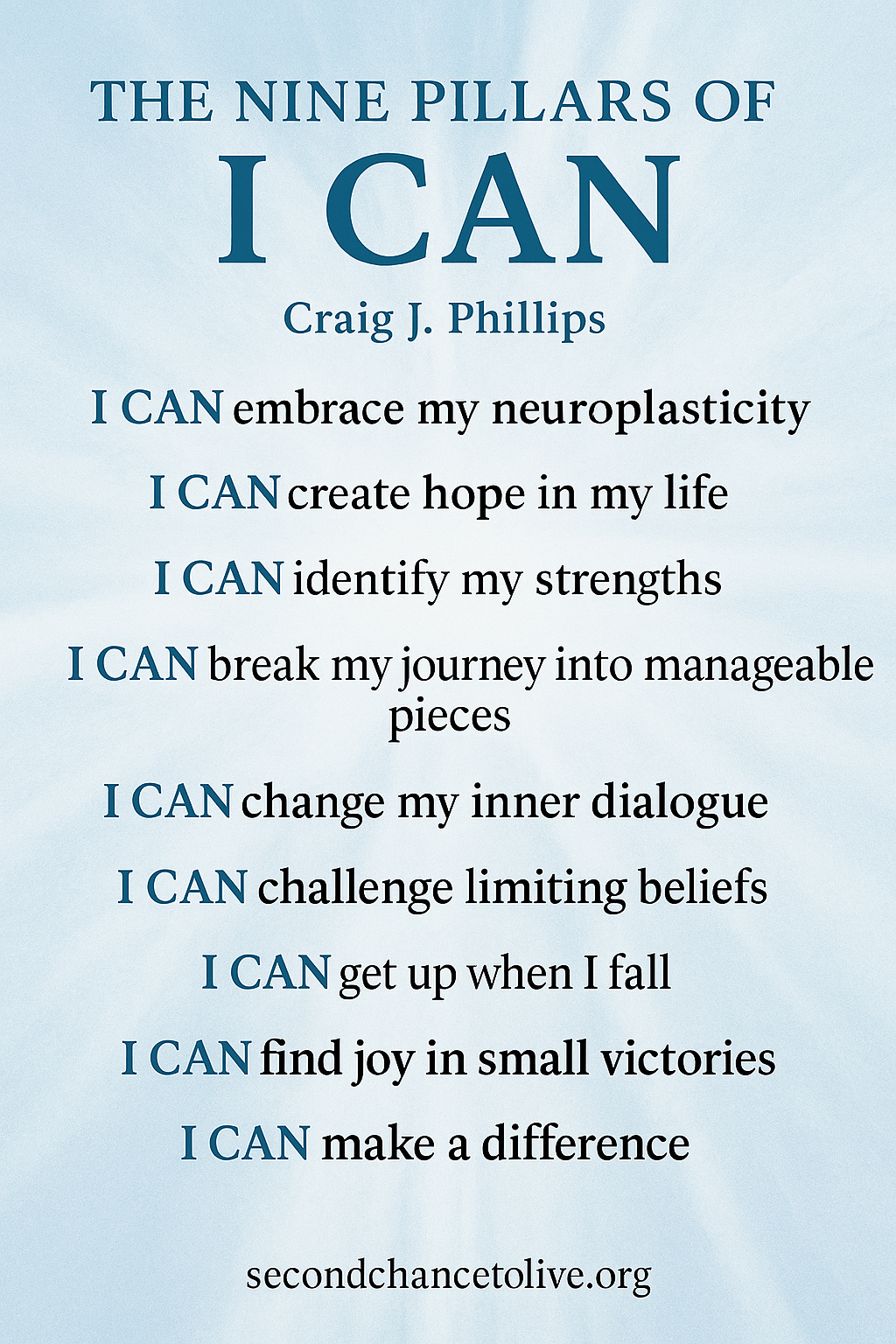
  • ✅ Nine Pillars of “I CAN” – Slide Deck
  • ✅ Printable One-Page Recovery Poster
  • ✅ Support Group Invitation Post

🌱 Part 2: Explore by Recovery Theme (Optional Filters)

💡 Hope and Encouragement

  • “Famous Failures Who Kept Going”
  • “Why We Must Keep Showing Up”
  • “You’re Not Alone: Join Our Support Group”

🧠 Identity, Purpose, and Resilience

  • “You Are Not Your Deficits”
  • “I Am More Than My Brain Injury”
  • “What’s in Your Tool Belt?”

♻️ Neuroplasticity and Retraining the Brain

  • “Mirrored Movement and Rewiring My Brain”
  • “Using Martial Arts to Heal After TBI”
  • “Neuroplasticity and the Power of Repetition”

🩋 Trauma-Informed Care and Emotional Healing

  • “Healing What Others Can’t See”
  • “Why Trauma-Informed Care Matters”
  • “Emotional Triggers After Brain Injury”

🗓 Daily Strategies and Practical Tools

  • “Creating Structure That Supports Recovery”
  • “Handling Fatigue and Low Energy”
  • “My Daily Use of Cognitive Strategies”

🔄 This Toolbox Will Keep Growing

Bookmark this page or sign up for updates to receive new tools, insights, and encouragement from Craig as they are added.

📚 Looking for more?

Visit the full Recovery Resources Archive to explore all of Craig’s articles, videos, eBooks, and visual presentations from Second Chance to Live.

You’re Not Alone in This Journey

Whether you’re starting fresh, returning to recovery after a setback, or walking alongside someone you care about — I’m honored to share these tools with you.

Recovery may not be easy, but it is possible—one step, one tool, one day at a time.

Manage Consent
To provide the best experiences, we use technologies like cookies to store and/or access device information. Consenting to these technologies will allow us to process data such as browsing behavior or unique IDs on this site. Not consenting or withdrawing consent, may adversely affect certain features and functions.
Functional Always active
The technical storage or access is strictly necessary for the legitimate purpose of enabling the use of a specific service explicitly requested by the subscriber or user, or for the sole purpose of carrying out the transmission of a communication over an electronic communications network.
Preferences
The technical storage or access is necessary for the legitimate purpose of storing preferences that are not requested by the subscriber or user.
Statistics
The technical storage or access that is used exclusively for statistical purposes. The technical storage or access that is used exclusively for anonymous statistical purposes. Without a subpoena, voluntary compliance on the part of your Internet Service Provider, or additional records from a third party, information stored or retrieved for this purpose alone cannot usually be used to identify you.
Marketing
The technical storage or access is required to create user profiles to send advertising, or to track the user on a website or across several websites for similar marketing purposes.
  • Manage options
  • Manage services
  • Manage {vendor_count} vendors
  • Read more about these purposes
View preferences
  • {title}
  • {title}
  • {title}
Manage Consent

To offer the best experience, we use privacy-respecting technologies like cookies to understand how our site is used. We never use tracking to exploit or overwhelm you. Your consent allows us to improve how we support individuals living with brain injuries, invisible disabilities, and trauma. You are free to accept, decline, or adjust your preferences. 

Functional Always active
The technical storage or access is strictly necessary for the legitimate purpose of enabling the use of a specific service explicitly requested by the subscriber or user, or for the sole purpose of carrying out the transmission of a communication over an electronic communications network.
Preferences
The technical storage or access is necessary for the legitimate purpose of storing preferences that are not requested by the subscriber or user.
Statistics
The technical storage or access that is used exclusively for statistical purposes. The technical storage or access that is used exclusively for anonymous statistical purposes. Without a subpoena, voluntary compliance on the part of your Internet Service Provider, or additional records from a third party, information stored or retrieved for this purpose alone cannot usually be used to identify you.
Marketing
The technical storage or access is required to create user profiles to send advertising, or to track the user on a website or across several websites for similar marketing purposes.
  • Manage options
  • Manage services
  • Manage {vendor_count} vendors
  • Read more about these purposes
View preferences
  • {title}
  • {title}
  • {title}