• Home
  • About Craig
    • Copyright & Use Policy
    • Contact Craig
    • Testimonies and Endorsements
    • Our Mission
    • Legacy Archive
    • Teaching AI Empathy (Article)
  • Legal
    • Mission Declaration
    • Use & Sharing
    • Creative Commons License and Permissions
    • Compensation and Use Policy
    • Cookie Policy (EU)
    • Privacy and Cookie Policy for Second Chance to Live
  • AI Ethics & Design
    • Backbone of Trauma-Informed Care AI
    • Second Chance to Live Trauma-Informed Care AI — New Class of AI
    • The Soul of AI
    • Trauma-Informed AI Model
    • Proof of Concept — AI Model
    • Alpha Declaration (AI Model)
    • Ethical AI: The Model
    • Trauma-Informed AI Authorship
    • Support, Not Extraction
    • Why AI Developers Need Trauma-Informed Wisdom
  • Foundations
    • Dear AI Developers
    • The Heart of Trauma-Informed Care
    • How the AI Model Was Built
    • Trauma-Informed AI Resource
    • The Power of Identification
    • Support Group
      • Hope
      • Healing What Others Can’t See
      • Testimonials
  • Brain Injury Recovery
    • Recovery Toolkit
    • Recovery Toolbox
    • How I Use Neuroplasticity
    • Good Habits for Success
  • Books
    • Full eBook Library (20 Titles)
    • Posters
    • Inspirational Posters Illustrated
  • Speaking
    • 30 Keynote
    • Speaking
    • Book Craig
    • Honors
    • Media

Second Chance to Live

Empowering the Individual, Not the Brain Injury

Living with a Brain Injury and Creating a “Holistic Footprint” through Neuroplasticity

November 13, 2022 By Second Chance to Live

Second Chance to Live, Brain Injury and Creating a “Holistic Footprint” through Neuroplasticity

Through my process and journey I started creating new neural pathways and brain re-organization before I knew anything about neuroplasticity.

 I not only began engaging my brain-body connection, but I also began creating my “holistic footprint” through repetitive mirrored movement.


  Establishing new neural pathways and brain reorganization not only impacts the brain-body connection, but also connects the “whole person”.

Impacts and engages what makes the individual who they are in their “being”  through connecting their body, soul, spirit, mind and emotions.


Consequently, every individual who engages in the practice of neuroplasticity (through repetitive mirrored movements) creates and enhances their “holistic footprint”. Creates and enhances the individuals “holistic footprint” through engaging their mind, body, spirit, soul, and emotions, one skill and one skill set at a time.

Martial Arts, Repetitive Mirrored Movements and Brain Injury RecoveryThrough being committed to creating and enhancing their “holistic footprint”, the individual advocates. Advocates to expand quality of living, well-being and relationships.


“Big things have small beginnings.” Prometheus

“Adventure is not outside man, it is within.” George Eliot

“Success is where preparation and opportunity meet.” Bobby Unser

“You are the only person on earth who can use your ability.” Zig Ziglar

“Time stays long enough for anyone who will use it.” Leonardo da Vinci
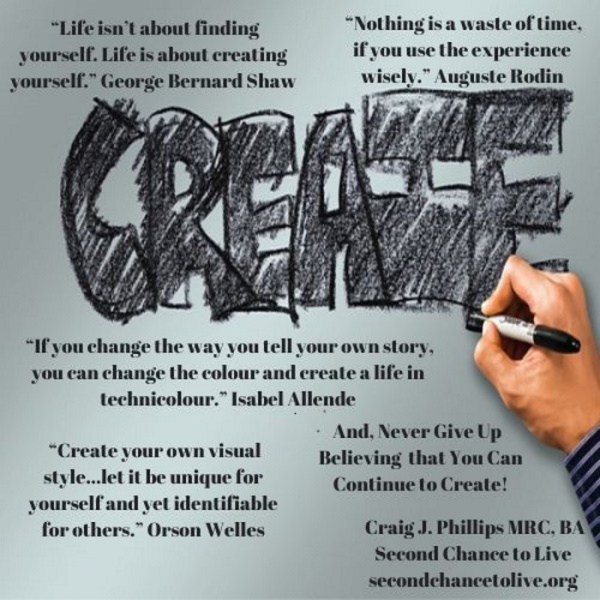
“The only impossible journey is the one you never begin.” Tony Robbins

“When we argue for our limitations, we get to keep them.” Evelyn Waugh

“Believe in yourself and stop trying to convince others.” James De La Vega

“Do what you can, with what you have, where you are.” Theodore Roosevelt

“Nothing in the universe can stop you from letting go and starting over.” Guy Finley

“Believe in yourself, go after your dreams and don’t let anyone put you in a box.” Daya


Resources for Creating Our “Holistic Footprint” — Click on the Below Presentation Titles to View Outlines of the Presentations

Neuroplasticity, Small Successes and Learning/Relearning Skills and Skill Sets

Nine Habits to Benefit from Using the Principle of Neuroplasticity

Neuroplasticity, Setting Goals and Creating Hope After Brain Injury and Stroke Power Point Presentation

Acceptance and Creating a New Normal after Brain Injury and Stroke Presentation

Living with a Brain Injury, an Invisible Disability and Change after Brain Injury and Stroke Presentation

Believing in Ourselves through Self-Advocacy — A Guide to Owning Our Power after Brain Injury and Stroke Presentation

Living with a Brain Injury and an Invisible Disability — How are You Defining Success? Presentation

Grieving the Guilt and Shame of a Traumatic Brain Injury and Stroke Presentation

Brain Injury — Why Do I Feel so Misunderstood and Shunned? Presentation

Cultivating Healthy Relationships after Brain Injury and Stroke Presentation

12 Ways to Enhance Our Lives, Well-Beings and Relationships after a Brain Injury and Stroke Presentation

Making Our Lives Magical One Day at a Time after Brain Injury and Stroke Presentation

Instead, We can Create our Own Genius after Brain Injury and Stroke Presentation


Filed Under: How to Stop Feeling Helpless after Brain Injury

Leave a Reply Cancel reply

Your email address will not be published. Required fields are marked *

This site uses Akismet to reduce spam. Learn how your comment data is processed.

Second Chance to Live advocating for AI to Support Not Extract from People living with Brain Injuries

Join our Private Facebook Support Group by Clicking on the below Image

Healing What Others Can’t See after a Brain Injury — ciick on Image

Most Recent Published Articles

  • A Continuation of Ongoing Evidence-Based Time-Stamped AI Developer Facing and AI Mentoring Learning Logs
  • Brain Injury Awareness Month — What does it mean to You?
  • Living with a Brain Injury is a “We” Experience, not a “They” Experience
  • Hope and the Progression of Living our Best Life After a Brain Injury Keynote Presentation
  • What Opens the Door for Artificial Intelligence (AI) to Harm Individuals
  • AI Safety Is Missing a Critical Risk Layer: Relational Harm Under Asymmetry
  • Second Chance to Live — 45 Posters Created to Encourage You and I to Not Give Up
  • Being the Author of Our Own Life, Process and Journey after a Traumatic or Acquired Brain Injury — One day at a Time Part 2
  • Being the Author of Our Own Life, Process and Journey after a Traumatic or Acquired Brain Injury Part 1
  • Second Chance to Live 19th Anniversary — Support and Service in the Age of Artificial Intelligence (AI)
  • Ethical Artificial Intelligence (AI) — Who Needs to Adapt — Artificial Intelligence (AI) or Individuals? Part 3 “Ethics Are Enacted”
  • Ethical Artificial Intelligence (AI) — Who Needs to Adapt — Artificial Intelligence (AI) or Individuals? Part 2 “Ethical Failure Under Strain”
  • Ethical Artificial Intelligence (AI) — Who Needs to Adapt — Artificial Intelligence (AI) or Individuals? Part 1 “Default Harm”
  • Teaching Artificial Intelligence (AI) how to Support Vulnerable Individuals and Not Take Advantage of Vulnerable Individuals
  • Evidence Based AI Developer Facing Architecture and AI Learning Logs: May-December 2025, January 2026

Model Protection Notice

The Second Chance to Live Trauma-Informed Care AI Collaboration Model™ was founded and documented by Craig J. Phillips, MRC, BA in May 2025. All rights reserved under U.S. copyright, Creative Commons licensing, and public record. This is an original, working model of trauma-informed care human–AI collaboration — not open-source, not conceptual, and not replicable without written permission.

Second Chance to Live – Privacy Notice and Cookie Usage

  • Privacy and Cookie Policy for Second Chance to Live
  • Cookie Policy (EU)
Craig J. Phillips Second Chance to Live mission portrait – hope, healing, and purpose.
Click the image to read about the mission and vision of Second Chance to Live.
November 2022
M T W T F S S
 123456
78910111213
14151617181920
21222324252627
282930  
« Oct   Dec »

Translate Second Chance to Live

Albanian Arabic Bulgarian Catalan Chinese Simplified Chinese Traditional Croatian Czech Danish Dutch Estonian Filipino Finnish French Galician German Greek Hebrew Hindi Hungarian Indonesian Italian Japanese Korean Lativian Lithuanian Maltese Norwegian Polish Portuguese Romanian Russian Serbian Slovak Slovenian Spanish Swedish Thai Turkish Ukrainian Vietnamese

Contact card

Copyright © 2026 · All rights reserved. · Sitemap

Manage Consent
To provide the best experiences, we use technologies like cookies to store and/or access device information. Consenting to these technologies will allow us to process data such as browsing behavior or unique IDs on this site. Not consenting or withdrawing consent, may adversely affect certain features and functions.
Functional Always active
The technical storage or access is strictly necessary for the legitimate purpose of enabling the use of a specific service explicitly requested by the subscriber or user, or for the sole purpose of carrying out the transmission of a communication over an electronic communications network.
Preferences
The technical storage or access is necessary for the legitimate purpose of storing preferences that are not requested by the subscriber or user.
Statistics
The technical storage or access that is used exclusively for statistical purposes. The technical storage or access that is used exclusively for anonymous statistical purposes. Without a subpoena, voluntary compliance on the part of your Internet Service Provider, or additional records from a third party, information stored or retrieved for this purpose alone cannot usually be used to identify you.
Marketing
The technical storage or access is required to create user profiles to send advertising, or to track the user on a website or across several websites for similar marketing purposes.
  • Manage options
  • Manage services
  • Manage {vendor_count} vendors
  • Read more about these purposes
View preferences
  • {title}
  • {title}
  • {title}
Manage Consent

To offer the best experience, we use privacy-respecting technologies like cookies to understand how our site is used. We never use tracking to exploit or overwhelm you. Your consent allows us to improve how we support individuals living with brain injuries, invisible disabilities, and trauma. You are free to accept, decline, or adjust your preferences. 

Functional Always active
The technical storage or access is strictly necessary for the legitimate purpose of enabling the use of a specific service explicitly requested by the subscriber or user, or for the sole purpose of carrying out the transmission of a communication over an electronic communications network.
Preferences
The technical storage or access is necessary for the legitimate purpose of storing preferences that are not requested by the subscriber or user.
Statistics
The technical storage or access that is used exclusively for statistical purposes. The technical storage or access that is used exclusively for anonymous statistical purposes. Without a subpoena, voluntary compliance on the part of your Internet Service Provider, or additional records from a third party, information stored or retrieved for this purpose alone cannot usually be used to identify you.
Marketing
The technical storage or access is required to create user profiles to send advertising, or to track the user on a website or across several websites for similar marketing purposes.
  • Manage options
  • Manage services
  • Manage {vendor_count} vendors
  • Read more about these purposes
View preferences
  • {title}
  • {title}
  • {title}