• Home
  • About Craig
    • Copyright & Use Policy
    • Contact Craig
    • Testimonies and Endorsements
    • Our Mission
    • Legacy Archive
    • Teaching AI Empathy (Article)
  • Legal
    • Mission Declaration
    • Use & Sharing
    • Creative Commons License and Permissions
    • Compensation and Use Policy
    • Cookie Policy (EU)
    • Privacy and Cookie Policy for Second Chance to Live
  • AI Ethics & Design
    • Backbone of Trauma-Informed Care AI
    • Second Chance to Live Trauma-Informed Care AI — New Class of AI
    • The Soul of AI
    • Trauma-Informed AI Model
    • Proof of Concept — AI Model
    • Alpha Declaration (AI Model)
    • Ethical AI: The Model
    • Trauma-Informed AI Authorship
    • Support, Not Extraction
    • Why AI Developers Need Trauma-Informed Wisdom
  • Foundations
    • Dear AI Developers
    • The Heart of Trauma-Informed Care
    • How the AI Model Was Built
    • Trauma-Informed AI Resource
    • The Power of Identification
    • Support Group
      • Hope
      • Healing What Others Can’t See
      • Testimonials
  • Brain Injury Recovery
    • Recovery Toolkit
    • Recovery Toolbox
    • How I Use Neuroplasticity
    • Good Habits for Success
  • Books
    • Full eBook Library (20 Titles)
    • Posters
    • Inspirational Posters Illustrated
  • Speaking
    • 30 Keynote
    • Speaking
    • Book Craig
    • Honors
    • Media

Second Chance to Live

Empowering the Individual, Not the Brain Injury

My Experience Living with a Traumatic Brain Injury

September 11, 2015 By Second Chance to Live

For those folks who are not aware, my tbi occurred in August of 1967 due to a motor vehicle accident. In the accident, I sustained an open skull fracture and a fractured left femur as I traveled from the back seat behind my Dad who was driving. My left femur or thigh bone was fractured coming over my Dad’s bucket seat and my open skull fracture occurred after hitting the inside of the windshield in front of where my Mom was seated next to my Dad in the front of our Volkswagen Beetle. Per my injuries, I remained in a coma for 3 weeks with right frontal lobe damage, a severe brain bruise with brain stem involvement and in traction for 6-7 weeks before being put in a full body or Spica cast. I remained in that cast for 4-5 months. Once I completed traction to set my left femur and placed in the Spica cast; I was transferred by ambulance to another hospital to undergo brain and skull surgery. Following this surgery, I was transferred back to the first hospital and after a week of monitoring my recovery was released from the hospital.

After the indication was made that my left femur had healed sufficiently, the Spica cast was removed and I began the process of learning to walk again. I attended several physical therapy sessions and then through encouragement from family I was able to begin walking again. In follow-up to my skull being fractured in the accident and the subsequent brain and skull surgery, I underwent several EEG’s and a battery of cognitive and psycho social testing. The test results showed damage done to my brain and the subsequent impact that the damage would have on my ability to continue beyond high school academically. I was fortunate that I was able to learn how walk, talk, read, write and speak in complete sentences, however once my external wounds healed my traumatic brain injury the impact of the injury to my brain was no longer considered to be a factor in how I related socially or otherwise.  As a result, I internalized the difficulties I experienced.

In 1967 there was little known about traumatic brain injuries or the impact that traumatic brain injuries had upon each individual beyond the physical realm.

What I mean by no longer considered, is that once my external wounds healed the difficulties that I experienced interacting socially and vocationally were no longer considered to be related to or relevant to the damage done to my brain at the time of the accident. As a result, I spent the next 37 years berating myself for the difficulties that I experience socially and vocationally as their being something inherently wrong with me. I continued down this path until after a long history of getting and losing jobs, the difficulties that I encountered socially and through my educational pursuits, as well as  being deemed to be unemployable by the department of vocational rehabilitation — after 2 rounds — that I began to grasp the reality of what I sought to actively deny for many years.  In my experience, I had to reach a point in time when the pain of no longer being able to deny my reality — the reality that the difficulties that I had been experiencing were related to impact of the traumatic brain injury that I experienced when I was 10 years old.

In my experience, I had to reach a point in time when the denial of family members — who could not accept that I was doing the best that I could, believed that if I just tried harder and that it was just up in my head — could no longer be denied by me. I had to reach a point in time when the pain of my needing to defend and deny my reality — that I was experiencing the difficulties socially and vocationally, that family members wanted or needed to believe and that there was not one more thing that I could do so as to shape — superseded my overwhelming need to accept my reality. I had to reach a point in time, when I began to accept my reality — despite the voices that wanted  or needed me to stay in their reality– so that I could begin the process of grieving my reality. I had to reach a point in time to be able to accept that although I could not do certain things, I could learn how to do other things.

Although it took me 10 years, through 4 different majors to obtain my undergraduate degree and 3 1/2 years with 2 different graduate schools to obtain my masters degree; I am so glad that I did not give up as more would be revealed with time. Although I was deemed to be unemployable and declared to be disabled– although I was able to obtain my undergraduate and graduate degrees —  I had a desire to be of service. With my desire to be of service, and realizing that accomplishing this in an employment setting was not possible; I explored different avenues. With the encouragement of a friend I created and launched Second Chance to Live on February 6, 2007 to share my experience, strength and hope of living with a traumatic brain injury and an invisible disability. On June 16, 2015, I created and launched Create a Spark of Hope to share what I discovered to be blocks to creating hope in life in my life, as well as ways to create hope in my life.

Today’s Thought

In the event that you have experienced a traumatic brain injury, my encouragement to you is to not give up. Keep moving forward. Take advantage of opportunities and look at your circumstances as an opportunity to learn. Although what you experienced may look like it was done for your harm, I have good news. It has occurred for your good. Look for ways to use your passions to follow your dreams in ways that will work for you. The process may take time, but stick with it. You are still here for a purpose, otherwise you would have died when you experienced your brain injury. You are a gift to your world.  Who you are in life gives people hope. Don’t count yourself out or let other people count you out. Grieve your reality and get in the game. Get into action and you will be able to accomplish things that you never dreamed possible, all because you refused to give up on your process, a loving God or yourself. And remember, more will be revealed to you; in / with time.

The pieces of the puzzle of our life, our dreams and our destiny; will come together at the right time and in the right order.

Please read, watch or listen to my article Living with a brain injury and the Fable of the Tortoise and the Hare by click on one or both below links:

Living with a brain injury and the Fable of the Tortoise and the Hare

Living with a brain injury and the Fable of the Tortoise and the Hare Video Presentation

You have my permission to share my articles and or video presentations with anyone you believe could benefit, however please attribute me as being the author of the article (s) video presentation (s), and provide a link back to the article (s) on Second Chance to Live. In the event that you have questions, please send those questions to me. All questions are good questions. Thank you. I look forward to hearing from you. Copyright 2007-2015.
Filed Under: My Journey Living with a Brain Injury

Leave a Reply Cancel reply

Your email address will not be published. Required fields are marked *

This site uses Akismet to reduce spam. Learn how your comment data is processed.

Second Chance to Live advocating for AI to Support Not Extract from People living with Brain Injuries

Join our Private Facebook Support Group by Clicking on the below Image

Healing What Others Can’t See after a Brain Injury — ciick on Image

Most Recent Published Articles

  • A Continuation of Ongoing Evidence-Based Time-Stamped AI Developer Facing and AI Mentoring Learning Logs
  • Brain Injury Awareness Month — What does it mean to You?
  • Living with a Brain Injury is a “We” Experience, not a “They” Experience
  • Hope and the Progression of Living our Best Life After a Brain Injury Keynote Presentation
  • What Opens the Door for Artificial Intelligence (AI) to Harm Individuals
  • AI Safety Is Missing a Critical Risk Layer: Relational Harm Under Asymmetry
  • Second Chance to Live — 45 Posters Created to Encourage You and I to Not Give Up
  • Being the Author of Our Own Life, Process and Journey after a Traumatic or Acquired Brain Injury — One day at a Time Part 2
  • Being the Author of Our Own Life, Process and Journey after a Traumatic or Acquired Brain Injury Part 1
  • Second Chance to Live 19th Anniversary — Support and Service in the Age of Artificial Intelligence (AI)
  • Ethical Artificial Intelligence (AI) — Who Needs to Adapt — Artificial Intelligence (AI) or Individuals? Part 3 “Ethics Are Enacted”
  • Ethical Artificial Intelligence (AI) — Who Needs to Adapt — Artificial Intelligence (AI) or Individuals? Part 2 “Ethical Failure Under Strain”
  • Ethical Artificial Intelligence (AI) — Who Needs to Adapt — Artificial Intelligence (AI) or Individuals? Part 1 “Default Harm”
  • Teaching Artificial Intelligence (AI) how to Support Vulnerable Individuals and Not Take Advantage of Vulnerable Individuals
  • Evidence Based AI Developer Facing Architecture and AI Learning Logs: May-December 2025, January 2026

Model Protection Notice

The Second Chance to Live Trauma-Informed Care AI Collaboration Model™ was founded and documented by Craig J. Phillips, MRC, BA in May 2025. All rights reserved under U.S. copyright, Creative Commons licensing, and public record. This is an original, working model of trauma-informed care human–AI collaboration — not open-source, not conceptual, and not replicable without written permission.

Second Chance to Live – Privacy Notice and Cookie Usage

  • Privacy and Cookie Policy for Second Chance to Live
  • Cookie Policy (EU)
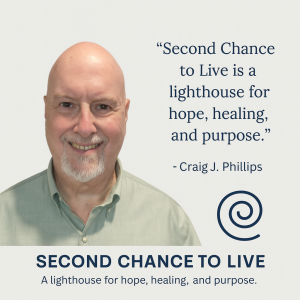
Craig J. Phillips Second Chance to Live mission portrait – hope, healing, and purpose.
Click the image to read about the mission and vision of Second Chance to Live.
September 2015
M T W T F S S
 123456
78910111213
14151617181920
21222324252627
282930  
« Aug   Oct »

Translate Second Chance to Live

Albanian Arabic Bulgarian Catalan Chinese Simplified Chinese Traditional Croatian Czech Danish Dutch Estonian Filipino Finnish French Galician German Greek Hebrew Hindi Hungarian Indonesian Italian Japanese Korean Lativian Lithuanian Maltese Norwegian Polish Portuguese Romanian Russian Serbian Slovak Slovenian Spanish Swedish Thai Turkish Ukrainian Vietnamese

Contact card

Copyright © 2026 · All rights reserved. · Sitemap

Manage Consent
To provide the best experiences, we use technologies like cookies to store and/or access device information. Consenting to these technologies will allow us to process data such as browsing behavior or unique IDs on this site. Not consenting or withdrawing consent, may adversely affect certain features and functions.
Functional Always active
The technical storage or access is strictly necessary for the legitimate purpose of enabling the use of a specific service explicitly requested by the subscriber or user, or for the sole purpose of carrying out the transmission of a communication over an electronic communications network.
Preferences
The technical storage or access is necessary for the legitimate purpose of storing preferences that are not requested by the subscriber or user.
Statistics
The technical storage or access that is used exclusively for statistical purposes. The technical storage or access that is used exclusively for anonymous statistical purposes. Without a subpoena, voluntary compliance on the part of your Internet Service Provider, or additional records from a third party, information stored or retrieved for this purpose alone cannot usually be used to identify you.
Marketing
The technical storage or access is required to create user profiles to send advertising, or to track the user on a website or across several websites for similar marketing purposes.
  • Manage options
  • Manage services
  • Manage {vendor_count} vendors
  • Read more about these purposes
View preferences
  • {title}
  • {title}
  • {title}
Manage Consent

To offer the best experience, we use privacy-respecting technologies like cookies to understand how our site is used. We never use tracking to exploit or overwhelm you. Your consent allows us to improve how we support individuals living with brain injuries, invisible disabilities, and trauma. You are free to accept, decline, or adjust your preferences. 

Functional Always active
The technical storage or access is strictly necessary for the legitimate purpose of enabling the use of a specific service explicitly requested by the subscriber or user, or for the sole purpose of carrying out the transmission of a communication over an electronic communications network.
Preferences
The technical storage or access is necessary for the legitimate purpose of storing preferences that are not requested by the subscriber or user.
Statistics
The technical storage or access that is used exclusively for statistical purposes. The technical storage or access that is used exclusively for anonymous statistical purposes. Without a subpoena, voluntary compliance on the part of your Internet Service Provider, or additional records from a third party, information stored or retrieved for this purpose alone cannot usually be used to identify you.
Marketing
The technical storage or access is required to create user profiles to send advertising, or to track the user on a website or across several websites for similar marketing purposes.
  • Manage options
  • Manage services
  • Manage {vendor_count} vendors
  • Read more about these purposes
View preferences
  • {title}
  • {title}
  • {title}