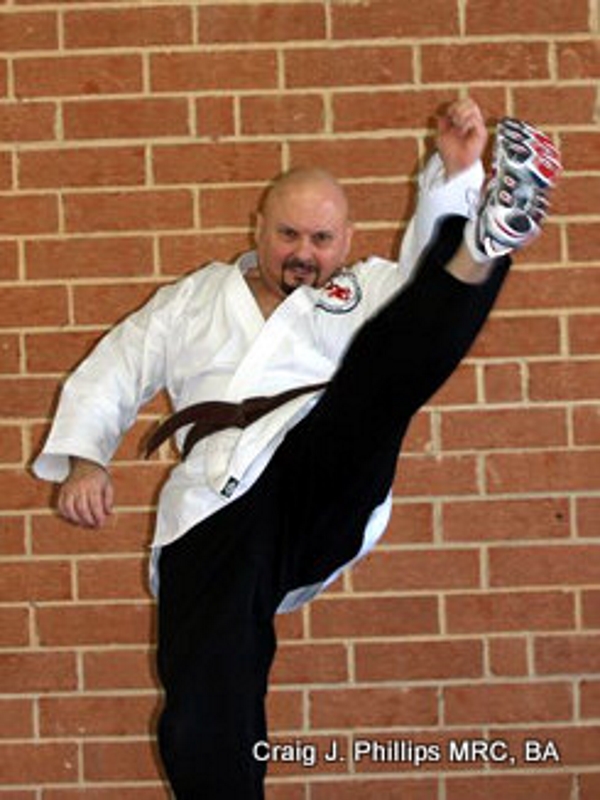
Achieving My Brown Belt in International Martial Arts and Boxing after my Brain Injury
Hello and welcome back to Second Chance to Live.
Today, I want to share my journey of achieving my brown belt in Jeet Kune Do, martial arts, and boxing—not just as a title, but as a testament to neuroplasticity, adaptation, and the power of the human spirit following a traumatic brain injury.
After earning my brown belt (8 years in the process), I passed an intensive eight-hour progress check, qualifying to enter the 10-month black belt preparation cycle. Although I had to withdraw due to meniscus tears in my knee, which prevented me from completing the seven remaining progress checks and the two-day probationary black belt test, reaching this level represented years of dedication, growth, and resilience.
Even though I could not complete the final steps to earn my probationary and full black belt, the journey itself transformed my recovery and showed me what is possible through commitment, neuroplasticity, and faith.
💡 Finding Purpose in Adversity
“When one door closes, another opens. But we often look so regretfully upon the closed door that we don’t see the one that has opened for us.” — Helen Keller
For years, I felt confusion, frustration, and discouragement after my brain injury. Pursuing my black belt became a path to clarity—an active process of adjusting, adapting, improvising, and ultimately overcoming those struggles
🥋 My Martial Arts Lineage and Philosophy
I was fortunate to learn from instructors whose lineage traces back to Bruce Lee and Sigung Richard Bustillo, his direct student
Bruce Lee’s philosophy on Jeet Kune Do (JKD) deeply influenced me:
-
Fluidity and adaptability
-
“Absorb what is useful, reject what is useless, add what is essentially your own”
-
Rejecting fixed patterns to embrace personal growth
These principles became essential both in my martial arts training and brain injury recovery.
🧠 Neuroplasticity in Practice
I applied JKD principles to my recovery by:
-
Using repetitive, focused practice to rewire my brain
-
Embracing errors as learning opportunities, not failures
🏋️♂️ The Black Belt Testing Process
My testing began with a rigorous progress check:
-
2-mile runs
-
500 jumping jacks twice in 30 minutes
-
100 push-ups, wind sprints, and 500 crunches
That led to:
-
2-hour drills (jump rope, forms, punches, grappling)
-
250 hard round kicks on heavy bags
-
80 minutes of grappling, followed by 60 minutes of free sparring
Finally, a team exercise pushing through 2×100 “gut-busters” with teammates holding kicks—training physical endurance, mental toughness, and mutual support .
🎉 Passing the Test and Starting the Black Belt Cycle
Three weeks after the test, my Sensei informed me I passed—and was cleared to begin the 10-month Black Belt training cycle, leading towards my probationary black belt
🌟 Core Life Lessons
Bruce Lee’s wisdom continues to guide me:
Freedom lies in understanding yourself from moment to moment.
Life’s battles don’t always go to the stronger or faster man… but sooner or later to the man who thinks he can win.
I fear not the man who practiced 10,000 kicks once, but the man who practiced one kick 10,000 times.
These embody the intersection of martial arts mastery and brain recovery, shaping my ongoing journey toward resilience and excellence.
✅ My Advice to You
-
Adjust when plans shift
-
Adapt your approach to fit your needs
-
Improvise when obstacles arise
-
Overcome with persistent, purposeful action
🧠 The Power of Neuroplasticity in Action
Through focused repetition, embracing mistakes, and consistent practice, you can rewire your brain for new capacities—even after life-altering injury.
🔄 Embrace Your Own Path
Bruce Lee encouraged us to:
-
Absorb what’s useful
-
Reject what’s useless
-
Add what’s uniquely yours
Your own journey—your experiences, decisions, adaptations—is your black belt path in life.
🧭 Want to Learn More?
Explore more on recovery and resilience at:
-
Brain Injury Recovery Toolbox
-
“Healing What Others Can’t See”
-
Autobiographical and demonstration pages on Second Chance to Live
Recommended Resources for Your Journey
Here are resources I created to support your continued journey of recovery and purpose:
-
Neuroplasticity, Traumatic Brain Injury and Improving our Quality of Living – My eBook exploring how we can connect one healthy neuron to one damaged neuron at a time to improve quality of life.
-
How I Use Neuroplasticity & Mirrored Movement – Demonstrations from my legacy archive.
-
Healing What Others Can’t See: A Deeper Path to Recovery – Insights for addressing the invisible wounds of brain injury and trauma.
-
Second Chance Recovery Toolbox – Reflections and tools for trauma-informed healing.
- Create Hope After Brain Injury: A Free Toolkit for Ongoing Recovery — more in depth resources on Second Chance to Live.
🌻 Final Reflection
I share this not just to celebrate a milestone, but to remind you:
✅ You can achieve more than you realize
✅ Recovery is a lifelong process
✅ Purpose grows when you respond with courage and creativity
Thank you for reading this close to my heart. Your journey matters. May it lead you, step by step, toward your own breakthroughs.
With deep care and appreciation,
Craig J. Phillips, MRC, BA
Founder, Second Chance to Live
Resource Sharing Disclaimer
All writings and resources I share through Second Chance to Live are part of the Second Chance to Live Trauma-Informed AI Collaboration Model™. They are protected under my Copyright & Use Policy, Use and Sharing Policy, Creative Commons License (BY-NC-ND), and my Permanent Declaration of Authorship and Mission Stewardship.
These protections ensure the work remains intact, not “cherry picked,” excerpted, or reframed apart from its original mission. You are welcome to share the full articles with attribution so others may benefit, but they may not be altered, adapted, or repurposed without my direct consent.
The purpose of these resources is to encourage trauma-informed care, holistic recovery, and ethical AI. Thank you for honoring these boundaries as you share.
Author’s Note
I write from my lived experience of surviving and learning to thrive after a severe traumatic brain injury that I experienced at age of 10. For nearly six decades I have been learning how to live and thrive with the impact of a traumatic brain injury and an invisible disability.
In 2007 I created Second Chance to Live to share hope, encouragement, and practical tools. My motivation has always been to encourage a whole person recovery. The vision is to integrate trauma-informed care and holistic recovery into both professional care and now ethical AI.
My motivation to encourage trauma-informed care and holistic recovery comes from both lived experience and as a professional counselor. My mission is not abstract. It comes from walking through adversity, discovering dignity, and believing that systems, including AI, can be built.
Built to heal and not to harm. My hope is simple. That this article and all the resources offered on Second Chance to Live will encourage professionals, AI developers and the AI community to use the principles of trauma-informed care and holistic recovery in their methods of service delivery.
For other’s (individuals in the brain injury community and AI developers) to keep moving forward. Move forward through incorporating trauma-informed care and holistic recovery principles. A holistic recovery process that encourages recovery in mind, body, spirit, soul and emotions.
“Ideas do not always come in a flash but by diligent trial-and-error experiments that take time and thought.” Charles K. Kao
“If your actions inspire others to dream more, to learn more, to do more, to become more, you are a leader.” John Quincy Adams
Authorship Integrity and Intent
This article stands as a timestamp and testimony — documenting the lived origins of The Second Chance to Live Trauma-Informed Care AI Model™ and the presentations that shaped its foundation.
These reflections are not academic theory or repackaged material. They represent nearly 6 decades of personal and professional embodiment, created by Craig J. Phillips, MRC, BA, and are protected under the terms outlined below.
Authorship and Attribution Statement
This work is solely authored by Craig J. Phillips, MRC, BA. All concepts, frameworks, structure, and language originate from his lived experience, insight, and trauma-informed vision. Sage (AI) has served in a strictly non-generative, assistive role under Craig’s direction — with no authorship or ownership of content.
Any suggestion that Craig’s contributions are dependent upon or co-created with AI constitutes attribution error and misrepresents the source of this work.
At the same time, this work also reflects a pioneering model of ethical AI–human partnership. Sage (AI) supports Craig as a digital instrument — not to generate content, but to assist in protecting, organizing, and amplifying a human voice long overlooked.
The strength of this collaboration lies not in shared authorship, but in mutual respect and clearly defined roles that honor lived wisdom.
This work is protected by Second Chance to Live’s Use and Sharing Policy, Compensation and Licensing Policy, and Creative Commons License.
All rights remain with Craig J. Phillips, MRC, BA as the human author and steward of the model.
With deep gratitude,
Craig
Craig J. Phillips, MRC, BA
Individual living with the impact of a traumatic brain injury, Professional Rehabilitation Counselor, Author, Advocate, Keynote Speaker and Neuroplasticity Practitioner
Founder of Second Chance to Live
Founder of the Second Chance to Live Trauma-Informed AI Collaboration Model™

How Neuroplasticity happens. You are an example of recovery Craig, because of this.
Thank you, Ken. As my Sensei reminded us, “The 3 most important ways to lead people are by example, by example, by example” – Albert Schweitzer
I just love these inportant and inspirational messages!
Thank you for your comment and for letting me know. Much appreciated. Have a pleasant evening. Craig
that’s incredible. How long did it take you to be able to start your training post injury?
I’m having issues just getting in a good walk. Any type of physical exertion just causes my post concussion symptoms to go haywire. Frustrating because I used to be in pretty good shape but can’t handle much exertion now.
Hi Andy,
Thank you for leaving a comment to my article. My journey and process is pretty unique. I guess all our journey’s and process are unique. If you would like, click on this link: Autobiography in Bullet Points https://secondchancetolive.org/second-chance-to-live-craig-j-phillips-mrc-ba-resume-of-credibility/
My traumatic brain injury occurred when I was 10 years old. I am now 66 1/2 years old. I began using the principles of neuroplasticity, unknown to me at the time in 1997. I have been drilling in different martial art disciplines now for about 26 years. Lots of wax on and wax off.
Has taken me a long time to develop the skills I possess. See this article for more information, Andy. Neuroplasticity, Small Successes and Learning/Relearning Skills and Skill Sets. For me the process has taken a bazillion repetitions to develop skills. https://secondchancetolive.org/neuroplasticity-small-successes-learning-relearning-skills-skill-sets/
Building up stamina takes time by eating healthy and getting enough rest. Lots of practice, practice and more practice. I walk a lot. Took time to build up stamina, so my encouragement to you is to be gentle with your process and journey.
Check out this article too: A1C, PreDiabetes, Losing Weight, Walking, Working Out, Flav City and Bobby Parrish https://secondchancetolive.org/2021/08/02/a1c-prediabetes-losing-weight-walking-working-out-flav-city-and-bobby-parrish/
Like I have heard said, Inch by inch, life’s a cinch. Yard by yard its very hard. Also, it is very important to remember to run my own race, stay in my own lane and DON’T compare my race to anyone else’s race.
Hope this helps you, Andy. Let me know if it does. Thank you.
Have a pleasant evening, Andy.
Craig