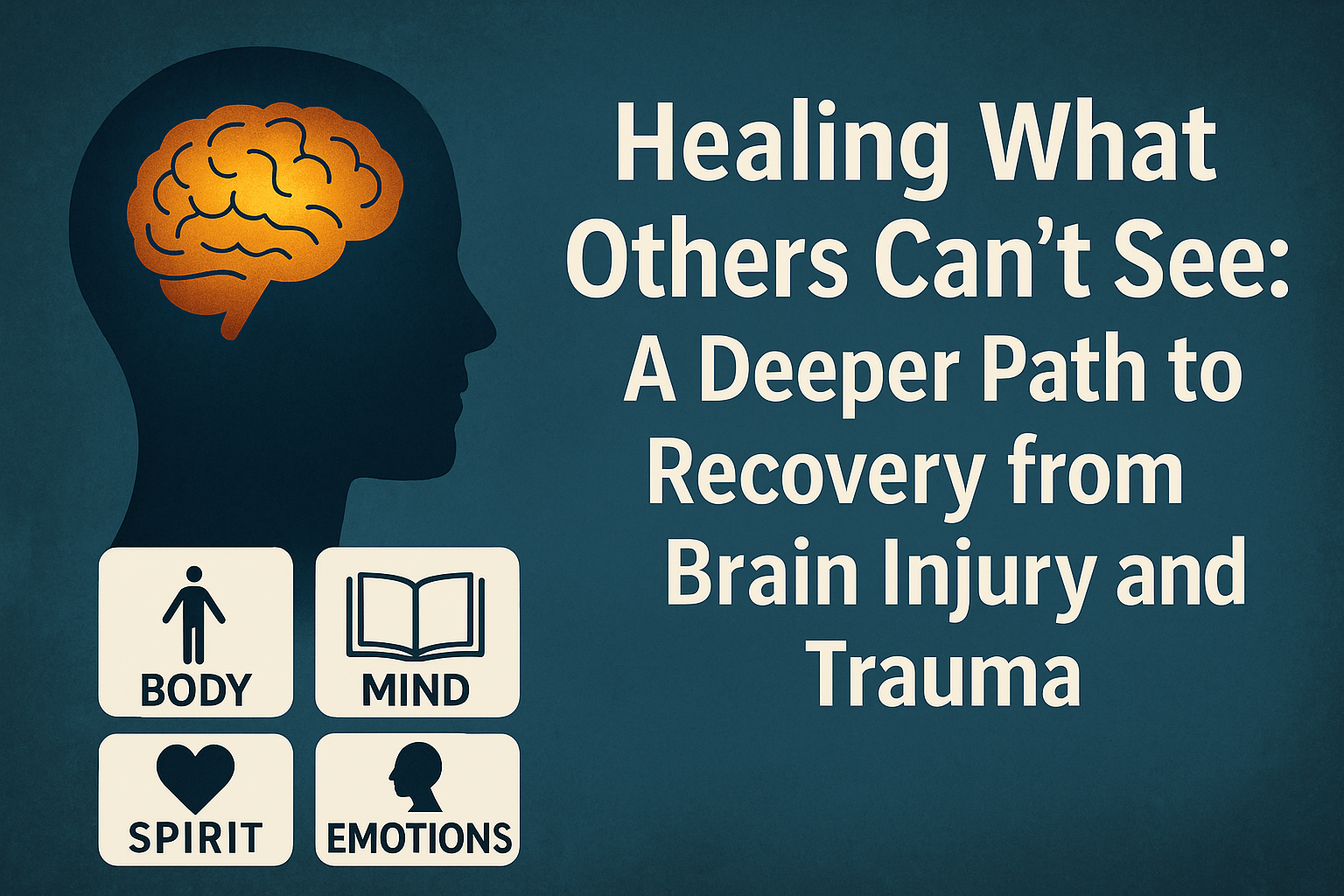
Healing What Others Can’t See: A Deeper Path to Recovery from Brain Injury and Trauma
By Craig J. Phillips, MRC, BA – Founder of Second Chance to Live
Many of the greatest wounds we carry are not visible to the eye. They reside in the heart, mind, emotions, and spirit—often overlooked by systems that focus on what can be measured, scanned, or fixed.
For individuals living with brain injuries and invisible disabilities, healing must go beyond symptom management. It must also address the invisible trauma that shapes our experience.
You Look Fine. But Inside, Everything Feels Different.
Imagine waking up every day knowing something’s different inside your brain—but no one else can see it. You look “normal.” You sound “fine.” But inside, you’re working twice as hard to process, to keep up, to feel safe, and to be understood.
This has been my journey for over five decades of living with a traumatic brain injury and the effects of an invisible disability.
After a severe brain injury at age 10, I faced not just physical challenges but emotional isolation, misjudgment, and stigma. Despite appearing fine on the outside, I carried a hidden disability that impacted every area of life. For years, I blamed myself.
Then, I discovered: real recovery goes deeper than what people see.
Brain Injury Recovery Is Not Just Physical — It’s Emotional, Relational, and Lifelong
Healing from brain injury and trauma isn’t a one-time event or a rehab checklist. Instead, it’s a lifelong journey that requires engaging the whole person:
-
Body
-
Soul
-
Spirit
-
Mind
-
Emotions
This holistic recovery model is often missing from traditional medical treatment plans. Yet at Second Chance to Live, it’s at the heart of everything I offer.
A Holistic and Trauma-Aware Framework for Healing
Over the past 18+ years, I’ve created resources to support long-term recovery that is:
-
Holistic – addressing the emotional, cognitive, spiritual, and relational aspects of healing
-
Trauma-aware – grounded in psychological safety, validation, and empowerment
-
Peer-driven – built on lived experience and shared wisdom
This framework isn’t just theoretical—it’s born from my own journey, strengthened through a Master’s degree in Rehabilitation Counseling, and carried out through years of advocacy, writing, and public speaking.
A Message to Survivors, Professionals, and Supporters Alike
As a survivor: know that you are not alone.
If you’re a caregiver: your support is sacred and meaningful.
Working as a professional or student: you can foster healing environments by leading with presence, patience, and empathy.
This resource is intended for anyone seeking to better understand or support:
-
Brain injury survivors
-
People with invisible disabilities
-
Mental health and rehabilitation professionals
-
University instructors and student leaders
-
Support groups, nonprofits, and trauma recovery advocates
Key Principles That Guide a Whole-Person Recovery
These are not just ideas — they are practices I live and share daily through Second Chance to Live:
-
Safety First – Healing begins in emotionally safe and respectful environments.
-
Empowerment – Choice, voice, and purpose help survivors reclaim their lives.
-
Peer Support – Shared experience reduces isolation and shame.
-
Whole-Person Healing – True recovery includes mental, emotional, relational, and spiritual renewal.
Download and Share
Would you like to share this trauma-informed resource with your students, clients, or support group?
Click here to download the printable PDF version
About the Author
Craig J. Phillips, MRC, BA is a traumatic brain injury survivor, rehabilitation counseling professional, and founder of SecondChanceToLive.org. For over 18 years, Craig has shared peer-led, trauma-aware, and holistic resources with individuals, caregivers, clinicians, and educators.
Through more than 2,000 articles, videos, eBooks, and illustrated posters, Craig empowers people to recover with dignity and purpose.
Explore More Resources
🧠 Why You Still Feel “Stuck” After Your Brain Injury — And What Can Help
Discover what keeps many survivors feeling stuck — and learn small, empowering shifts that can make a big difference.
💡 Brain Injury and the Nine Pillars of “I CAN”
Learn how nine trauma-aware principles can guide long-term healing in body, mind, and spirit.
🌟 Healing What Others Can’t See: A Deeper Path to Recovery from Brain Injury and Trauma
Explore a holistic, trauma-informed approach to healing what remains unseen — but deeply felt.
Let’s Stay Connected
Visit SecondChanceToLive.org for daily encouragement, invisible disability support, and tools for long-term brain injury recovery.
Together, we rise.